Back on the coast road, past Vesuvius and south to Paestum. I am listening to the American couple behind me (or, rather, to the male half whilst the woman makes sympathetic remarks). The conversation so far has ranged through letting God guide you, the problems with too much introspection, Dosteovsky’s questioning what the world would be like if Christianity had never existed and existentialism. I knew this was an educated and intellectual holiday but this sounds like a lot on one cup of coffee.
The countryside continues as before – main road with old villas, modern flats and a lot of noxious looking concrete. The mountains in the background have a sprinkling of villas, castles, churches and monasteries in the most improbable places.
We seem to be in a hotbed of TV historians here. Janina Ramirez was on our plane and Andrew Graham-Dixon was seen striding across the historic site at Paestum.
Paestum was a Greek colony dedicated to Poseidon and changed its name under the Romans. It was abandoned in the 9C when the river dried up and moved course. The sea is also now 2km away rather than right outside.
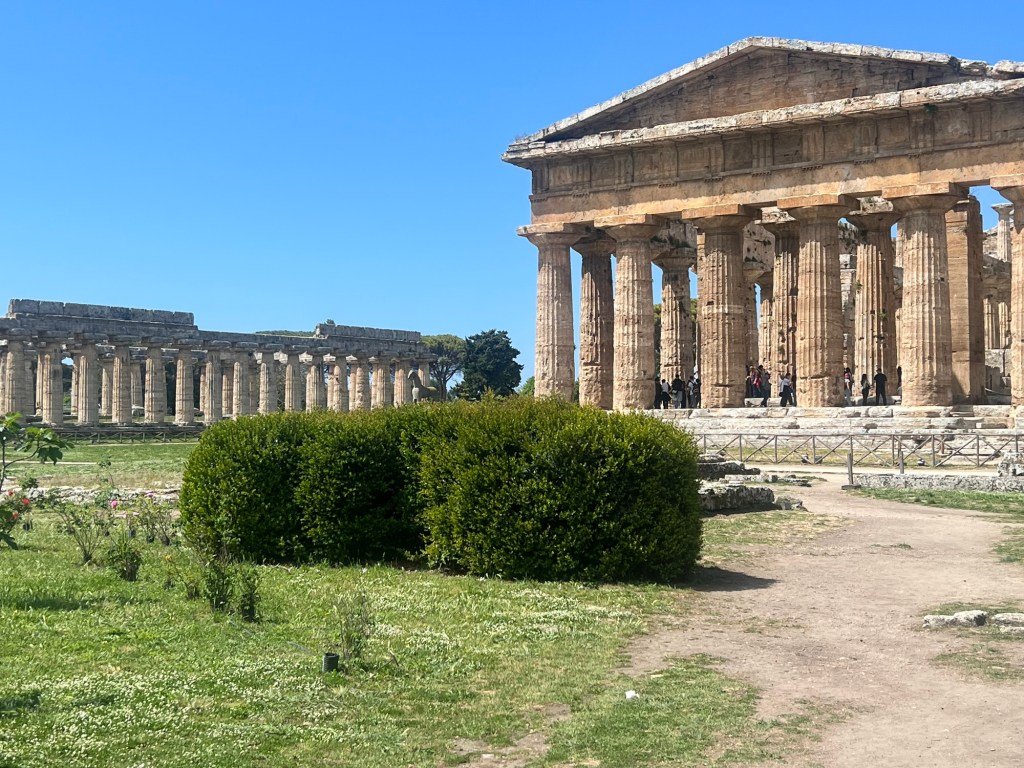
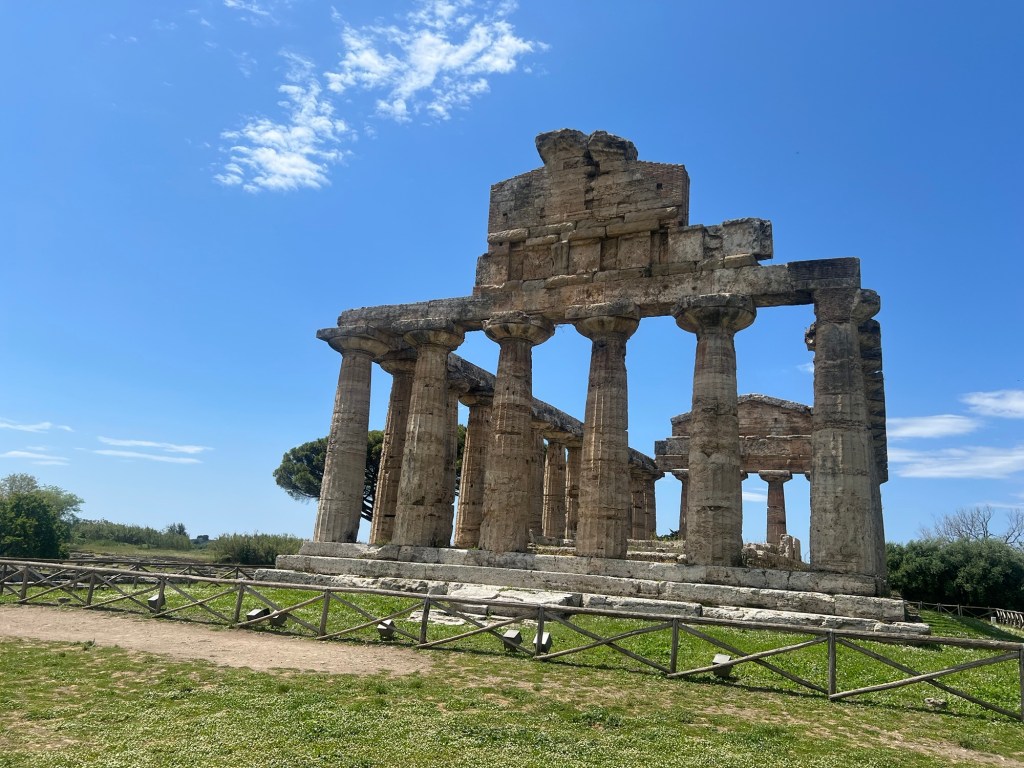
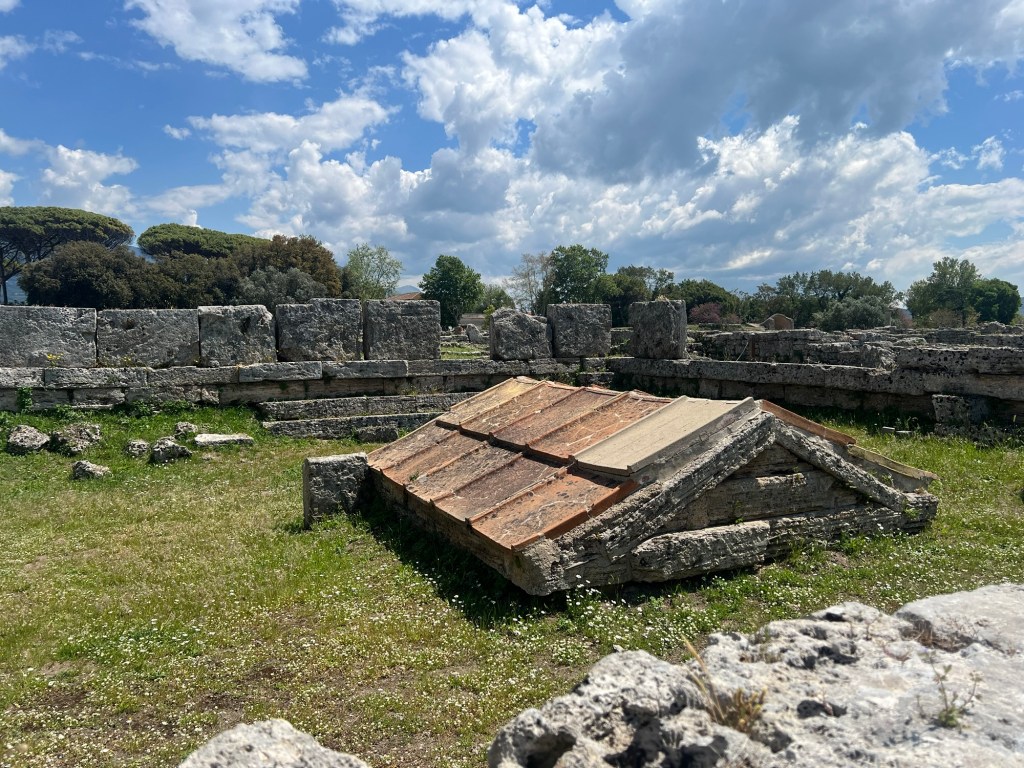
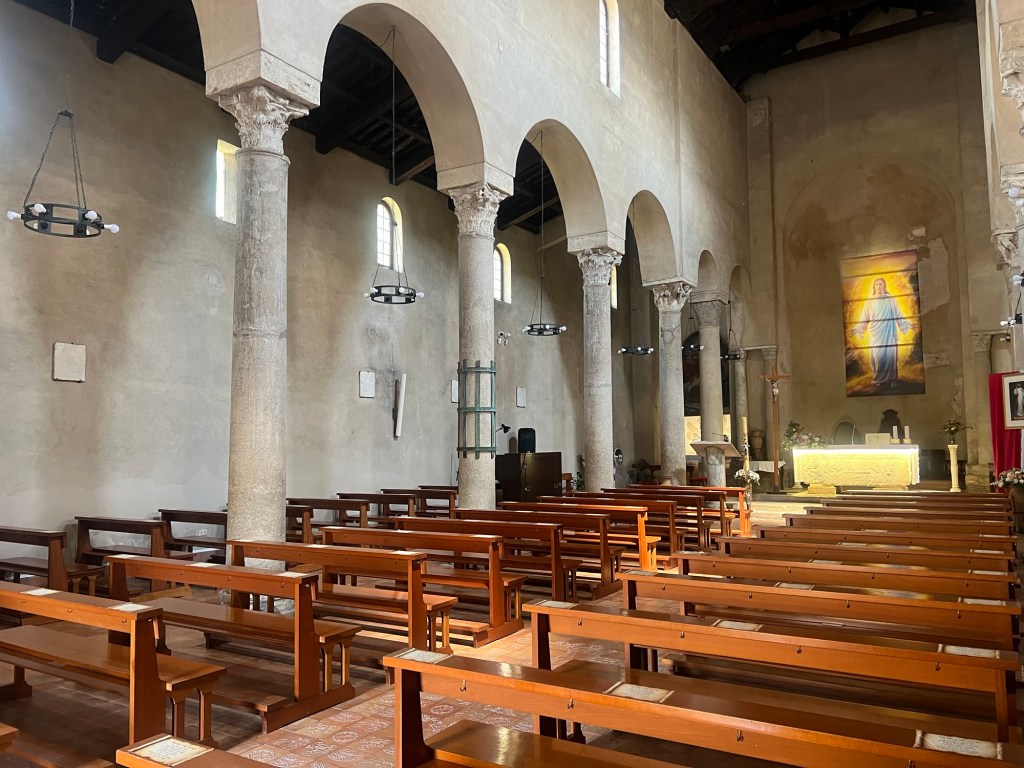
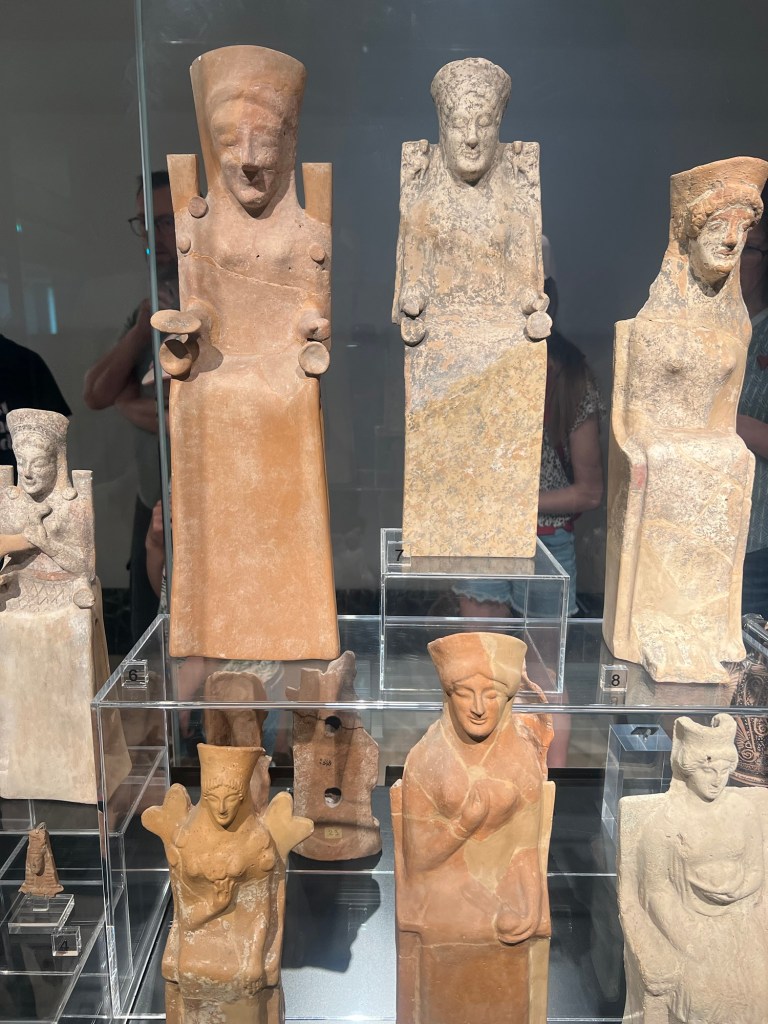
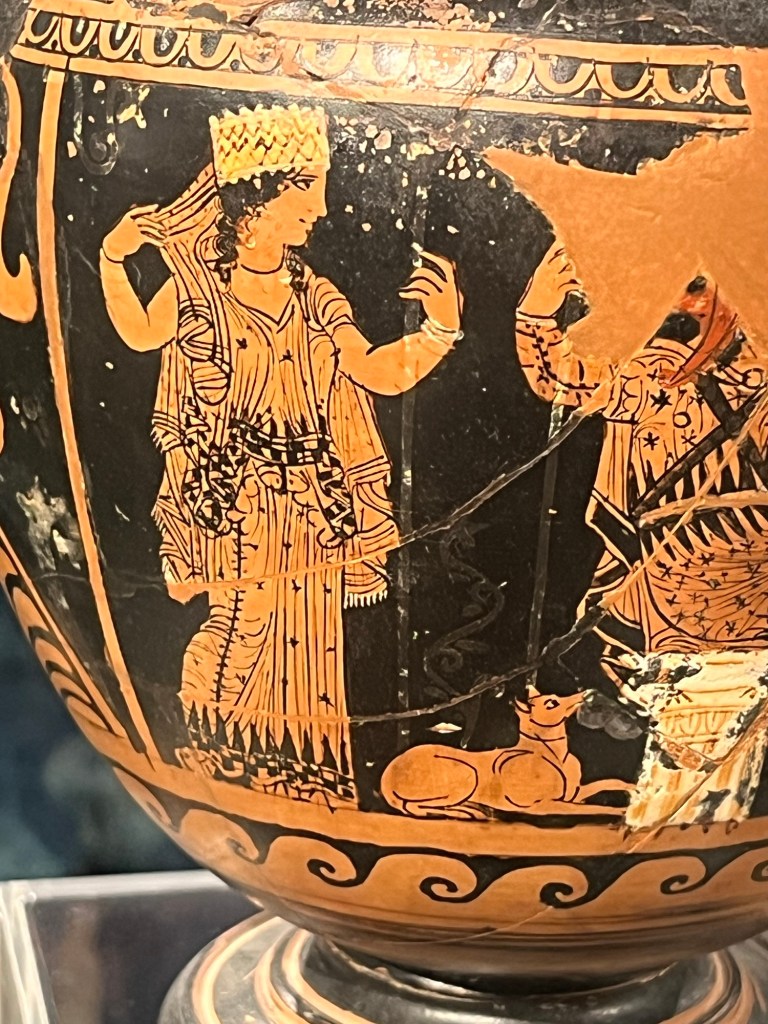
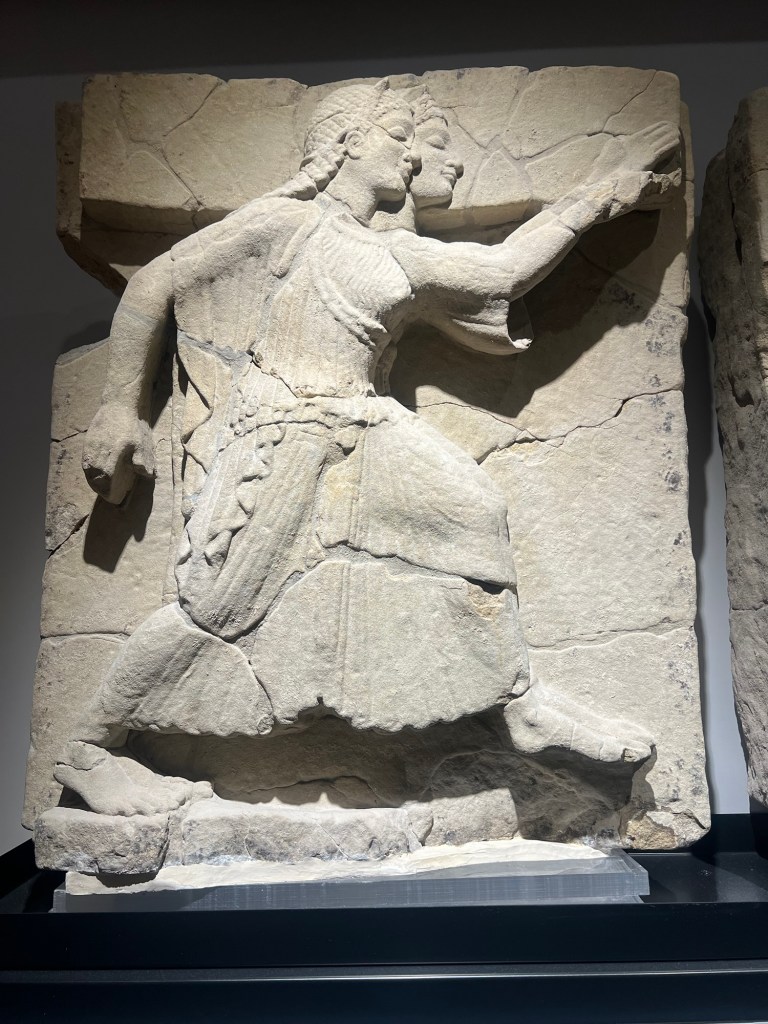
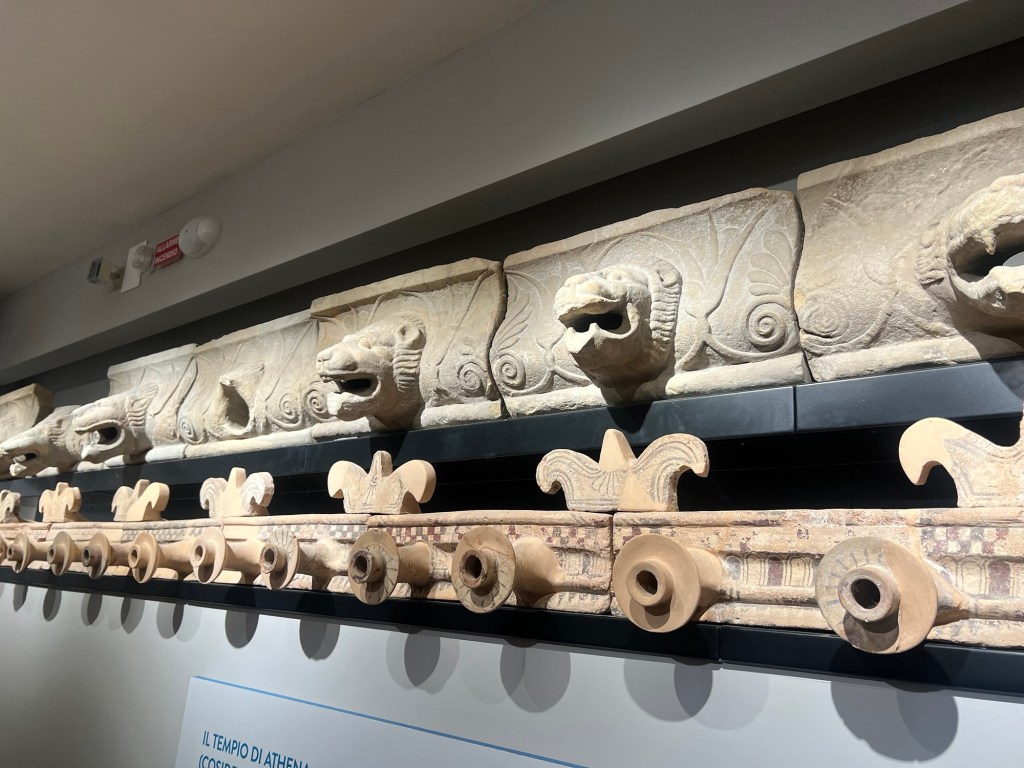
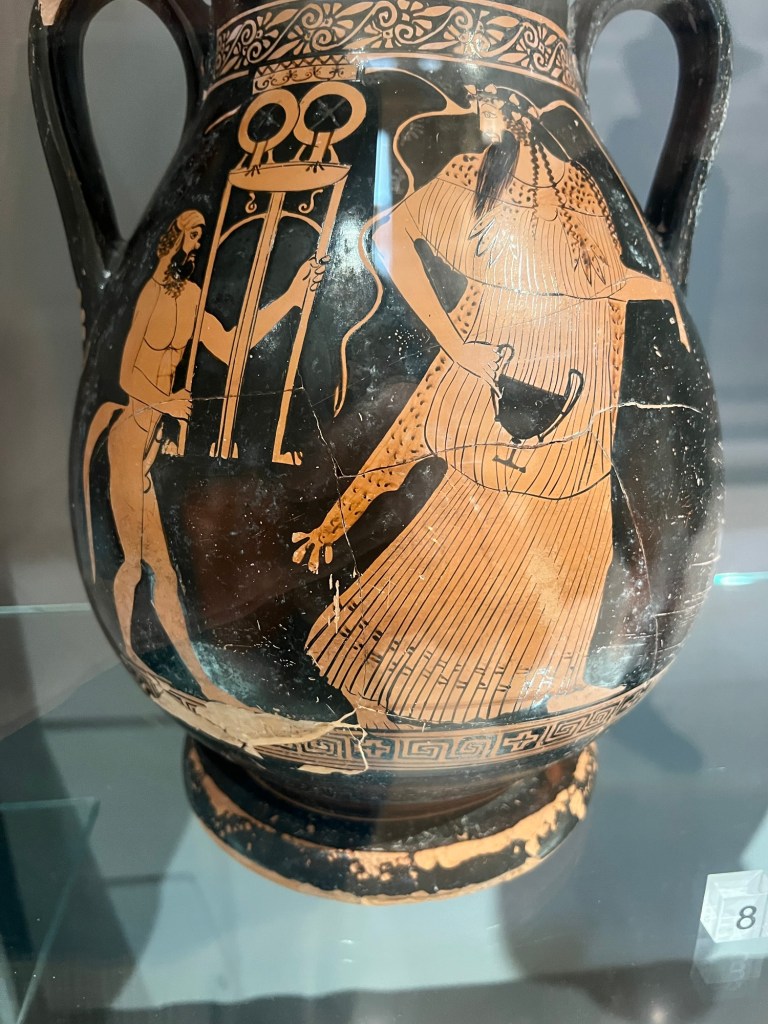
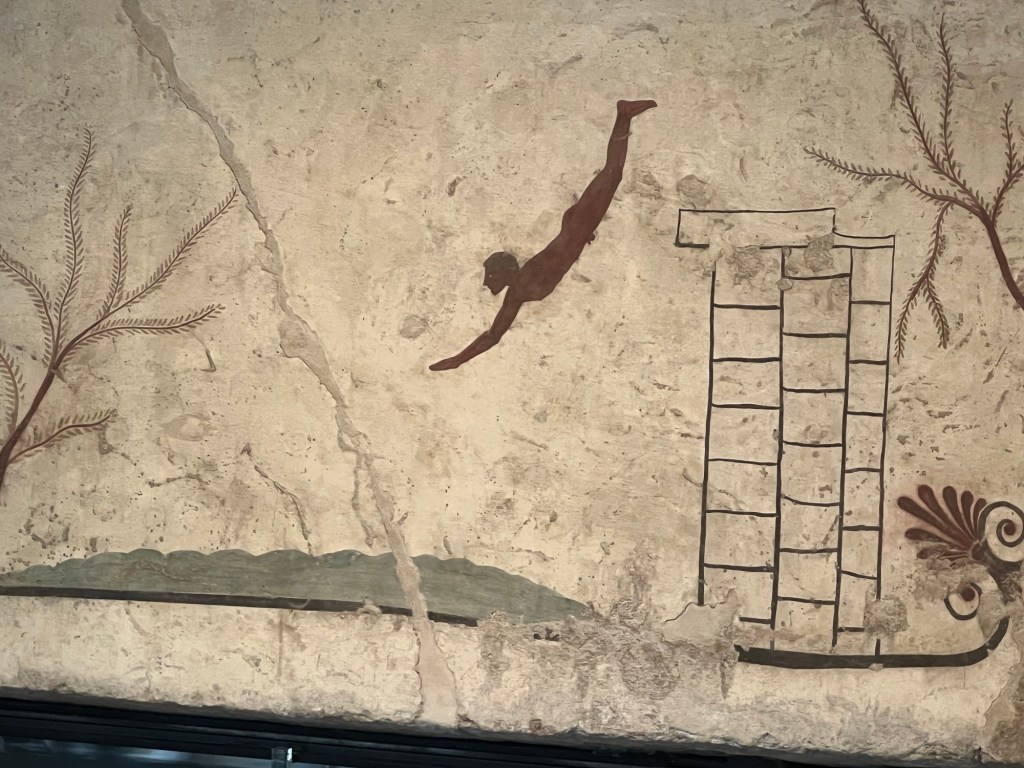
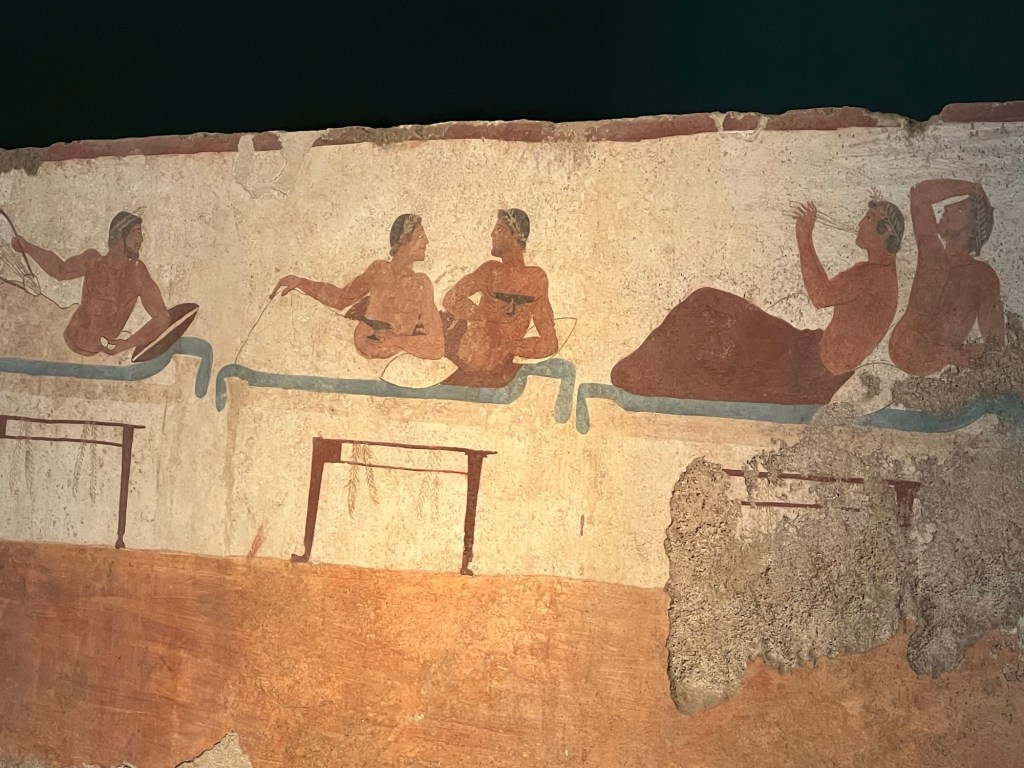
Two of the three temples at Paestum. The one on the left is the oldest, built around 500 BCE. It is built on the Egyptian model with the door at the east end and the sanctuary (only available to priests) at the other. The third temple. It looks a bit odd about the top because it was made into a church once the Roman Empire converted to Christianity. This is something called a Heroon (pronounced hero on). It is a cist grave constructed for a mythical ancestor of the early Greeks. Most of it is under the ground and when it was first built it was covered with a tumulus. The tiles are original. The contents of the Heroon in the museum. The amphora are bronze and the objects in the middle are skewers for roasting sacrificial animals on. The basilica of Paestum. Built in the 5th century using Roman pillars from elsewhere, it was restored in the 15C. Offering figures of Hera from one of her two temples. Handmaiden with whippet! This vase and others nearby with female figures on them were apparently for weddings. Dancing maidens from the 4C BCE. Early plumbing. The top row of spouts is the gutter of one of the temples, the bottom one is from another small building nearby. Dionysus and a satyr holding the tripod of Apollo. Apparently one of the labours of Hercules was getting it back. This is the most famous thing in the museum. The grave of the diver. It is the interior of a cist grave of a young man, found in one of the city graveyards. No one seems to know what the symbolism of the diver means – if anything.
Another large dinner with wine and many dishes this evening. Pompeii tomorrow.
Fascinating stuff – the handmaiden with the whippet has a definite ‘come hither’ expression. Early plumbing hardly seems to do justice to the decoration. This is a town/city I’ve never heard of, so it looks as though you’re getting to see some things off the beaten track and not too swamped with other travellers – there looks to be a comfortable crowd in the museum. I think sympathy is due the American lady behind you, her spouse sounds like hard work…or just very earnest in the way that only some Americans can be. Roll on.

 The Retirement Travels
Fascinating stuff – the handmaiden with the whippet has a definite ‘come hither’ expression. Early plumbing hardly seems to do justice to the decoration. This is a town/city I’ve never heard of, so it looks as though you’re getting to see some things off the beaten track and not too swamped with other travellers – there looks to be a comfortable crowd in the museum. I think sympathy is due the American lady behind you, her spouse sounds like hard work…or just very earnest in the way that only some Americans can be. Roll on.
LikeLiked by 1 person
The thing I didn’t mention was that the place was heaving with school trips!
LikeLike