The city of Hercules (possibly). It is the story put about that this was a grander and more exclusive resort than Pompeii but, as only a bit of it has been dug up, it’s hard to generalise.
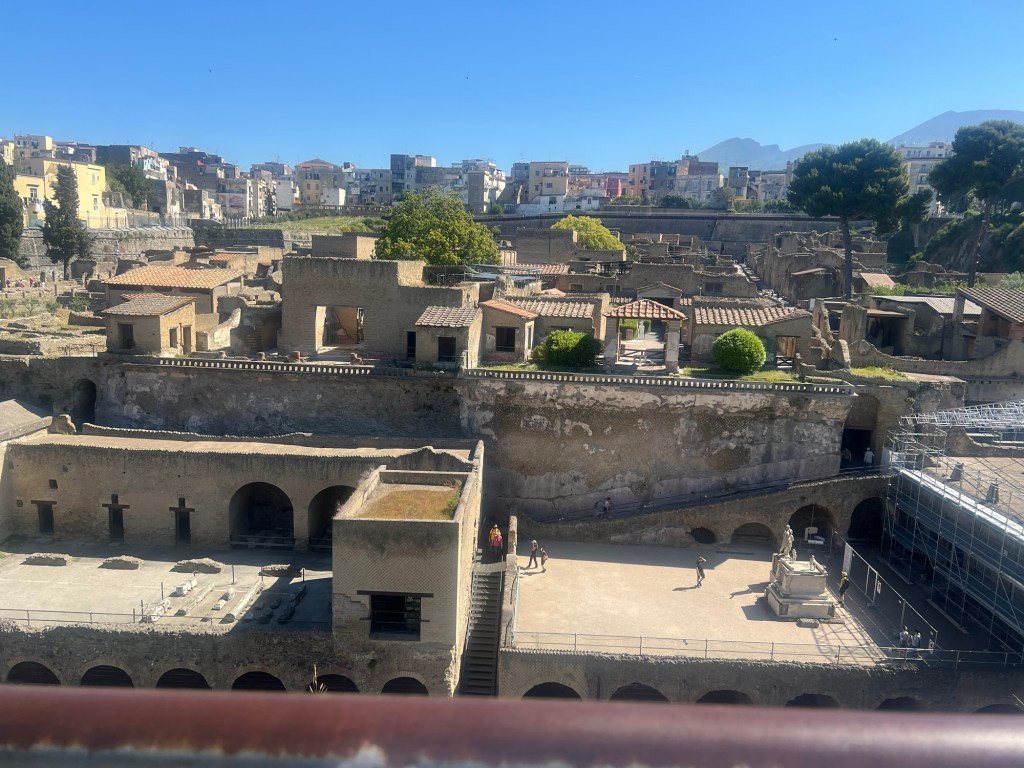
The arches that are just visible at the front of the picture are the old sea front. The sea is now at least 2km away.
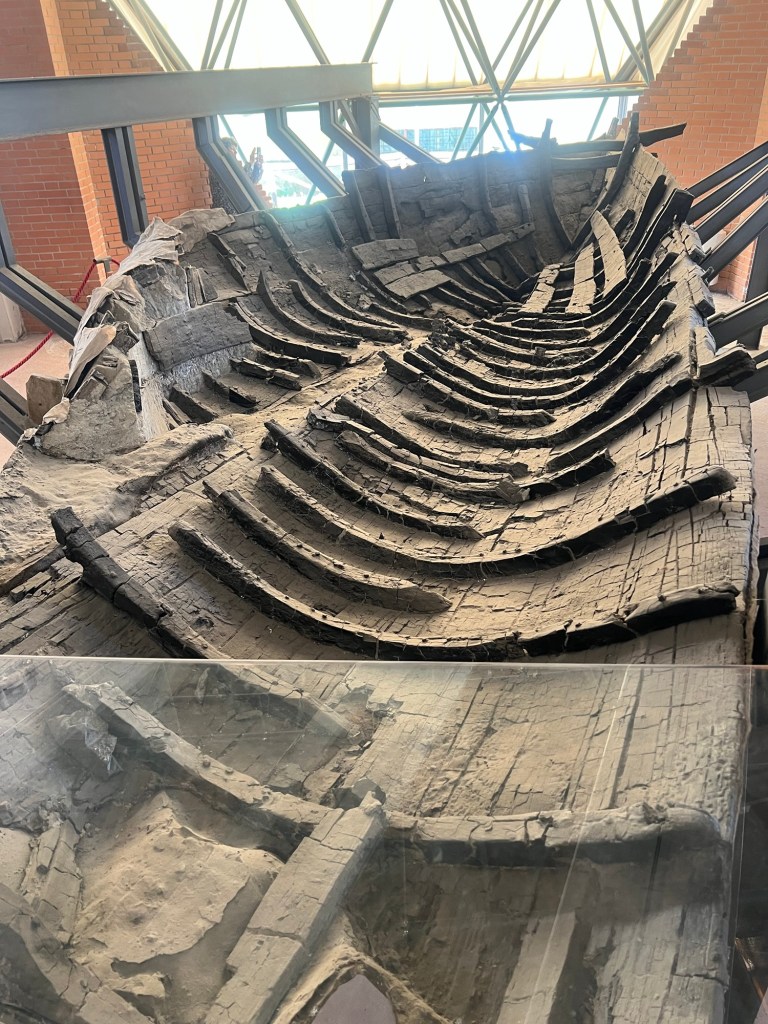
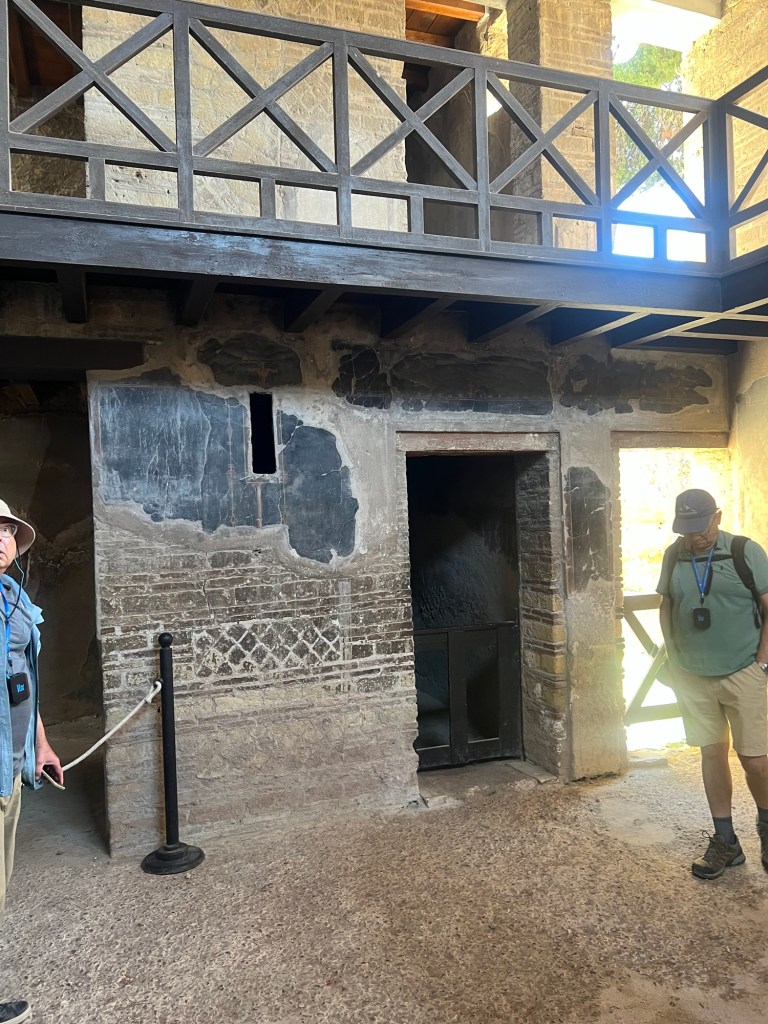
Herculaneum was destroyed by the first pyroclastic flow – of 6 – which gave the citizens less time to get away than those at Pompeii. This was followed by a landslip which buried the place under 20m of topsoil. This created an anaerobic environment which led to the preservation of organic materials. It also meant that, despite a bit of tunnelling, there was no archeological digging until the 1920s when Mussolini said ‘make it so’.
Apparently, no one believed Pliny’s account of the various pyroclastic flows until the 1980s when Mount St Helens in the US exploded in exactly the same way.


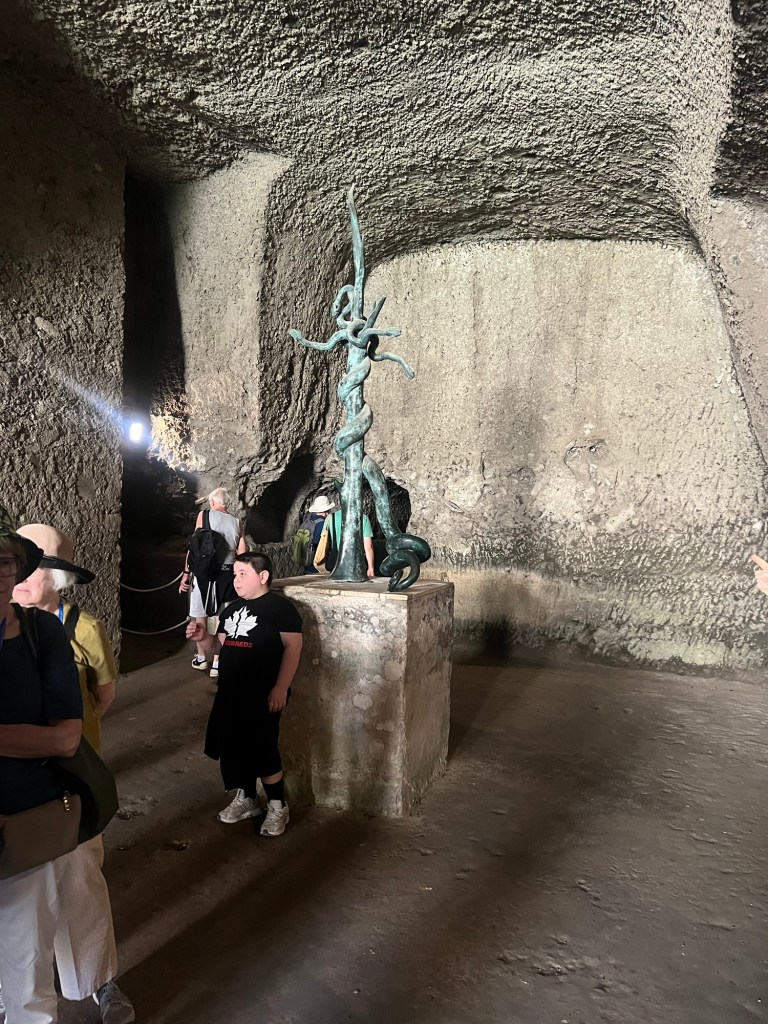
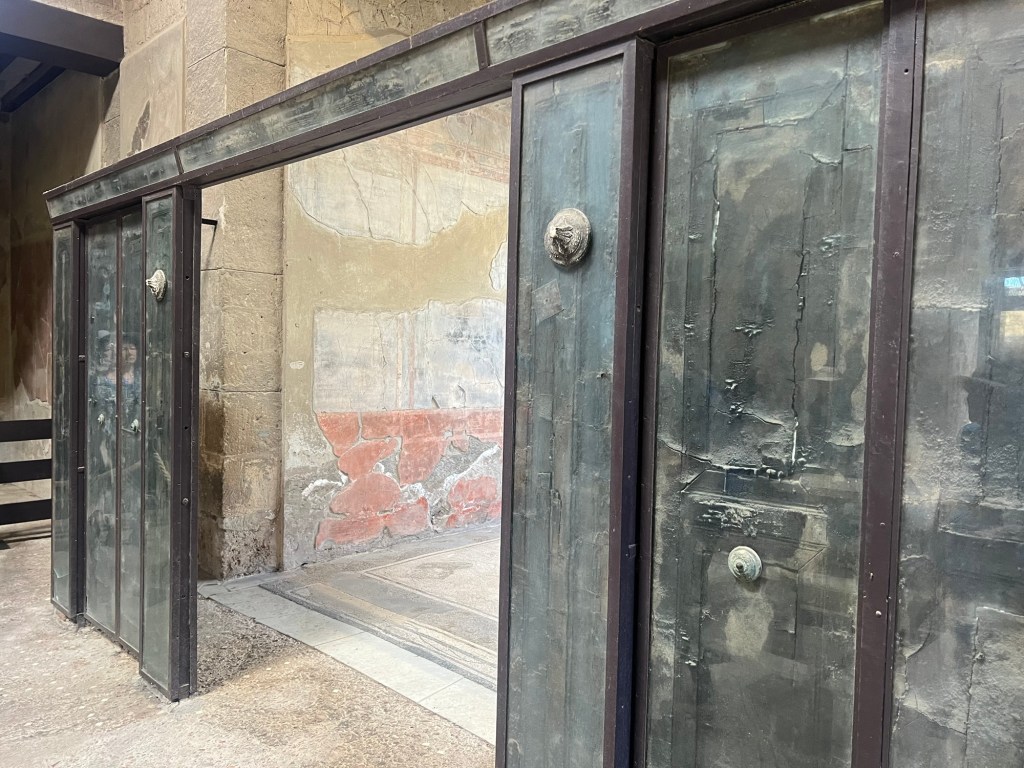
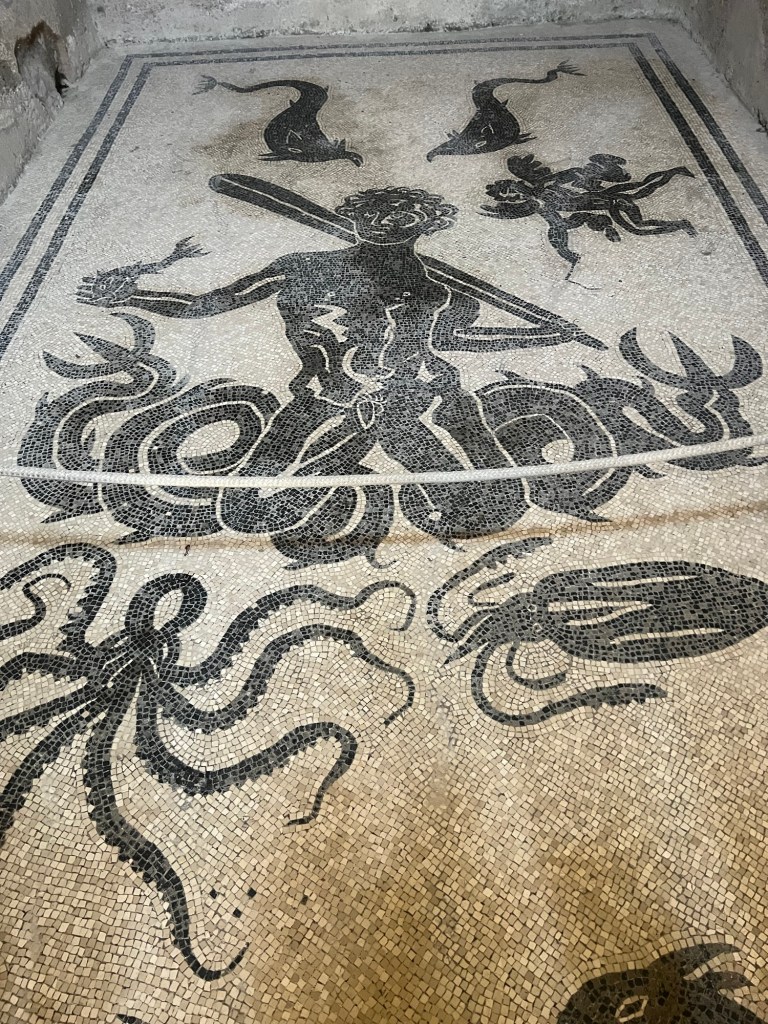
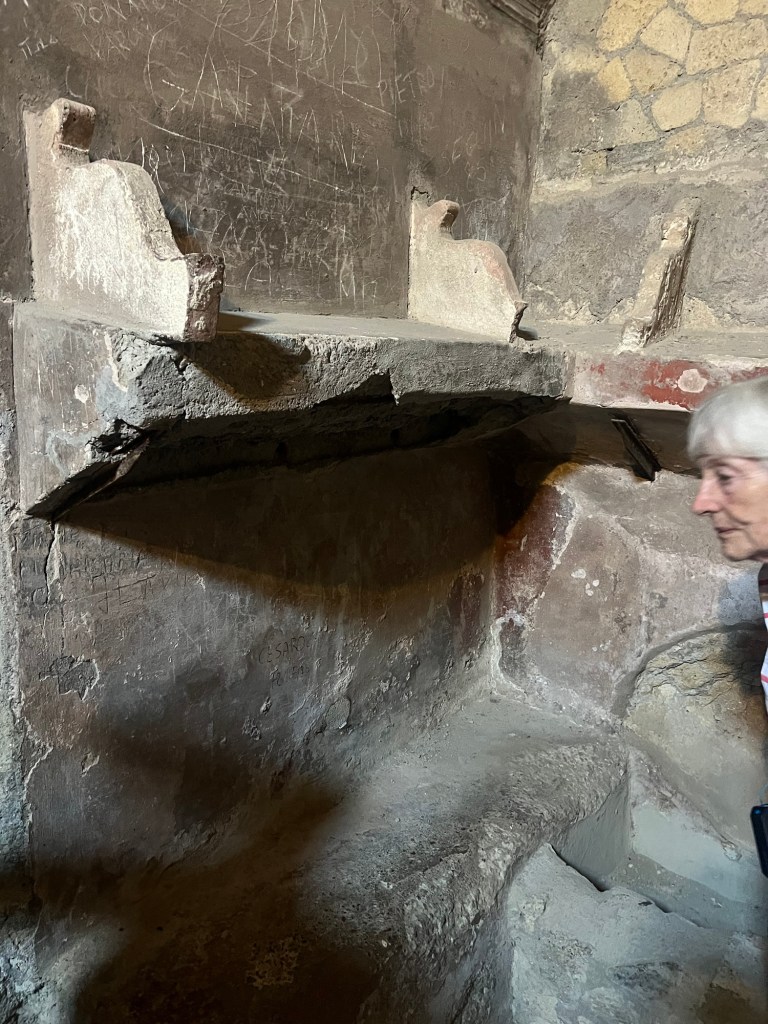
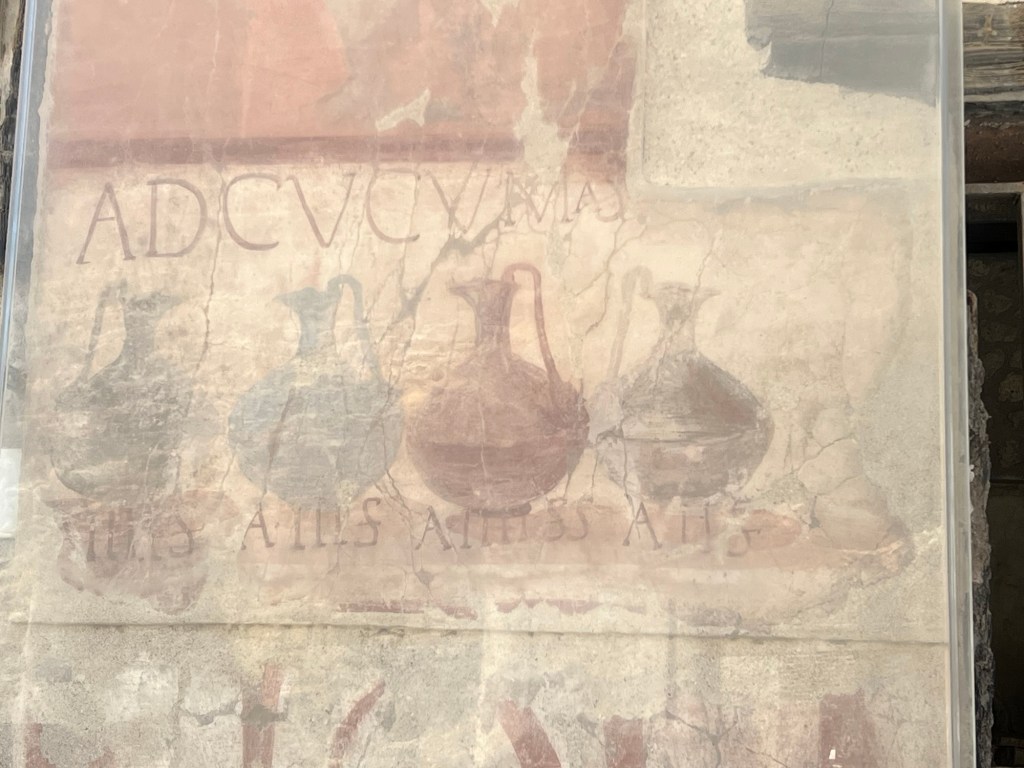

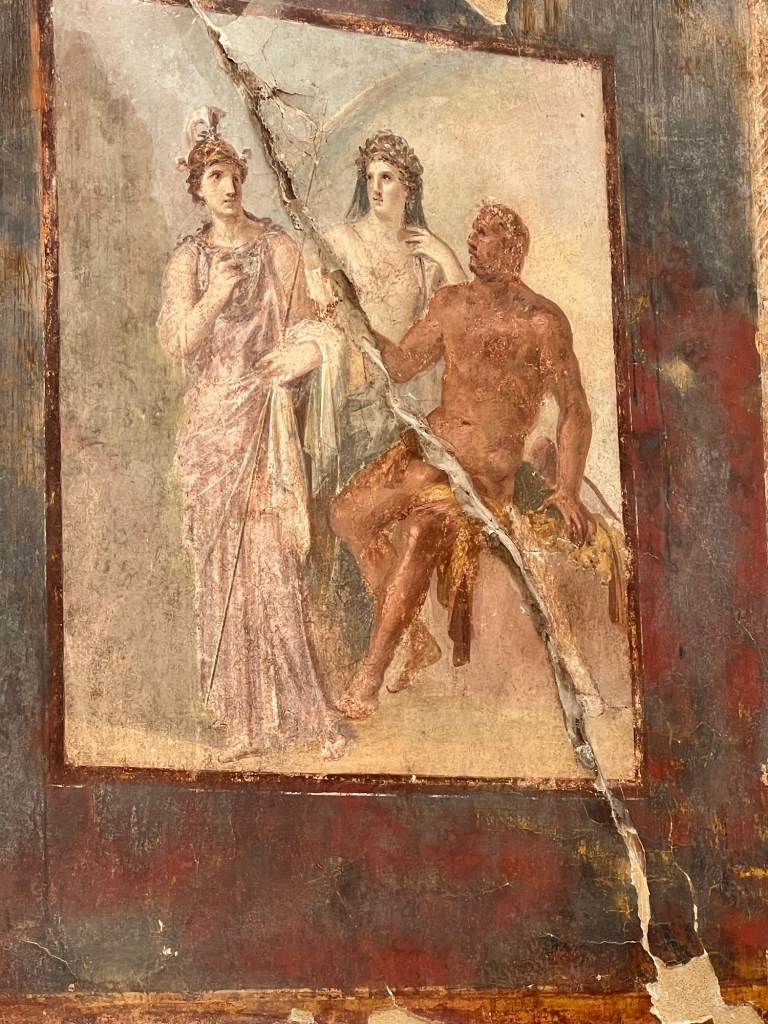
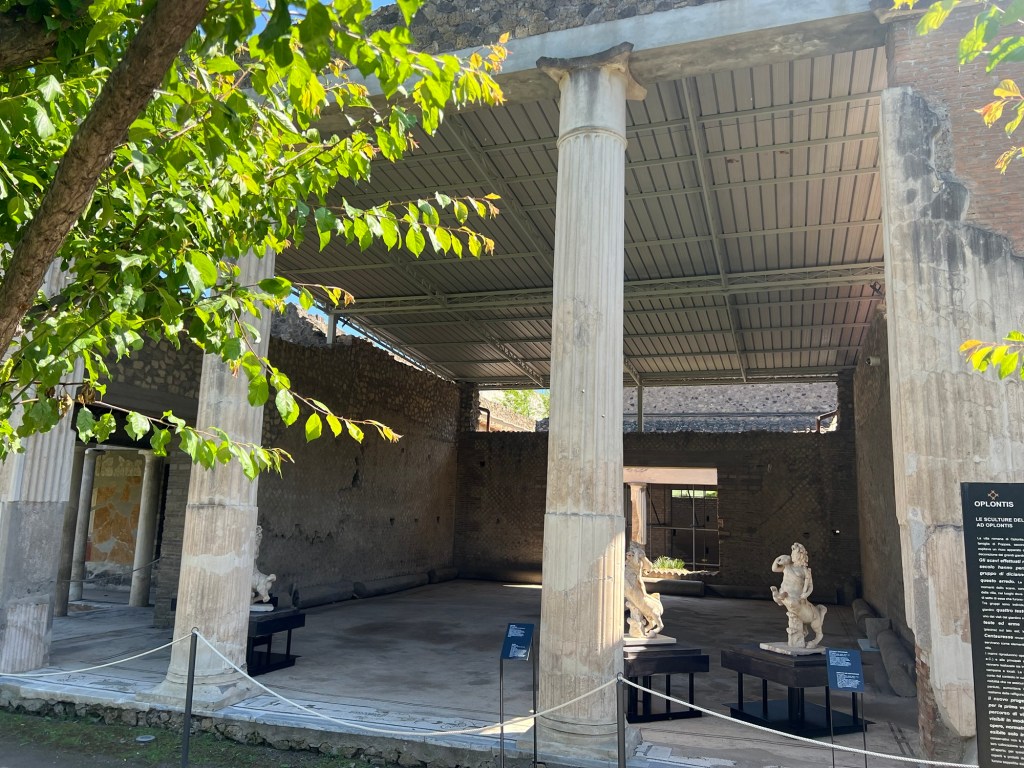
After Herculaneum we went to Oplontis and the House of Poppaea. There is very little proof that this belonged to her (second wife of Nero, in case you were asking) but it was definitely a very high status villa – half of it is still underground – in an area where other emperors and their families went for their holidays. Again, it would have been right next to the sea but is now quite a long way back.
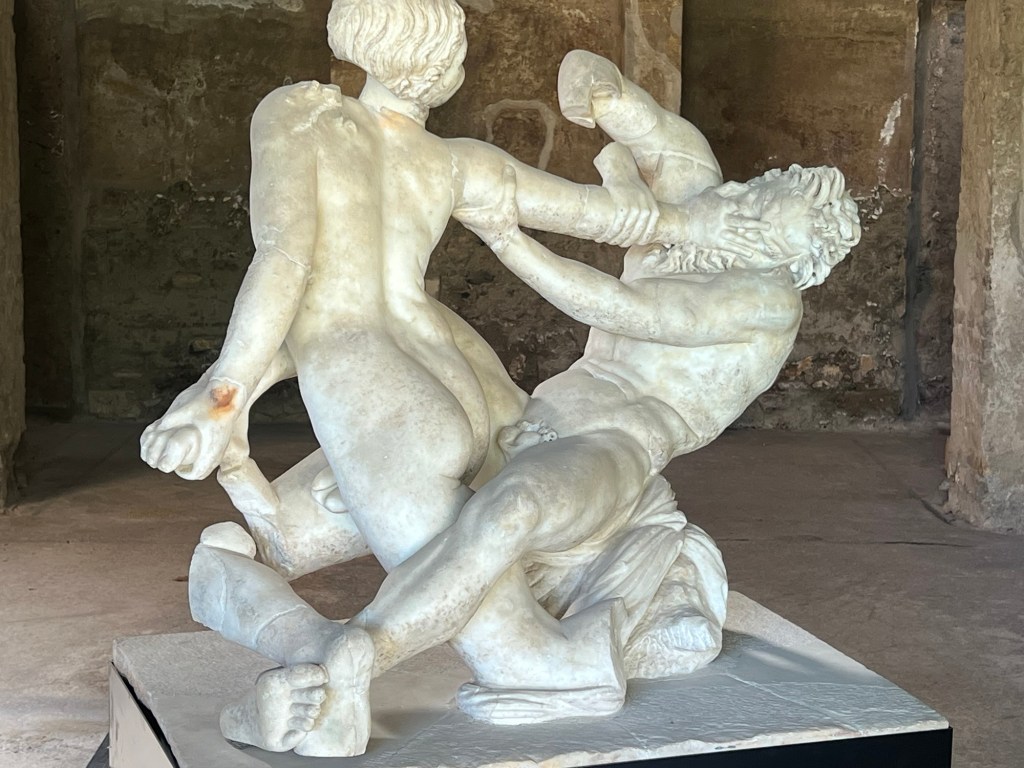
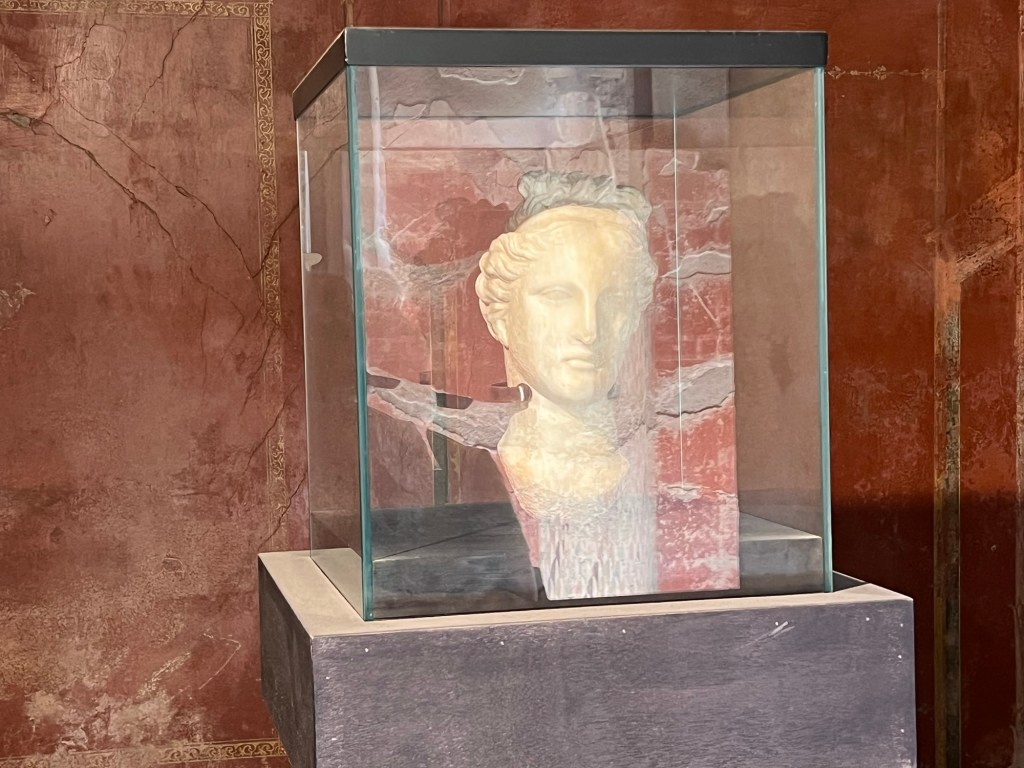
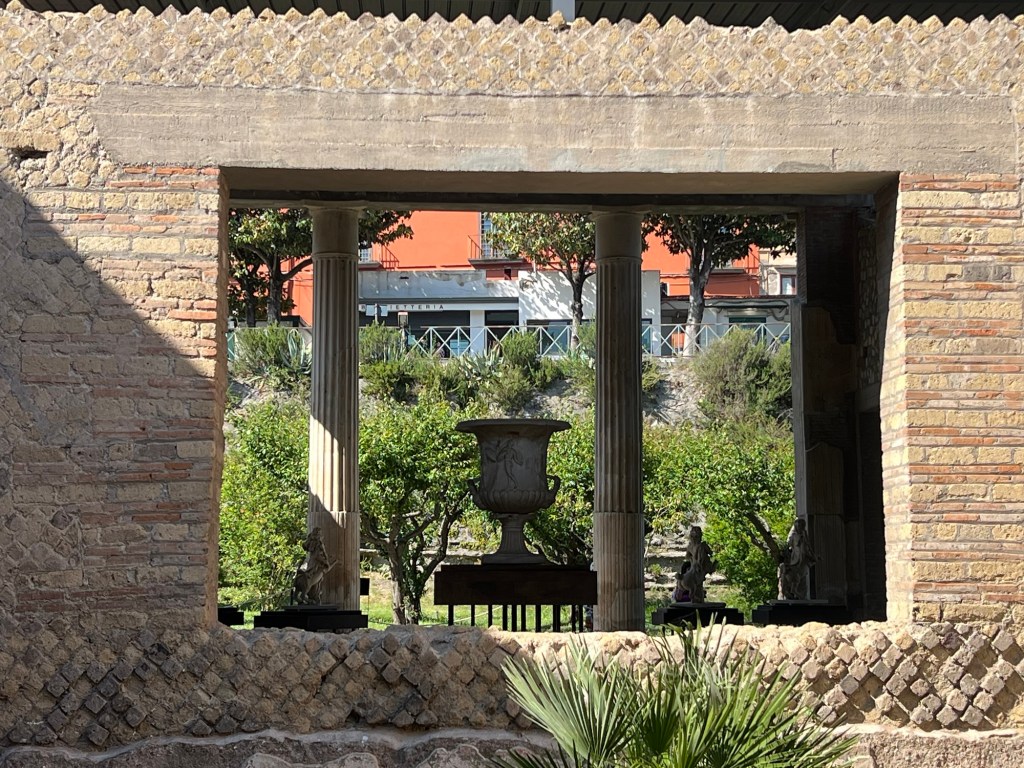
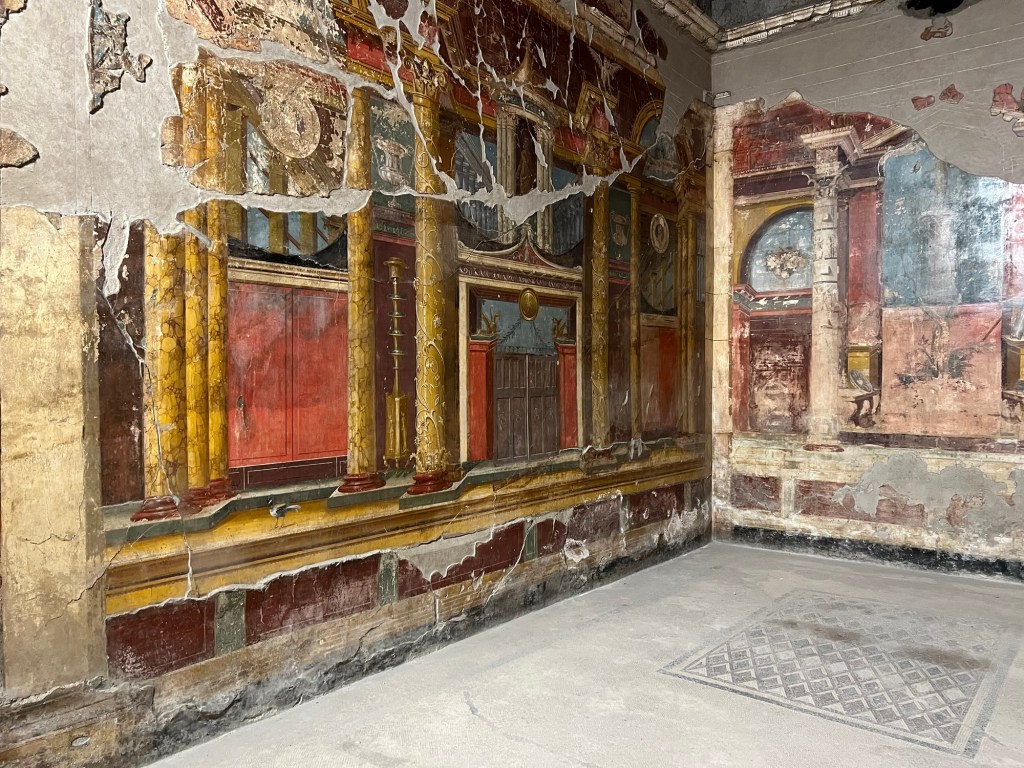
And, just to change the theme a bit, I am adding the final love duet from Monteverdi’s ‘L’incoronazione di Poppaea’.
 The Retirement Travels
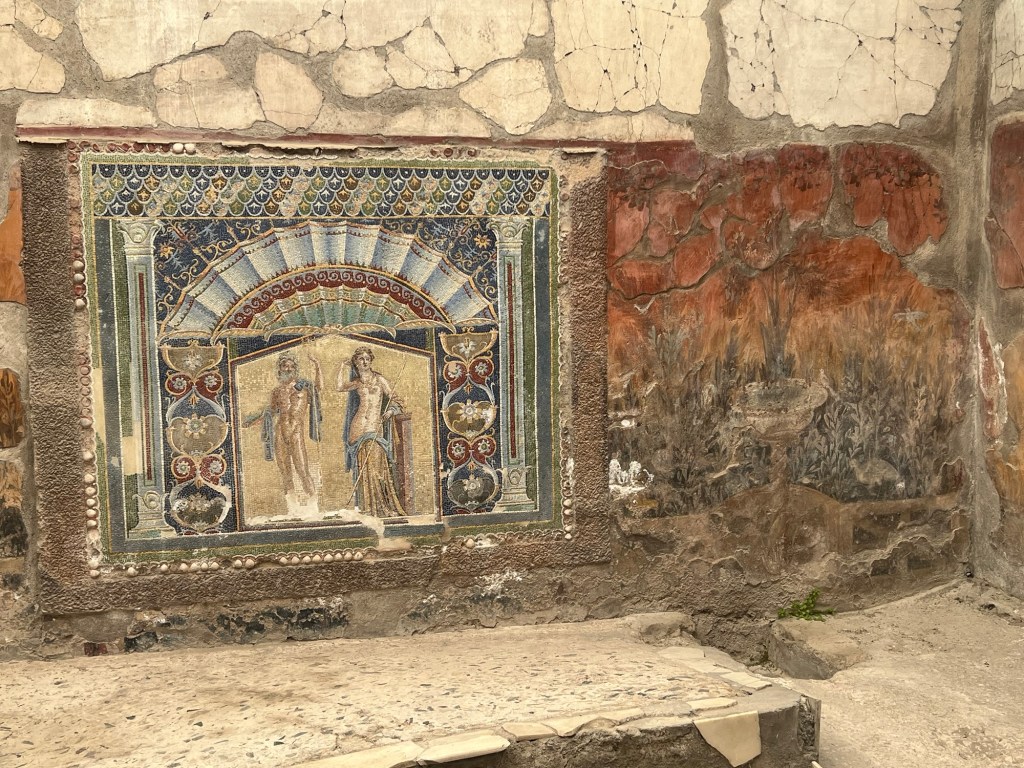
I meant to say something about the Pompeii garden fountain surround, but this one is even more elaborate. This could be where the late C18/early C19 passion for shell grottos in grand houses came from.
The rope is stunning.
Thanks for letting us share.
LikeLiked by 1 person