So this morning I sat around reading the paper and listening to Radio 3. So much so ‘retired people on holiday’ to quote my brother.
This afternoon Anne and I went on another tour. A brief history of Montpellier. There were some overlaps with yesterday but not many.
Firstly, water. In the 18thC the king decided that Montpellier needed a piped water system. An aqueduct was built, bringing the water from 14km away to a structure called the Chateau d’Eau
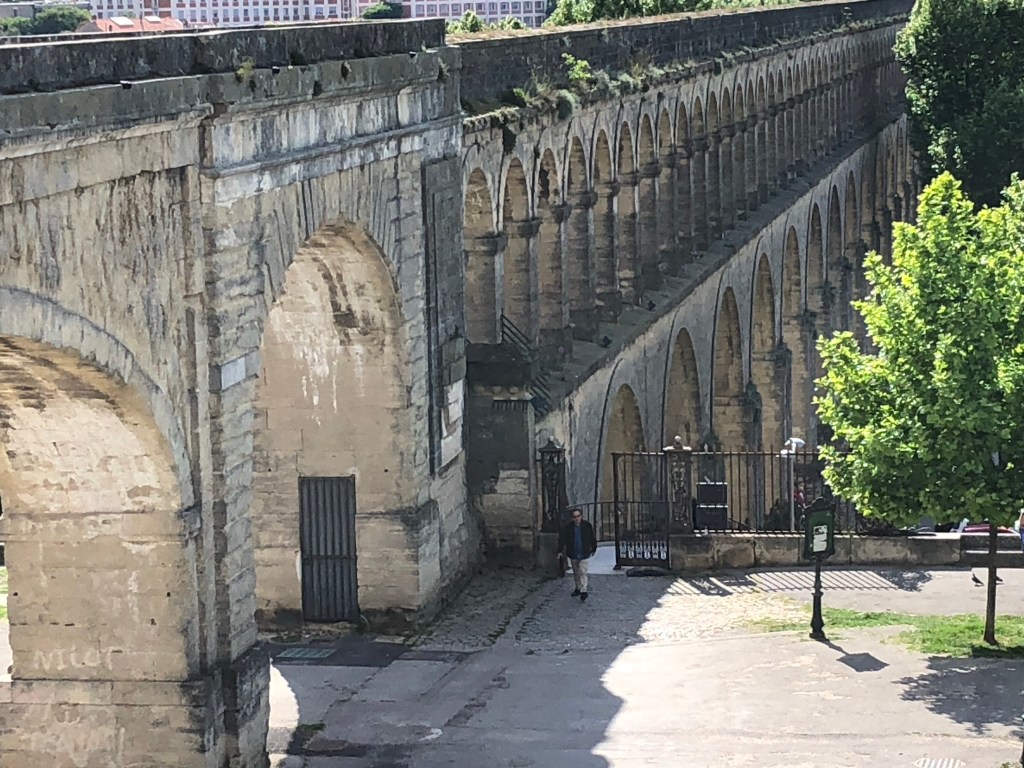
. It was then piped around the town, directly to the houses of the rich and to three fountains for the use of the poor. The expansion of the town in the 19thC meant that it no longer met the needs of the people and it was discontinued. The aqueduct became a historic site in 1954.
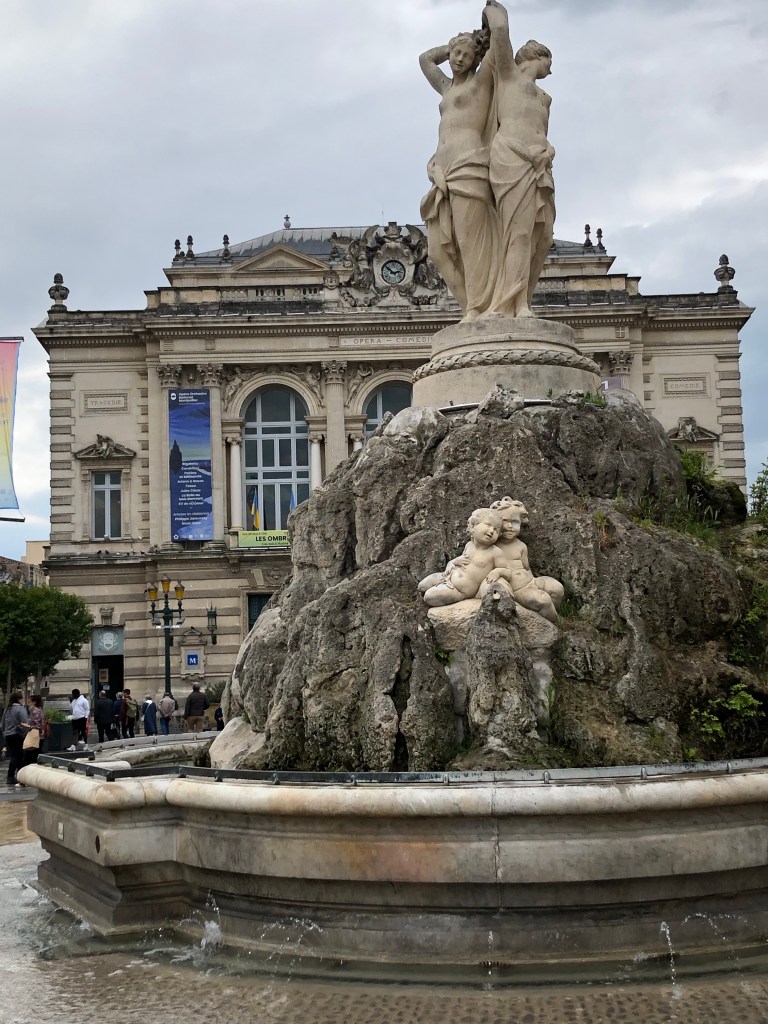
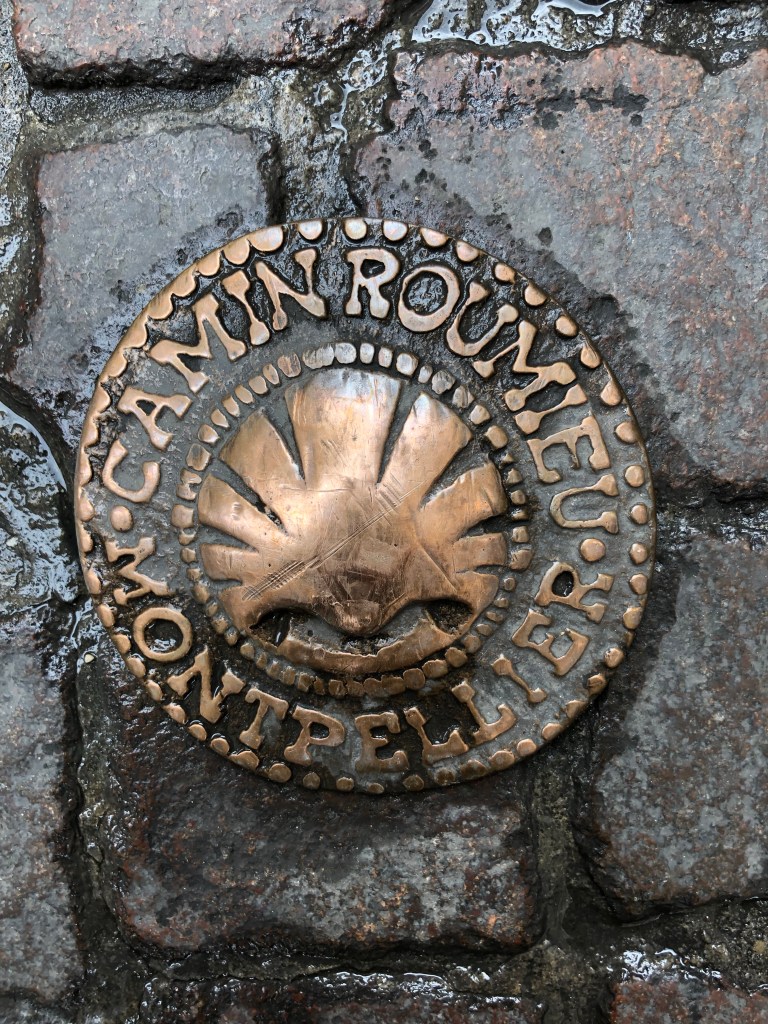
Montpellier was on the pilgrim route from Santiago de Compostella to Rome. When the streets were pedestrianised in the 80s, these commemorative plaques were put down on the route.
Because of the many wars of religion, (and the revolution) there are squares in the old town where there used to be churches. One of these was Notre Dame des Tables where the money changers used to put up their stalls in order to fleece the pilgrims. This was destroyed in the revolution and, although it was rebuilt, it wasn’t in the same place.
Alongside the pilgrim way is a house (and shoe shop) on the site of the apparent birthplace of St Roch, patron saint of Montpellier. Apparently he was an early doctor, specialising in the plague. He cared for many people without getting it but then succumbed and went off to a wood to, as he thought, die. A dog found him and brought him a piece of bread. There is apparently a well in the shoe shop which is considered holy. https://fr.m.wikipedia.org/wiki/Roch_de_Montpellier
Following the pilgrim way we went to what had been the Jewish quarter of the town. The town was founded in the 10thC and there were Jews here from the start. See https://jguideeurope.org/en/region/france/languedoc/montpellier/ for more details
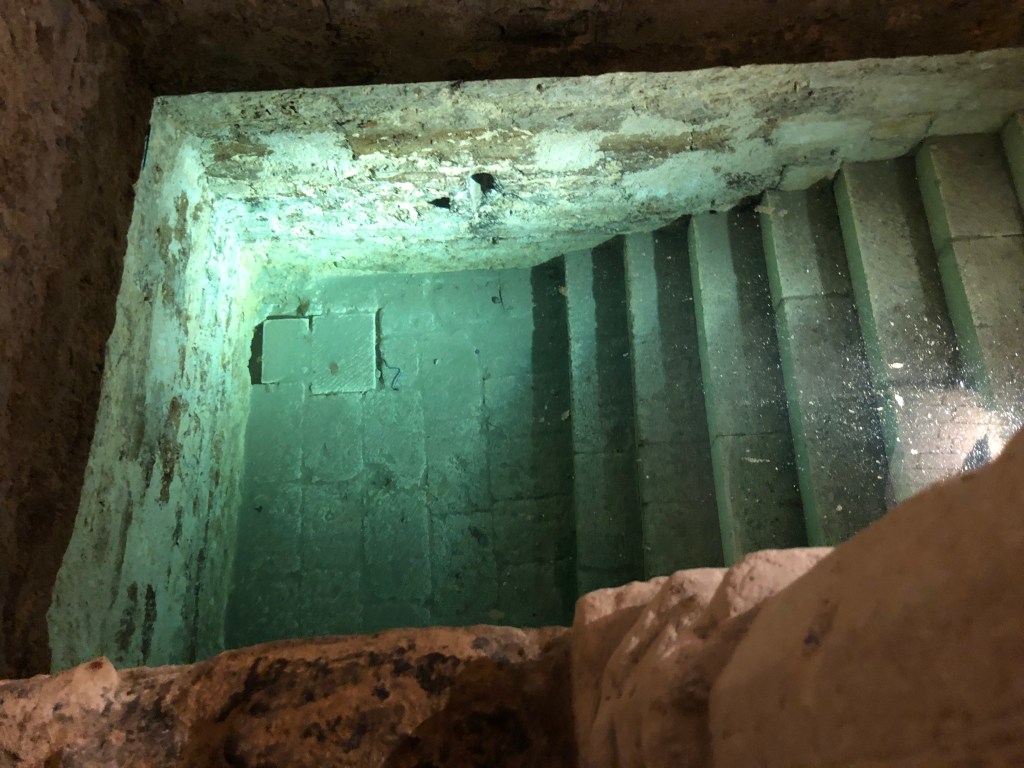
After the expulsions in the 14thC, the synagogue, school etc was destroyed. However, in 1980, it was discovered that an apparent well in the basement of an old house was actually a Mikva or ritual bath. This is now a historic site and can be seen on organised tours like ours.
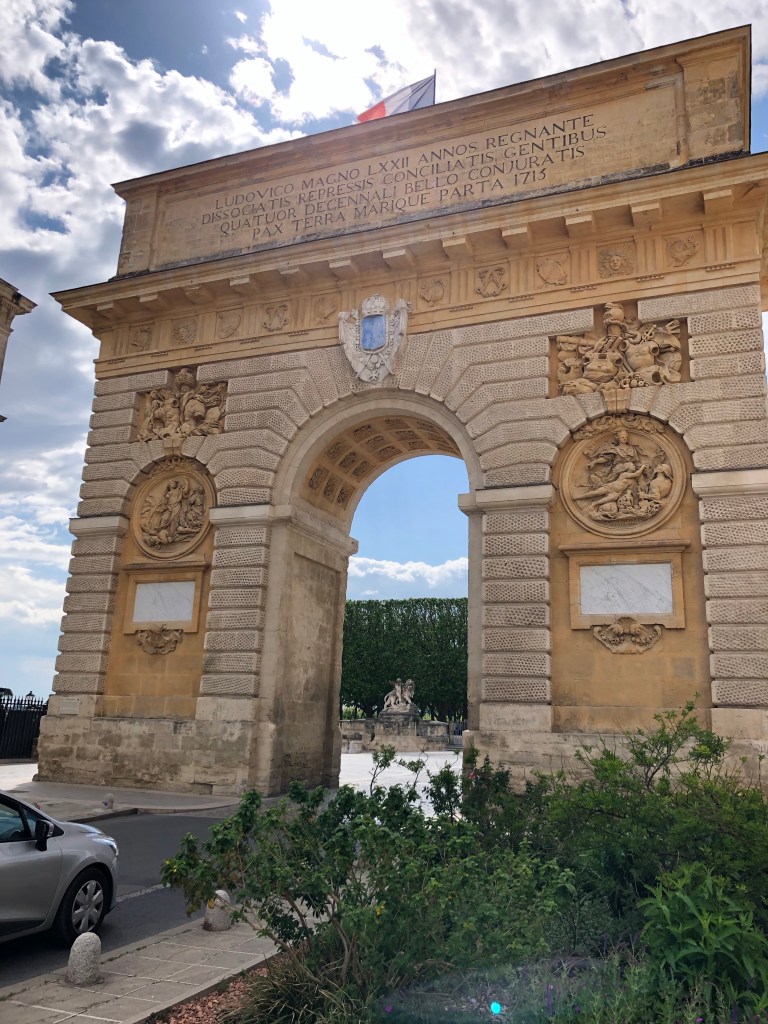
The final event of the tour was the Arc de Triomphe. This is actually right next to the Chateau d’Eau, but I thought you might like things in a logical order. It was put up in 1695 to celebrate Louis XIV’s reign. When he died in 1715, a plaque was added celebrating the fact that his reign had been 72 years long. This was also a pointed declaration of loyalty and Catholicism following the repeal of the Edict of Nantes. https://en.m.wikipedia.org/wiki/Edict_of_Nantes
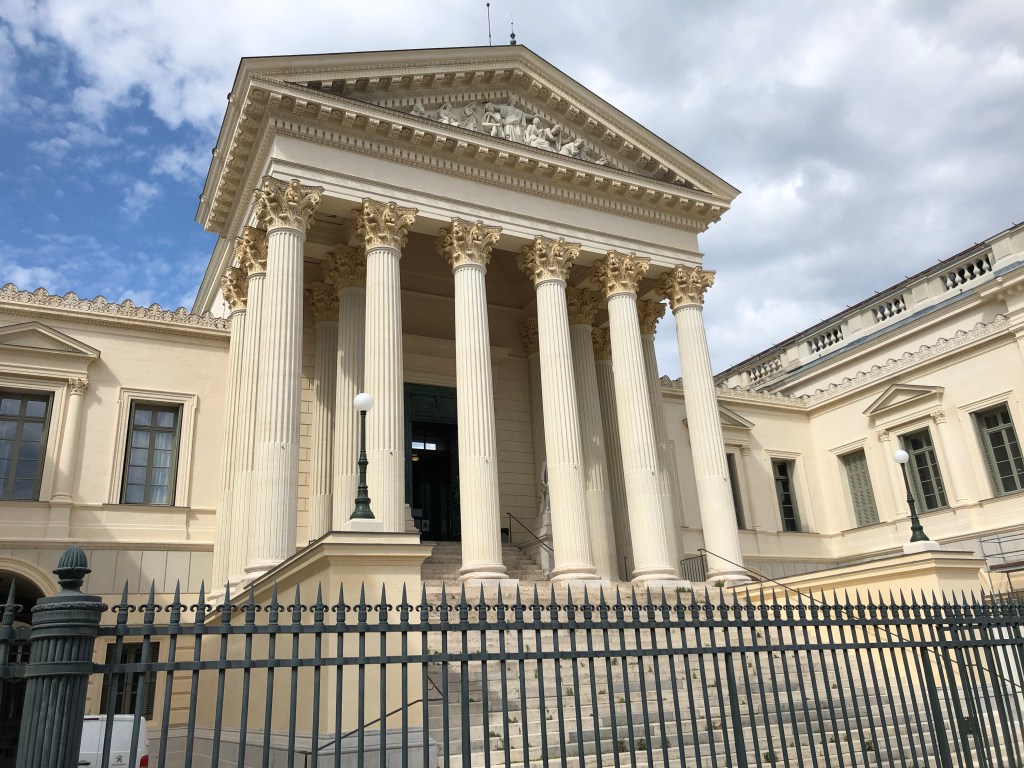
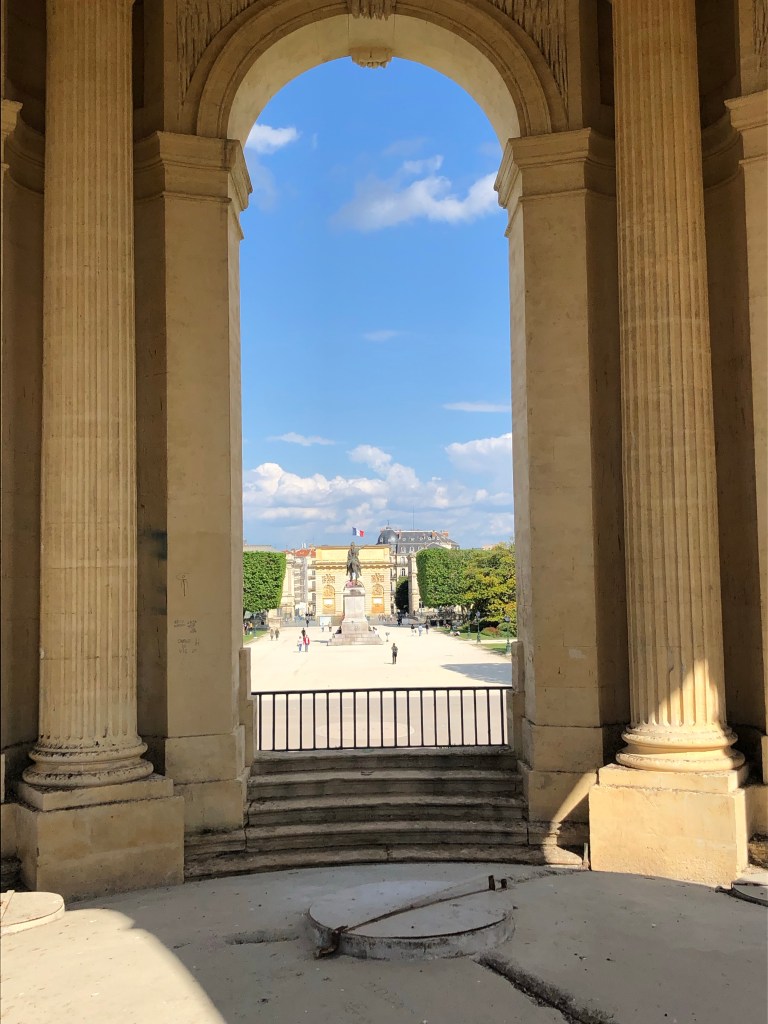
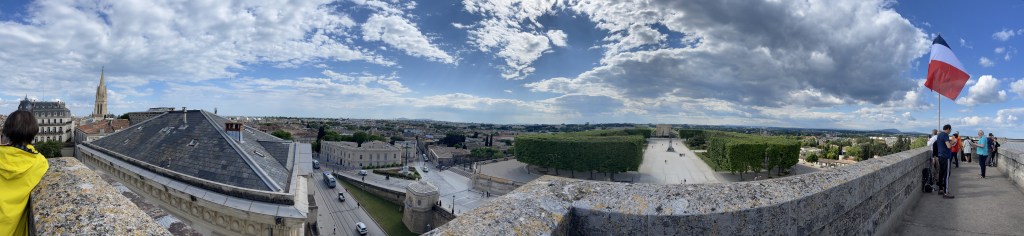
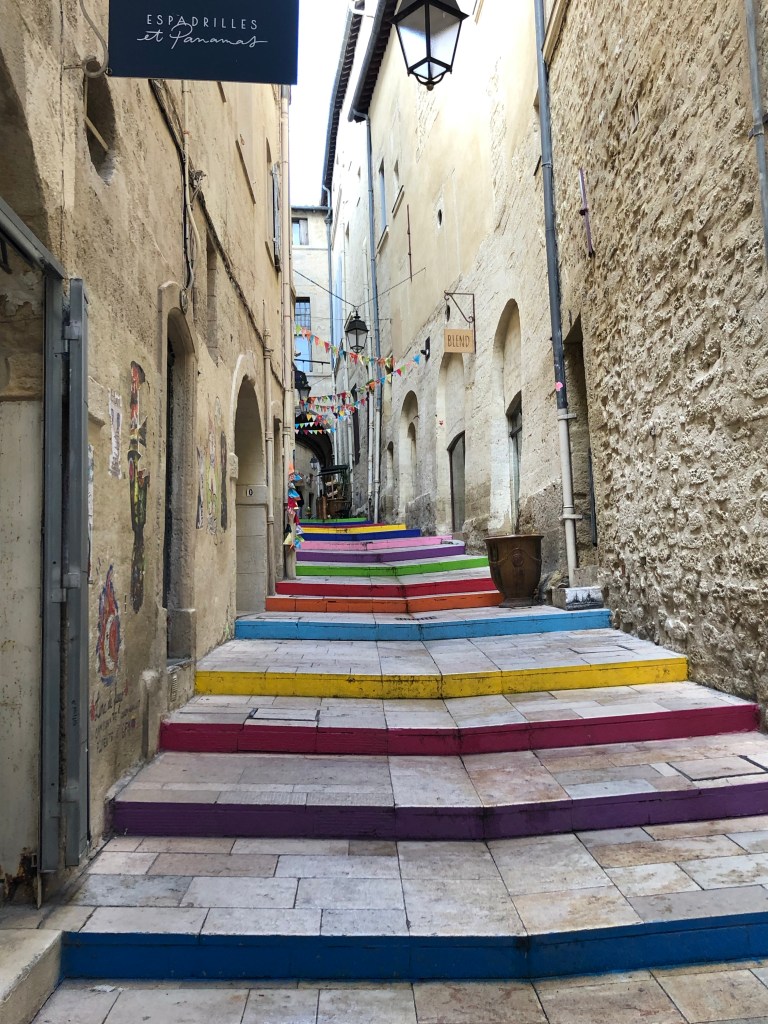
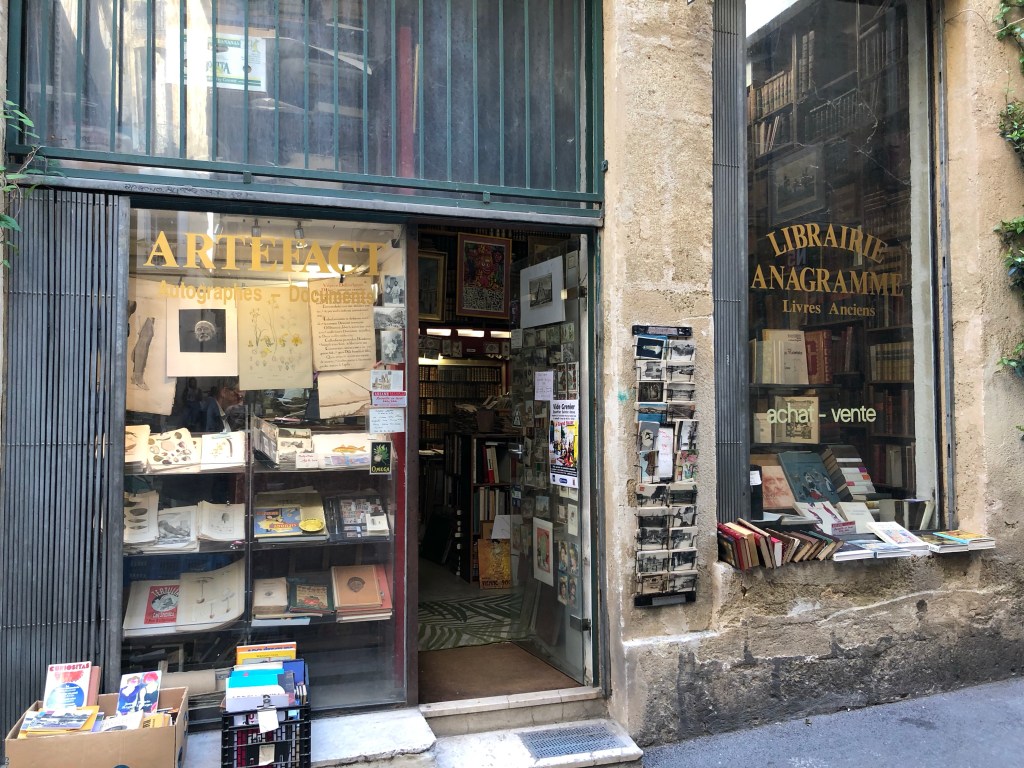
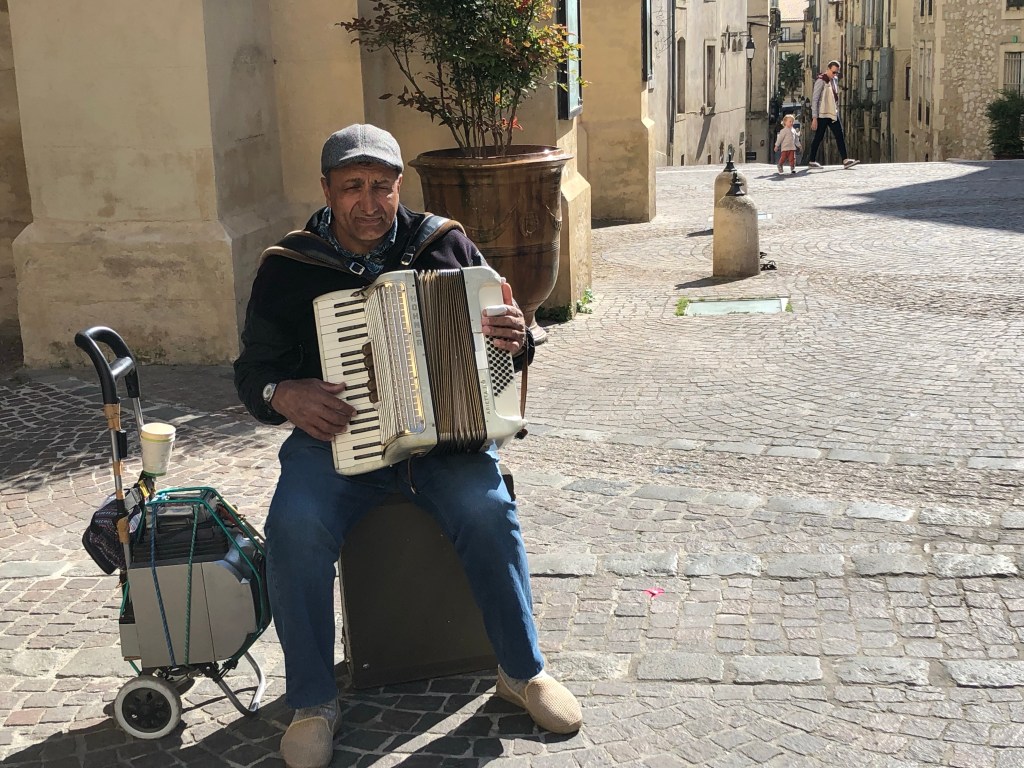
There are also a few more pictures of the streets.