Despite the comfort and facilities of the hotel, not only does other people’s plumbing echo in my bathroom when they run the shower but I am next to the lift! Always travel with earplugs should be my motto.
Today was a long art history day.

Both Rubens and Van Dyck worked in Genoa and the aristocratic families during the 16, 17 and 18Cs were rich enough to build enormous palazzi and fill them with art. Of course, some of it got sold off, some passed on to other members of the family and there was quite a lot of damage done by (whisper it) allied bombardment during the 2nd World War, but enough remains to make an impressive collection of museums. My feet are feeling the effects.
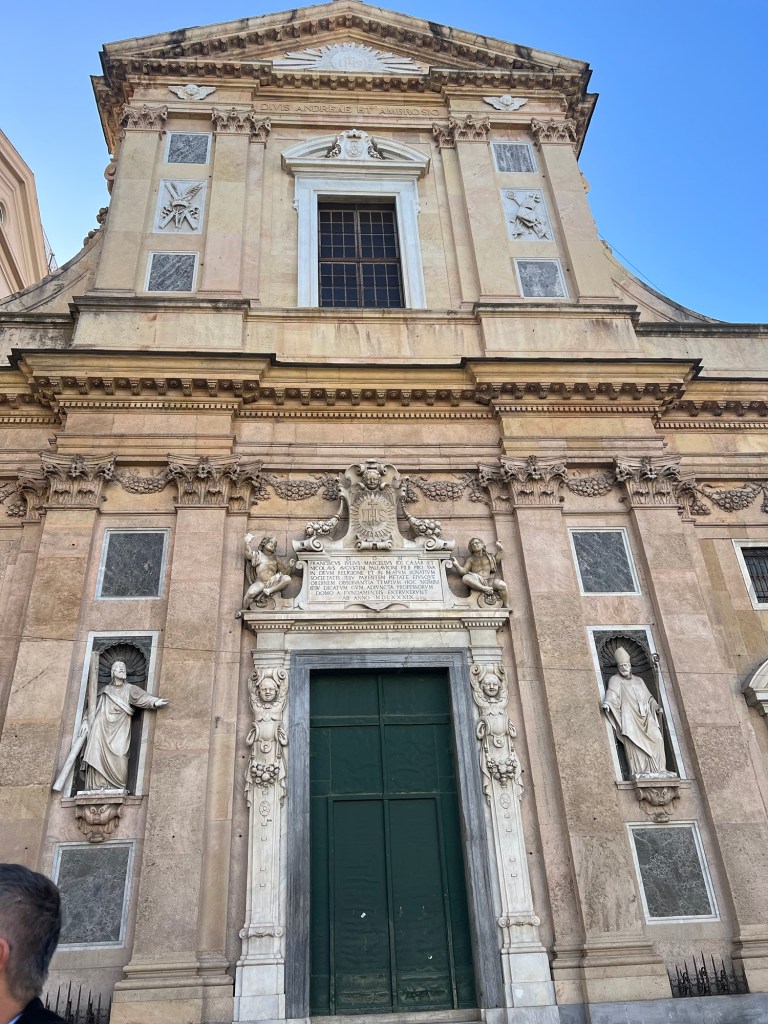
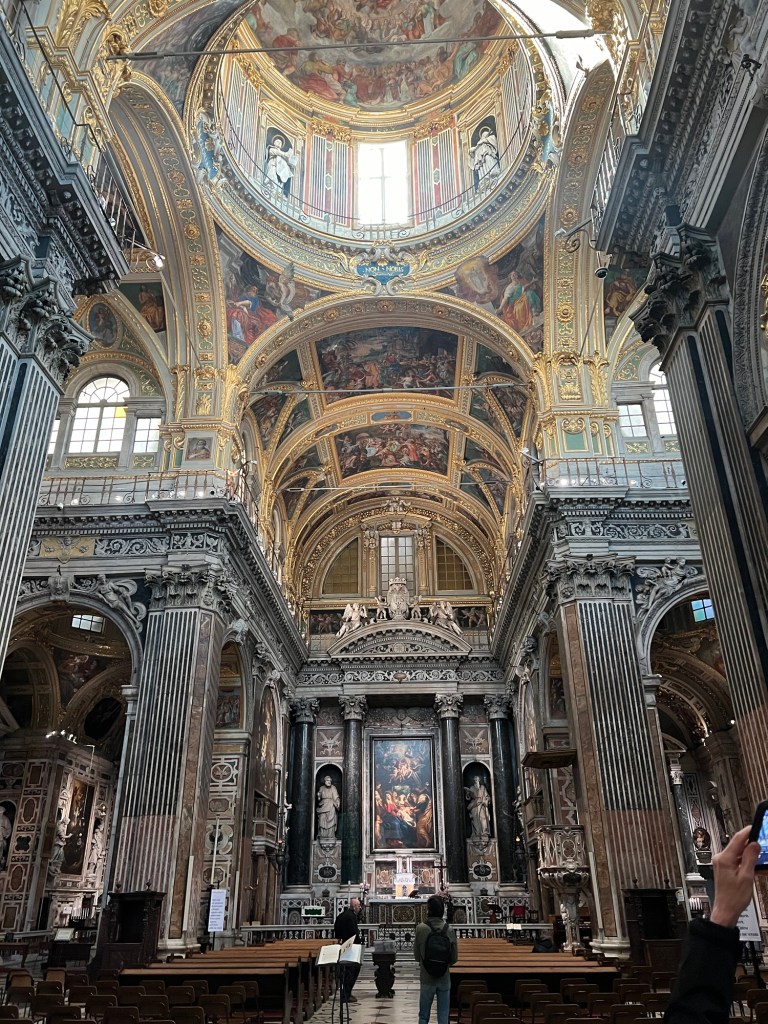
Firstly, to the Gesu, the Jesuit church. Luca, the art historian, told us a wonderful story about how, when the Jesuits were thrown out of Spain in the 18C, they were put on boats and sent to Rome. The Pope refused to admit them and turned the guns on them before they could disembark. He says there’s a novel in there somewhere. I think he’s right.
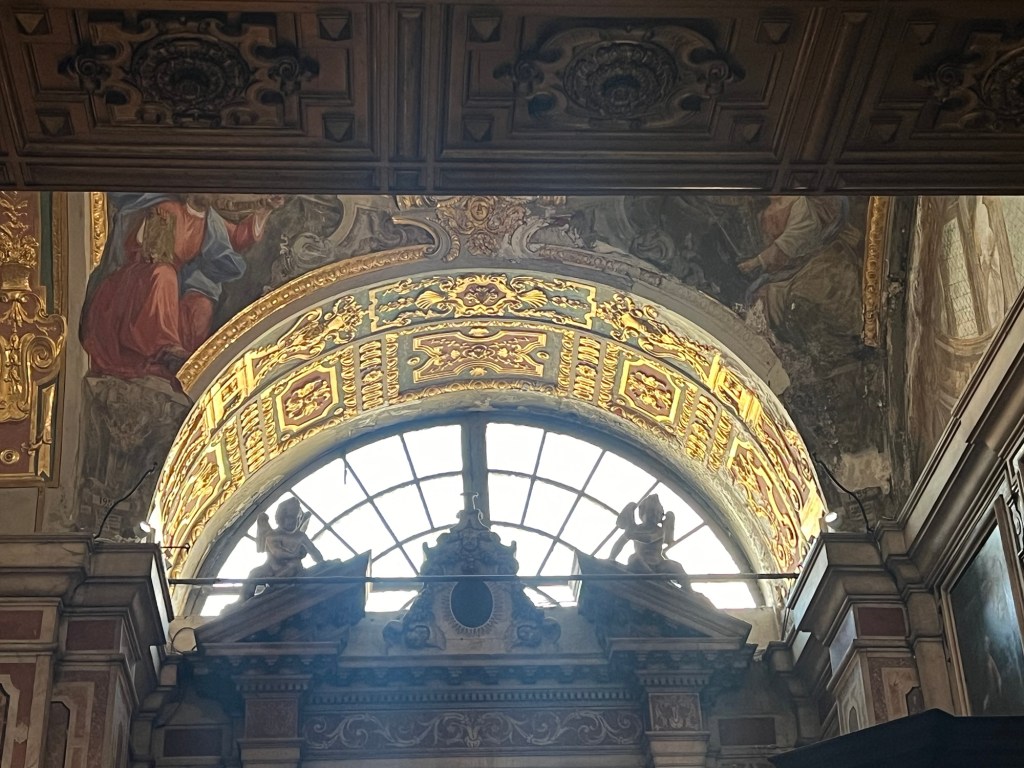
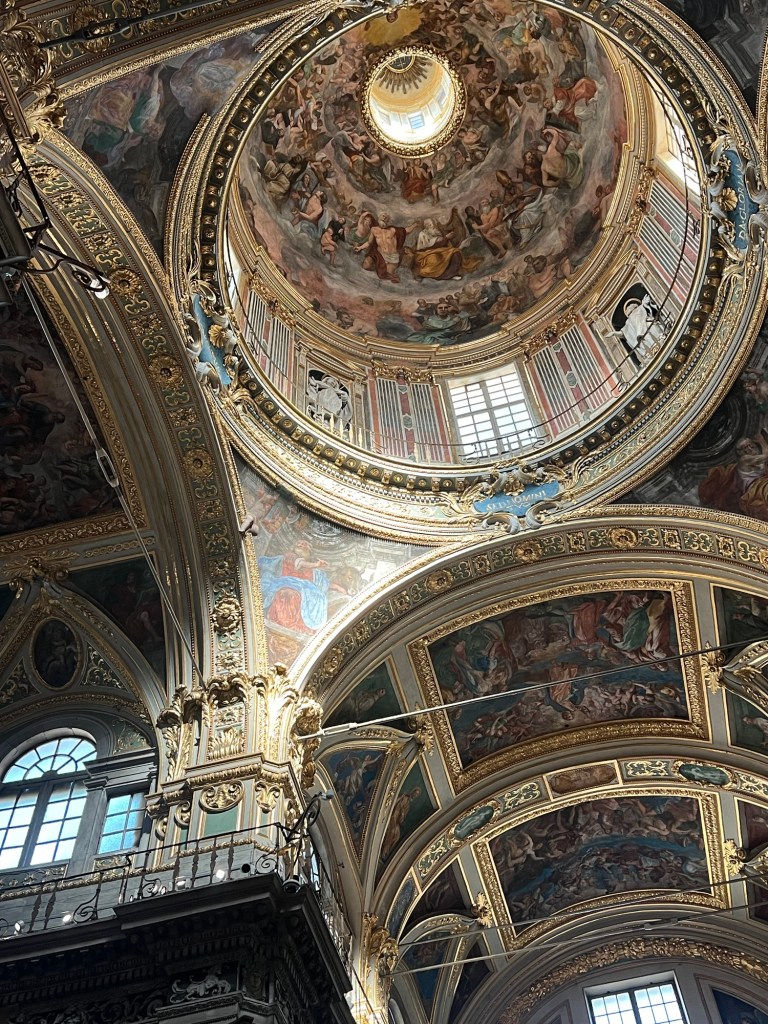
The church is very much of the ‘if it moves, gild it’, school of baroquerie. They have two Rubens’.
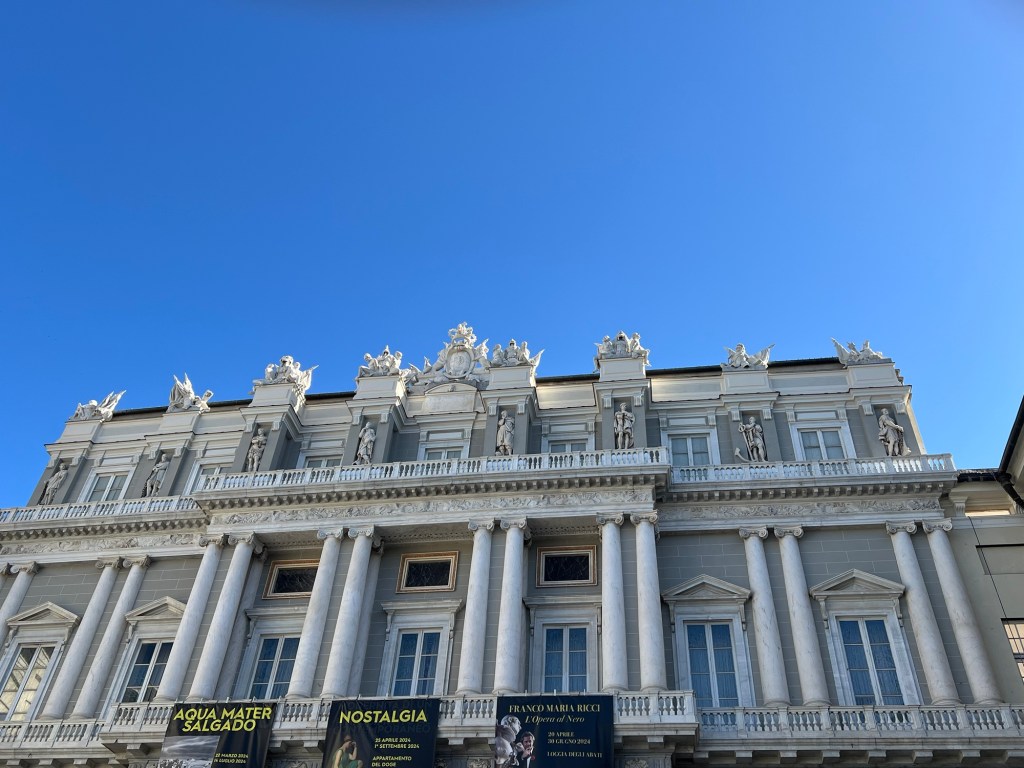
The centre of town is full of palazzi, with or without civic functions. This one, the former home of the Doge, is now used for exhibitions.
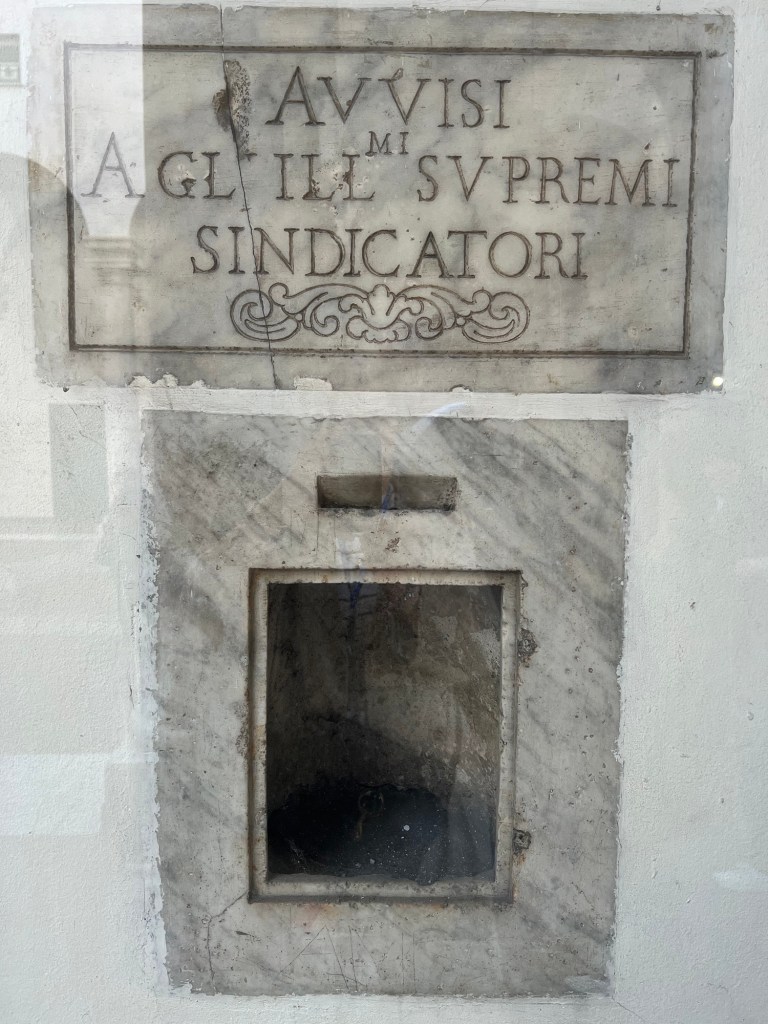
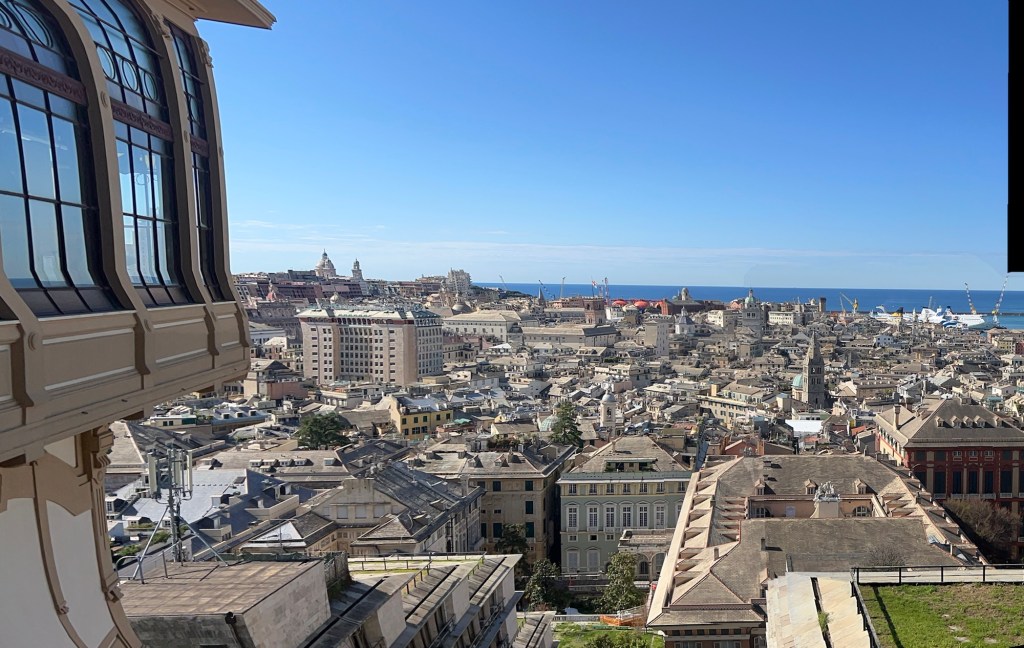
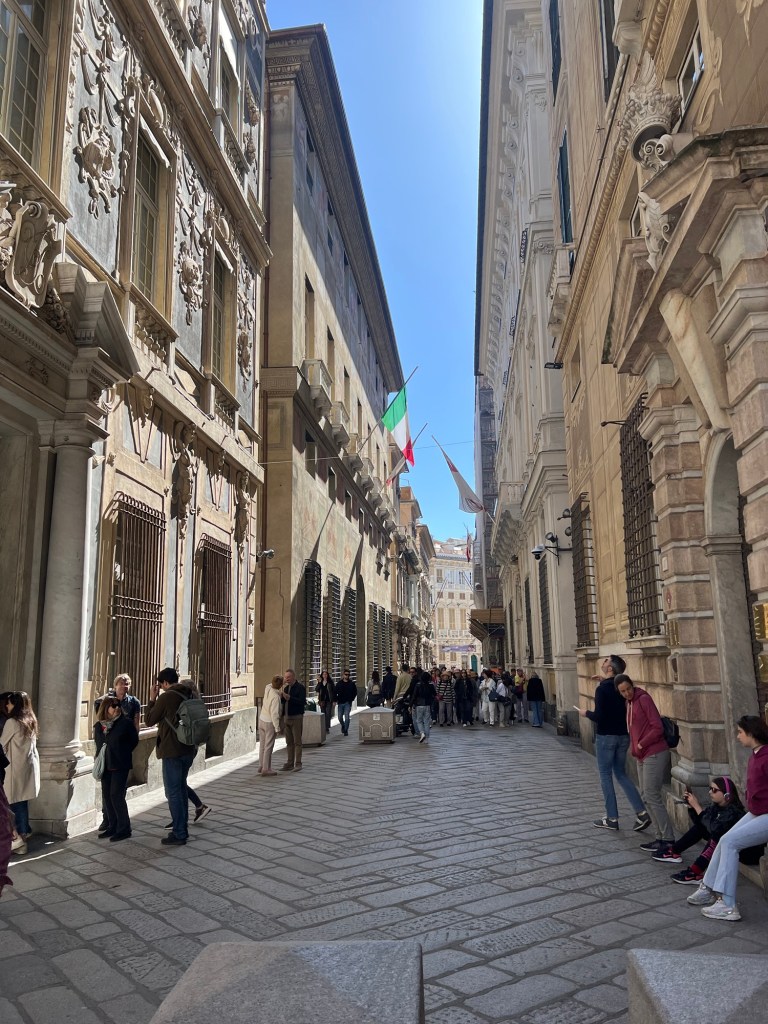
Then to the Strada Nuova (as it was called when built in the 16C) or the Strada Garibaldi (as it is today). Lined with palaces, one or two still privately owned. The others are banks, offices or museums
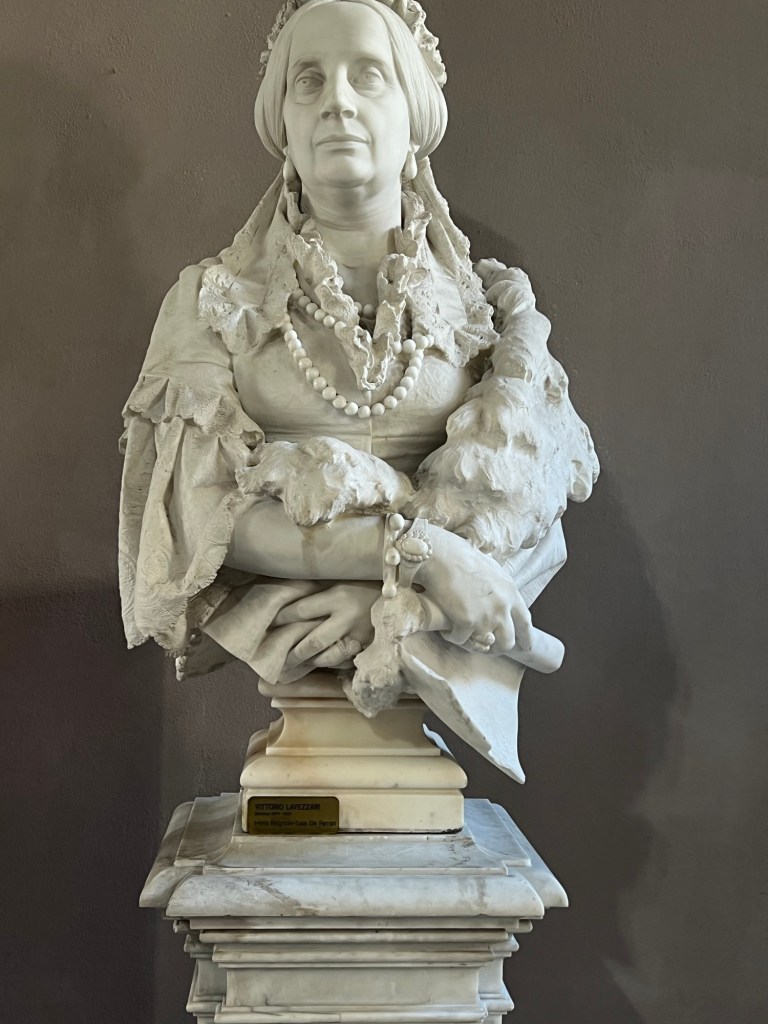
At the end of the 19C, one woman, the Duchess of Galliera, gave two of these palaces to the state of Genoa. She also left the Hotel Matignon in Paris to be the Prussian Embassy. After the First World War it was taken as reparations and became the official residence of the French Prime Minister.
The Palazzo Rosso was badly damaged in the Second World War (oops) and was done up as an art gallery in modernist style in the 1950s.
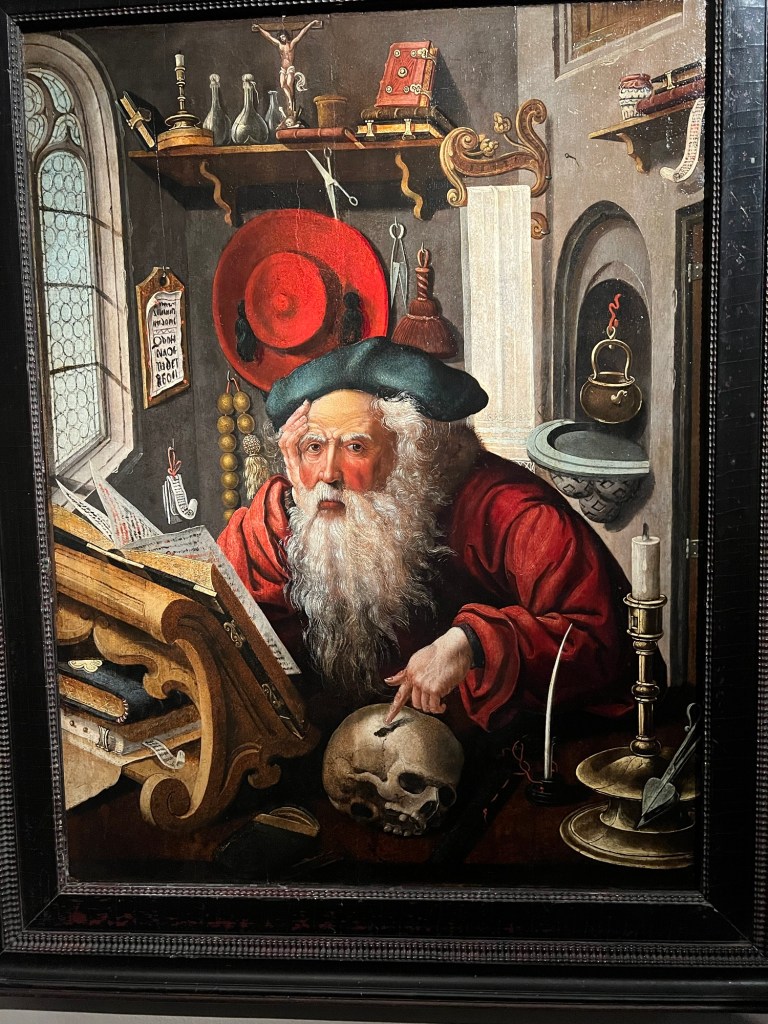
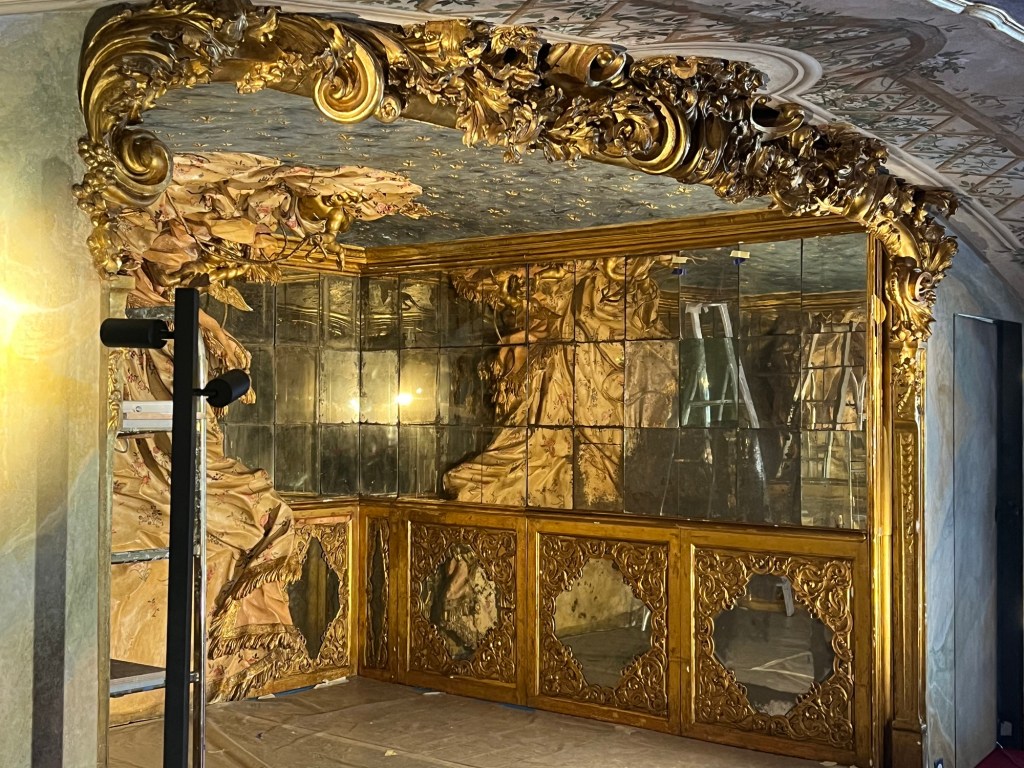

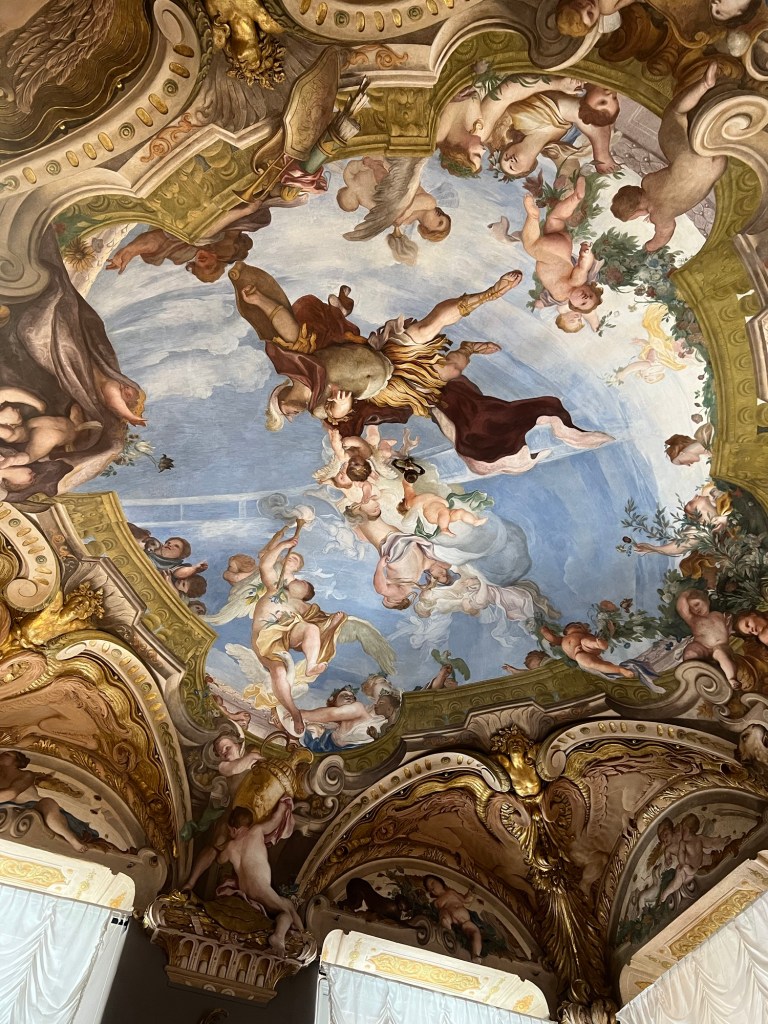
The Palazzo Bianco, so called not because it is white (although it is) but because it is not red, is over the road from the Palazzo Rosso.
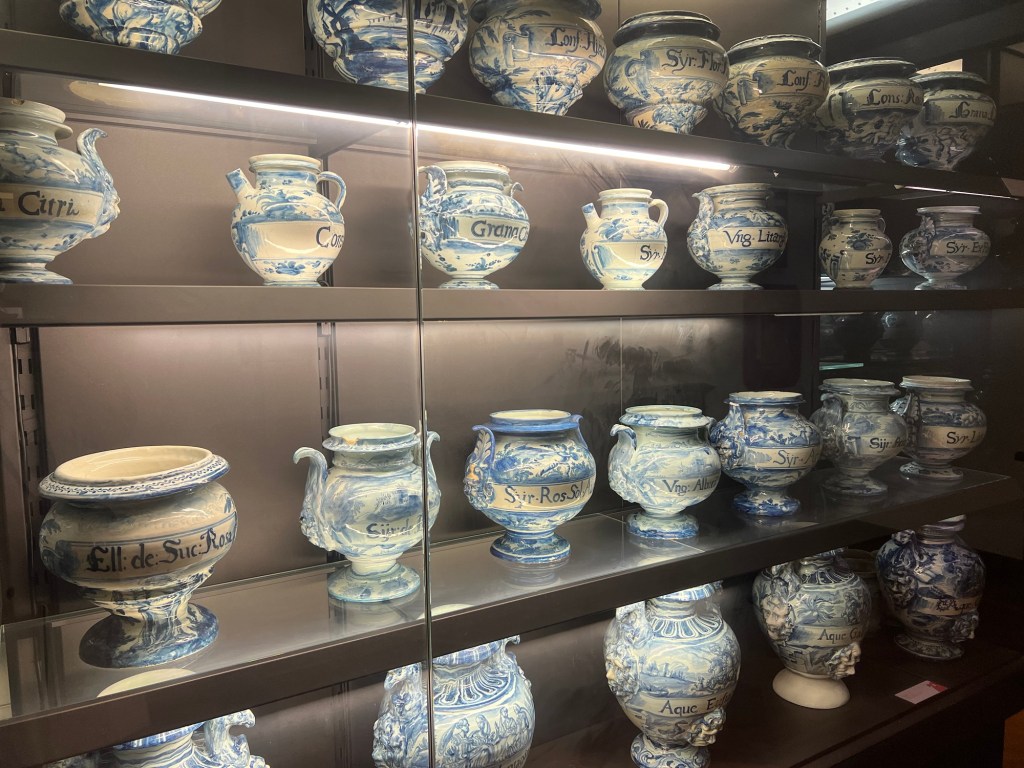

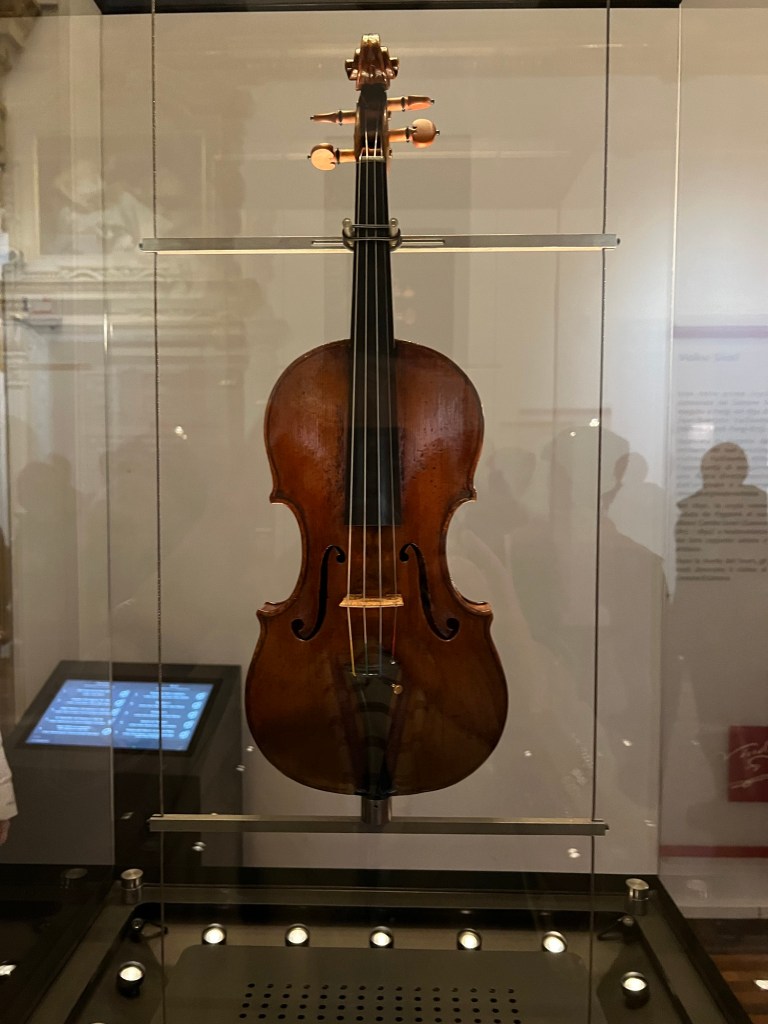
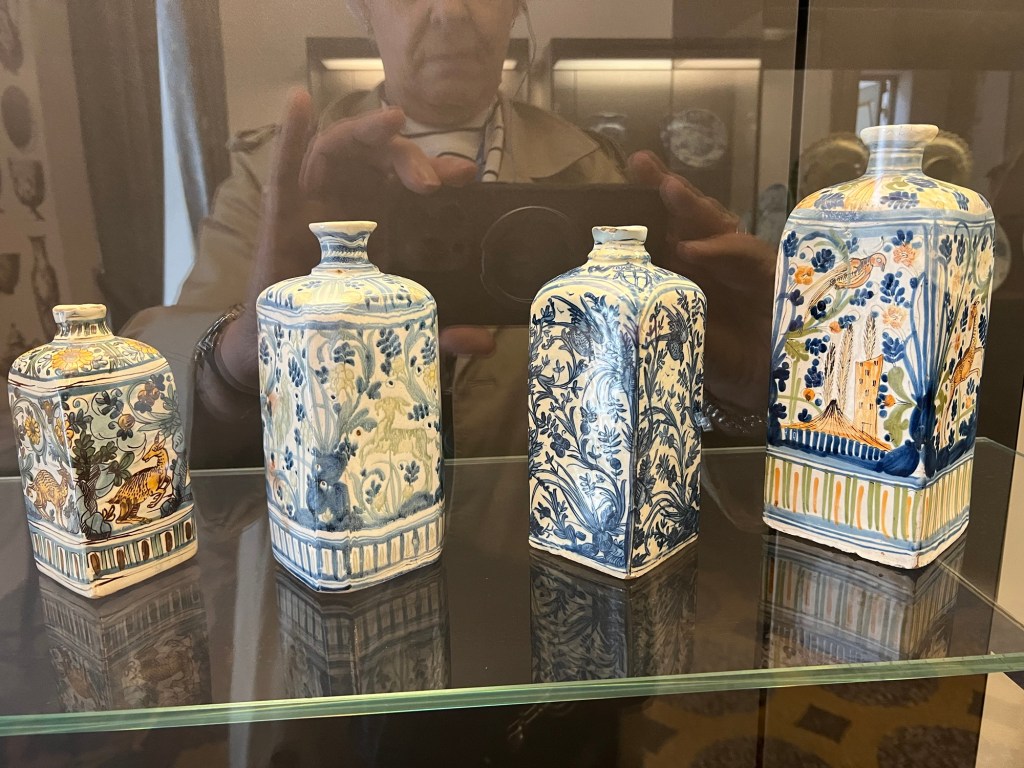
Then to the Palazzo Spinola, home of the Town Council – and a museum.
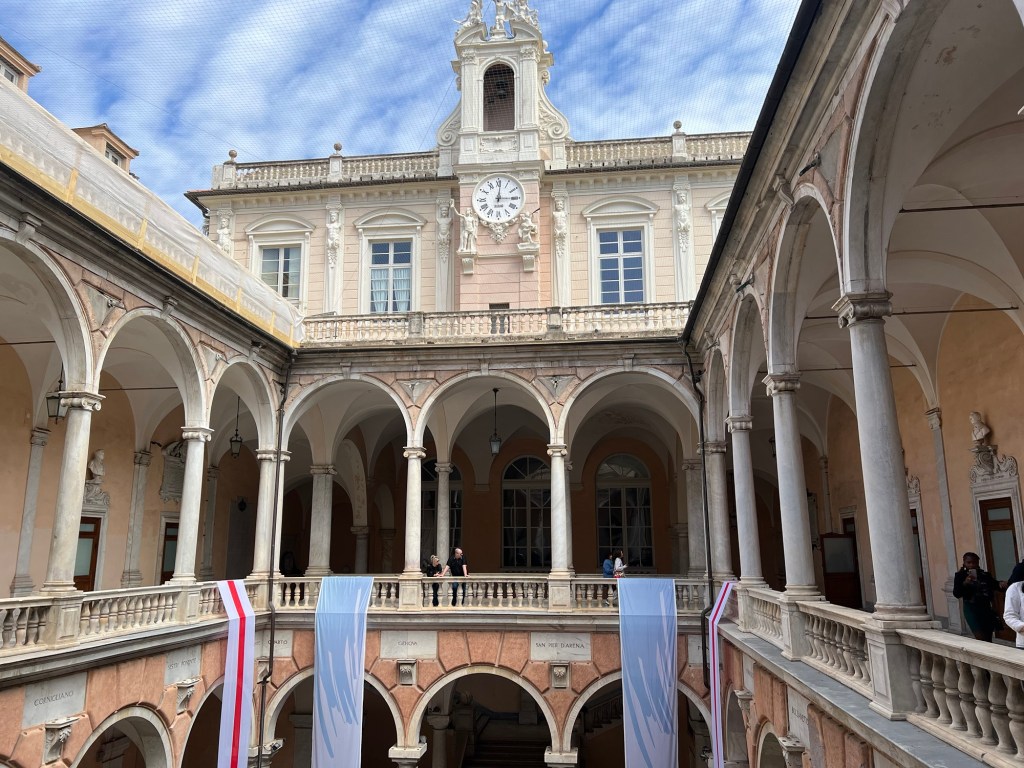
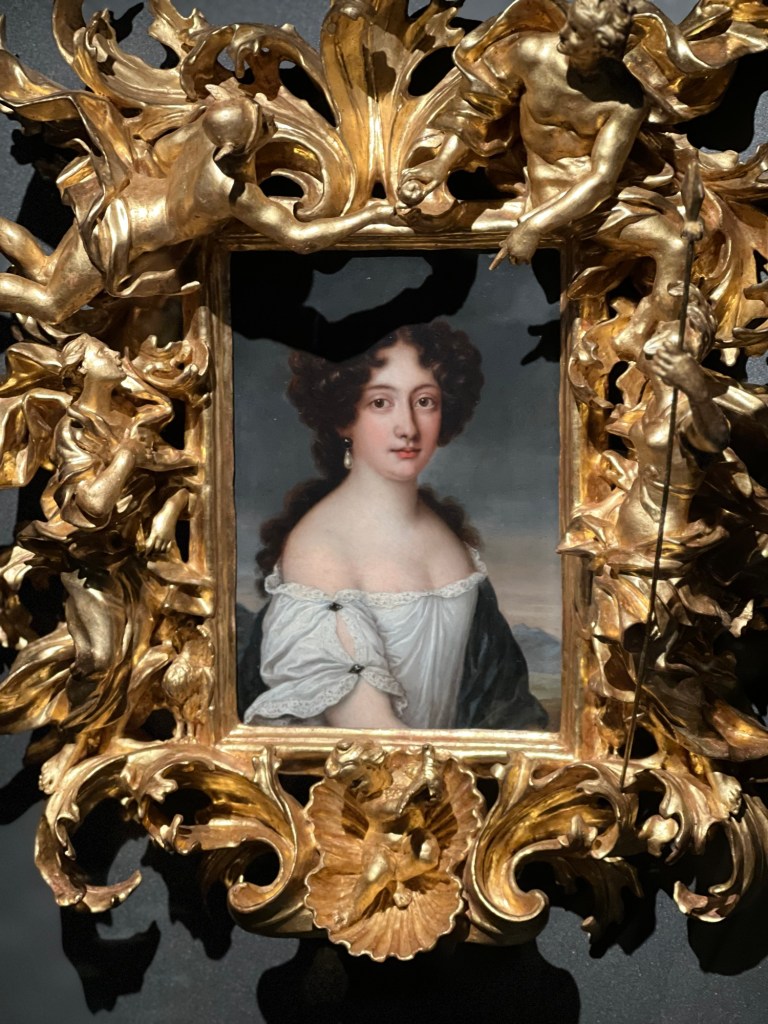

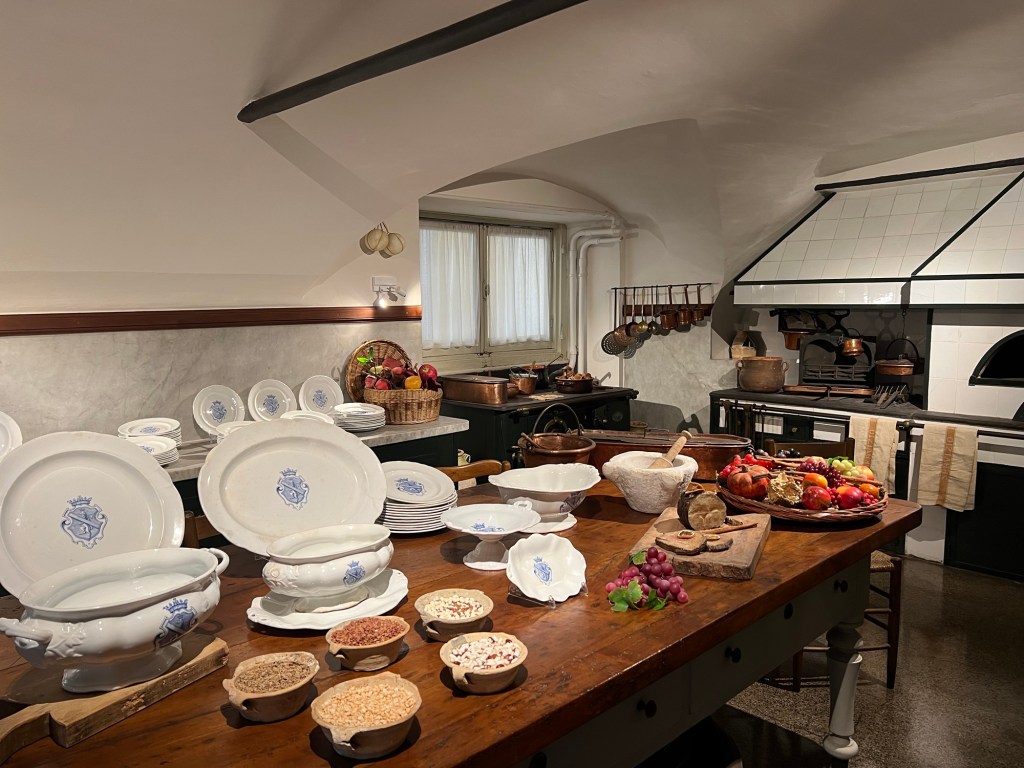
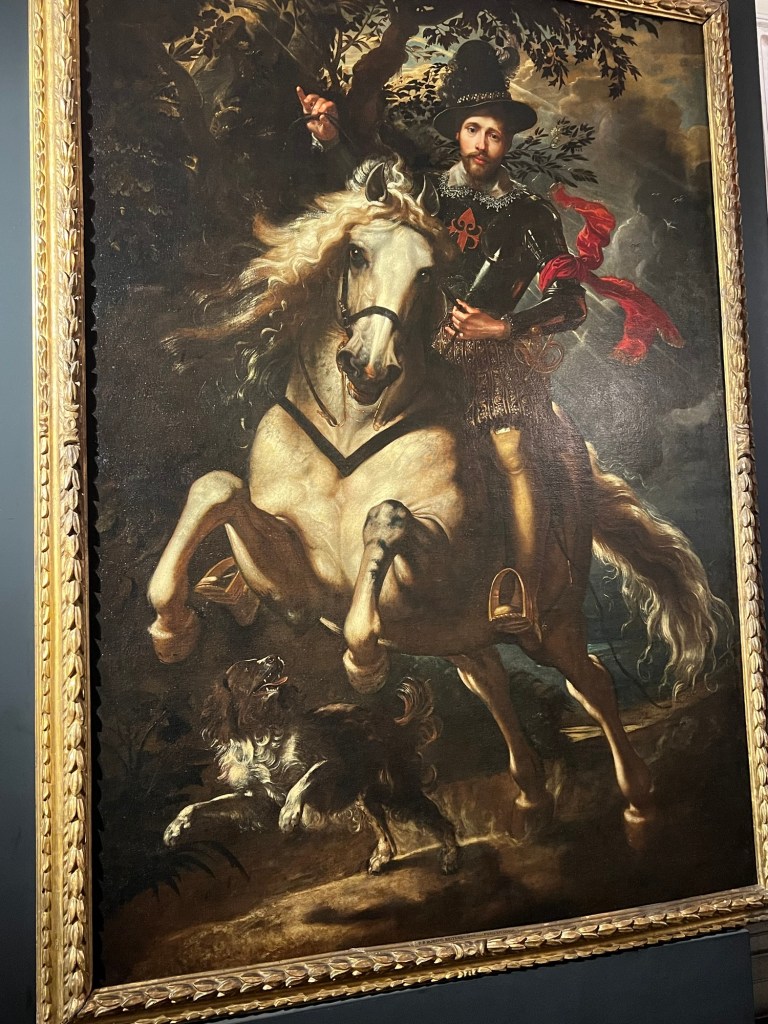
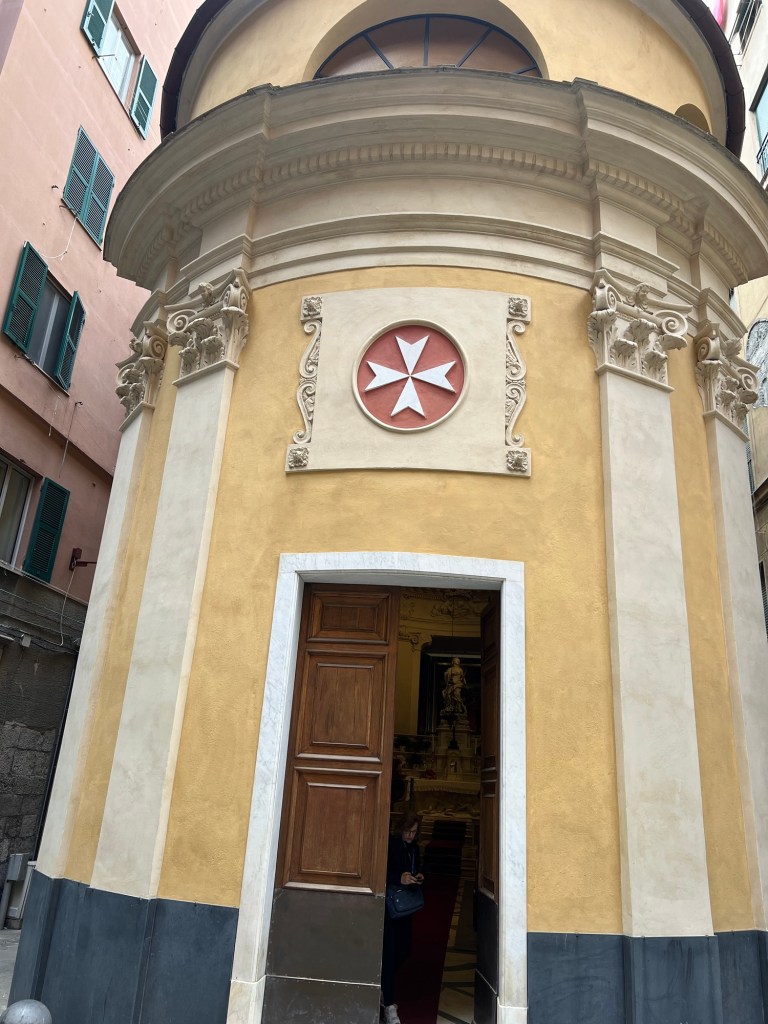
And finally to the Oratory of St Pancras. No resemblance to any stations intended.
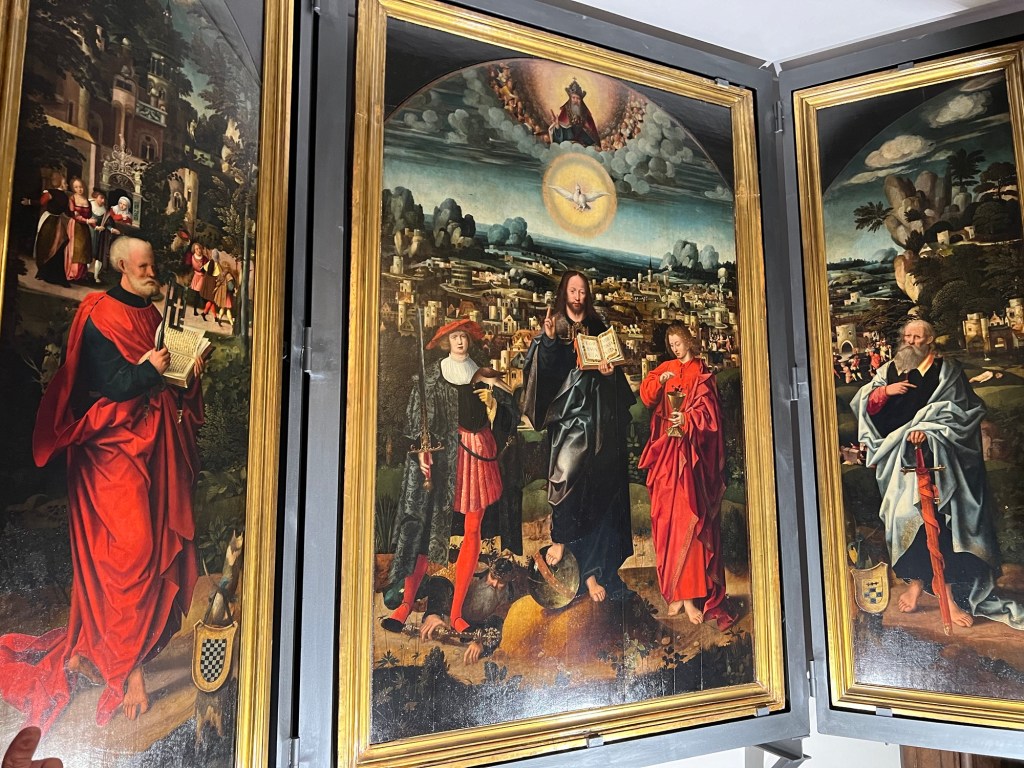
Evening – dinner. The weather is now coldish and raining (in case we missed home). By taxi to Eataly. Terrible name for a chain of rather nice shops / restaurants/ cooking schools. There is one in London but I can’t find its address anywhere on its website.
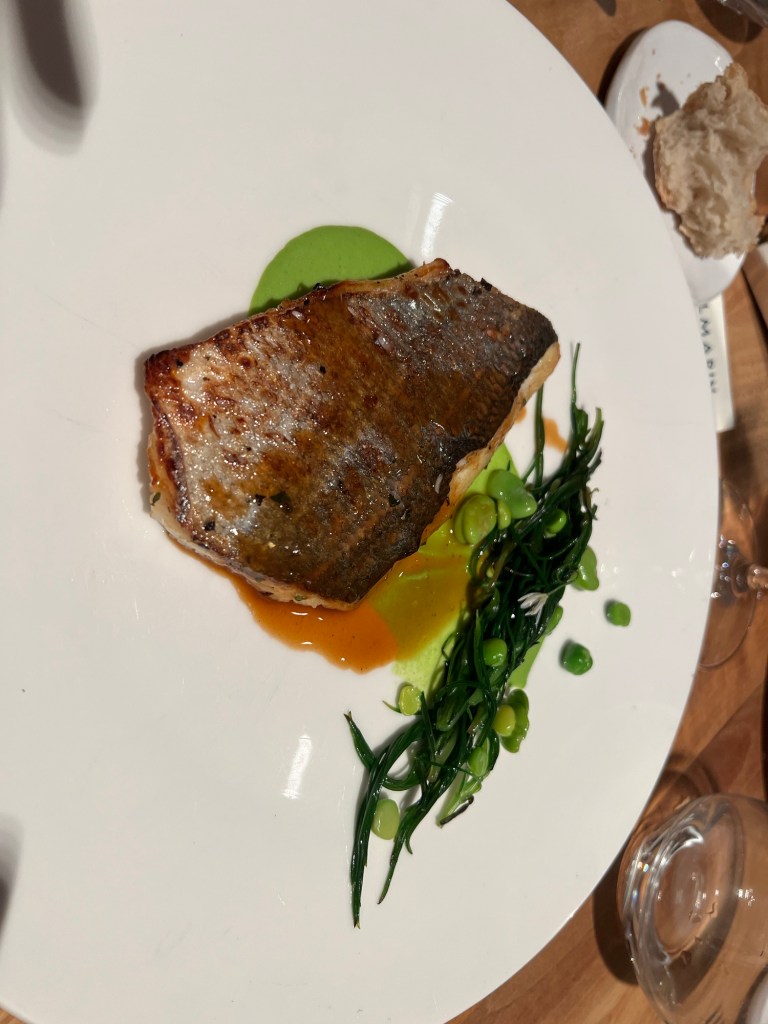
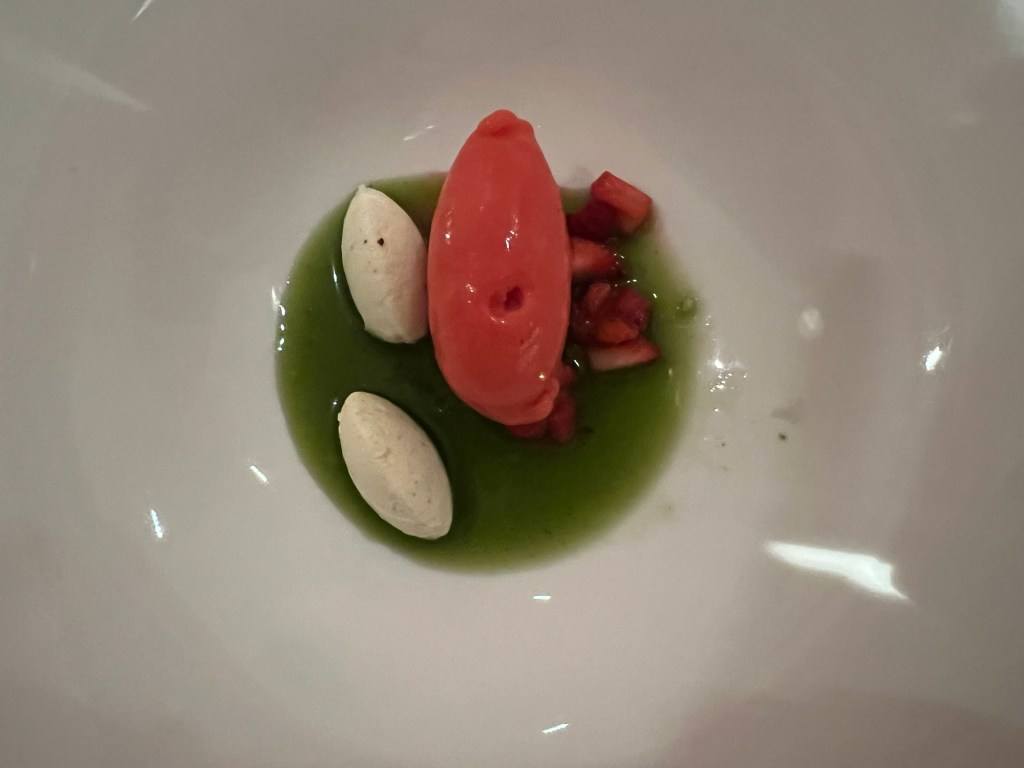
The dinner was very good – very tasty. Nice young man kept the wine glasses topped up. Only issue for old people like me is that if dinner starts at 8 you are wide awake at 11………. Good night all x


I feel for your feet, those pavements look hard. The chandeliers are very beautiful, were they buying in glass from somewhere like Venice, or making them locally? I think that amount of gilding and mirrors might make sleep difficult, although that might not have been the intention…and was the lady with the shell bed a ‘grande horizontale’? Many thanks for the virtual trip…
LikeLike
I have asked and the glass in the chandeliers would have originally come from Venice. Later on, they started making it themselves, here. The lady in the picture was an aristocrat.
LikeLike
What a gorgeous trip you are on Ann. I enjoy reading about it. The food looks delicious. Lovely photos.
See you soon
Ann H xxx
LikeLiked by 1 person
Plate coveting commenced.
LikeLiked by 1 person