Pozzuoli
This appears to be another nice resort on the sea at the opposite end of the bay from where we are staying. All the area we are visiting today was the summer homes of the Roman imperial family – Julius Caesar, Augustus, Agrippina, Claudius etc.
The whole of the Naples area, on the way here, was covered in smog. If it’s that bad at the beginning of May, what on earth will it be like by August?
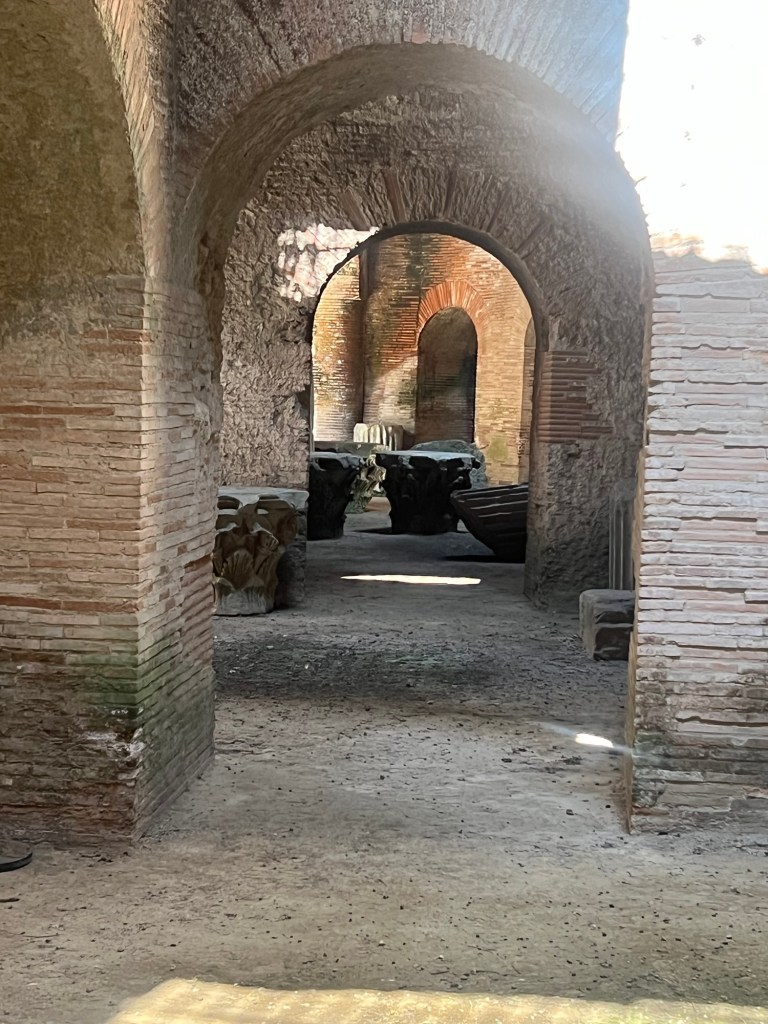
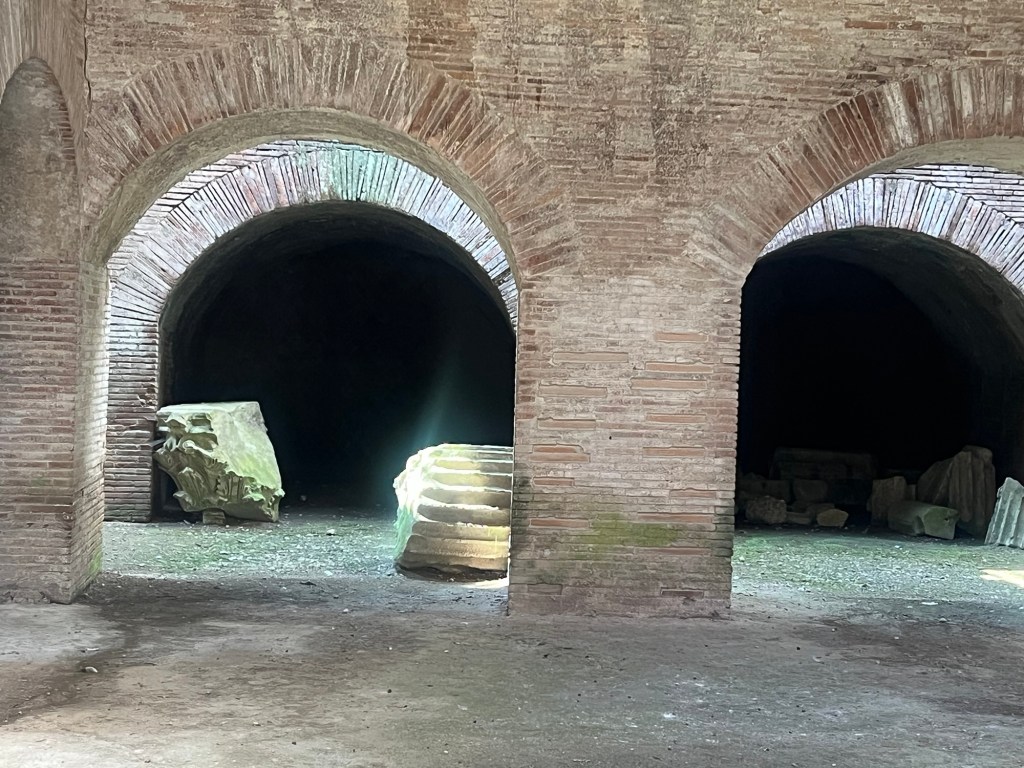
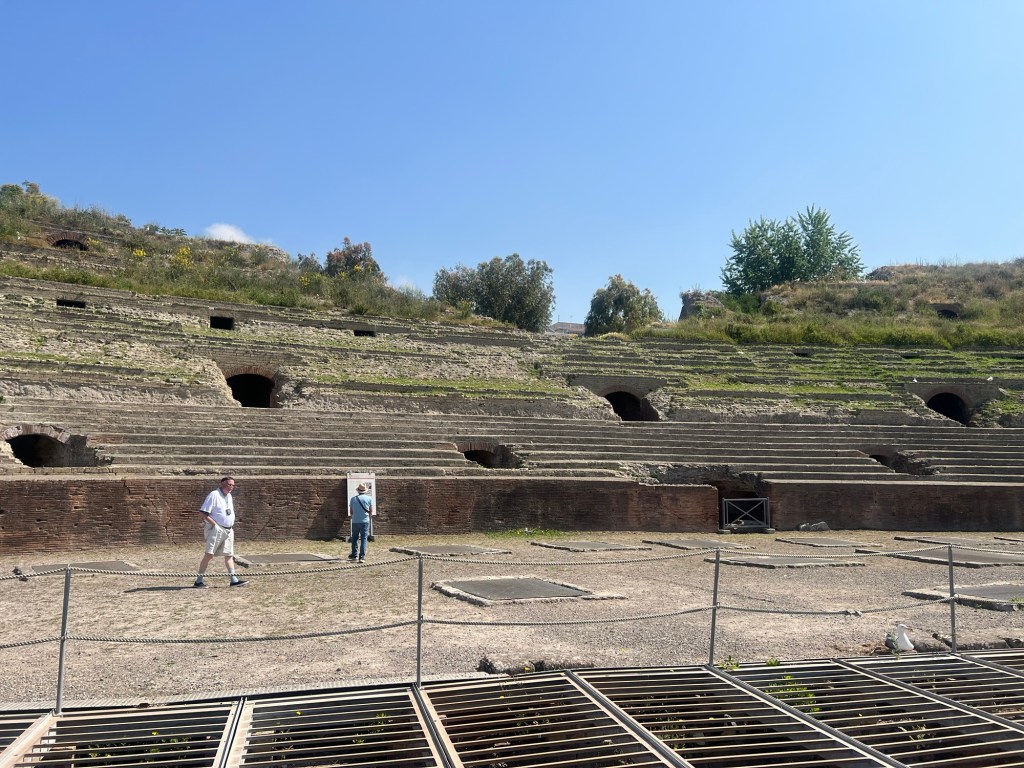
The attraction here is an amphitheatre, started by Vespasian to cheer up the populace after Nero. Although Nero had built gardens in Rome, the population didn’t know what to do with them. They wanted ENTERTAINMENT! Bread and circuses.
This is the third (or 4th) biggest amphitheatre in Italy, about the size of Verona. It has extensive underground facilities which would have had lifts etc. See the film Gladiator for reference. Apparently the day’s entertainment would have started with a wild beast hunt, followed by executions and then by gladiator competitions. Gladiators were big stars in their day. Most of them were slaves but some freemen would sell themselves to a gladiator training school in the hope of raising some money for their family. If they survived 20 fights then they were given a wooden sword signifying freedom and a percentage of the money they had raised for their trainer. Some of them then signed on again for another round and became even bigger stars in the process. High class women would pay to have star gladiators brought over to ‘visit’ and, apparently, gladiator sweat was bottled and sold as an aphrodisiac.


Baia
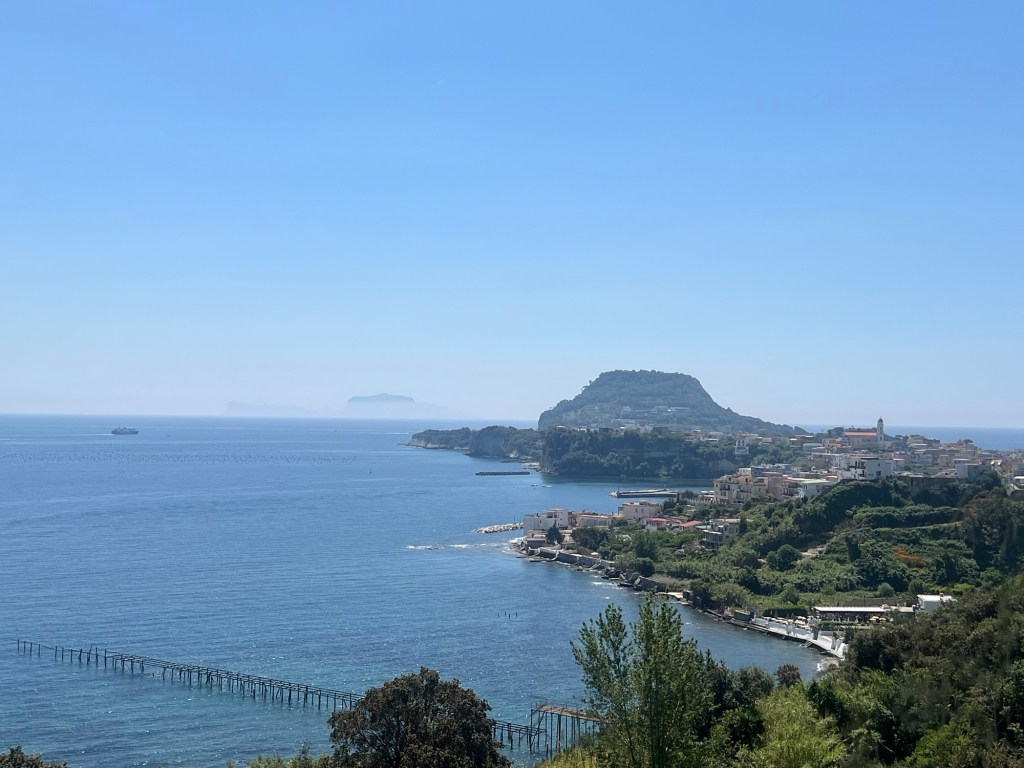
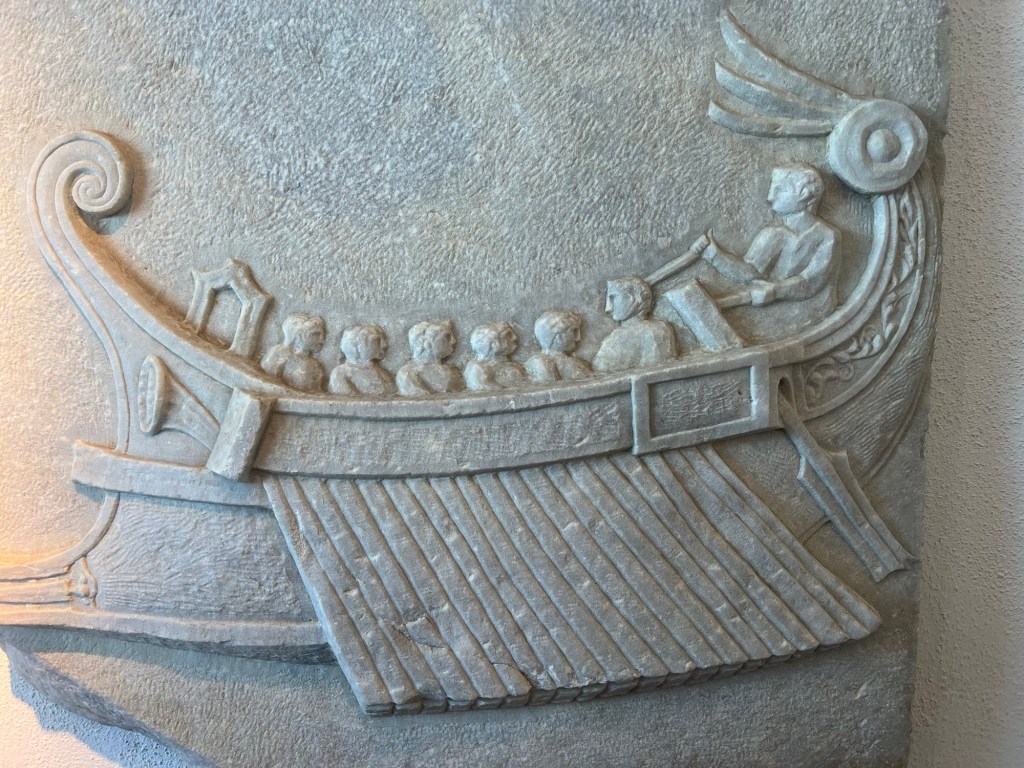
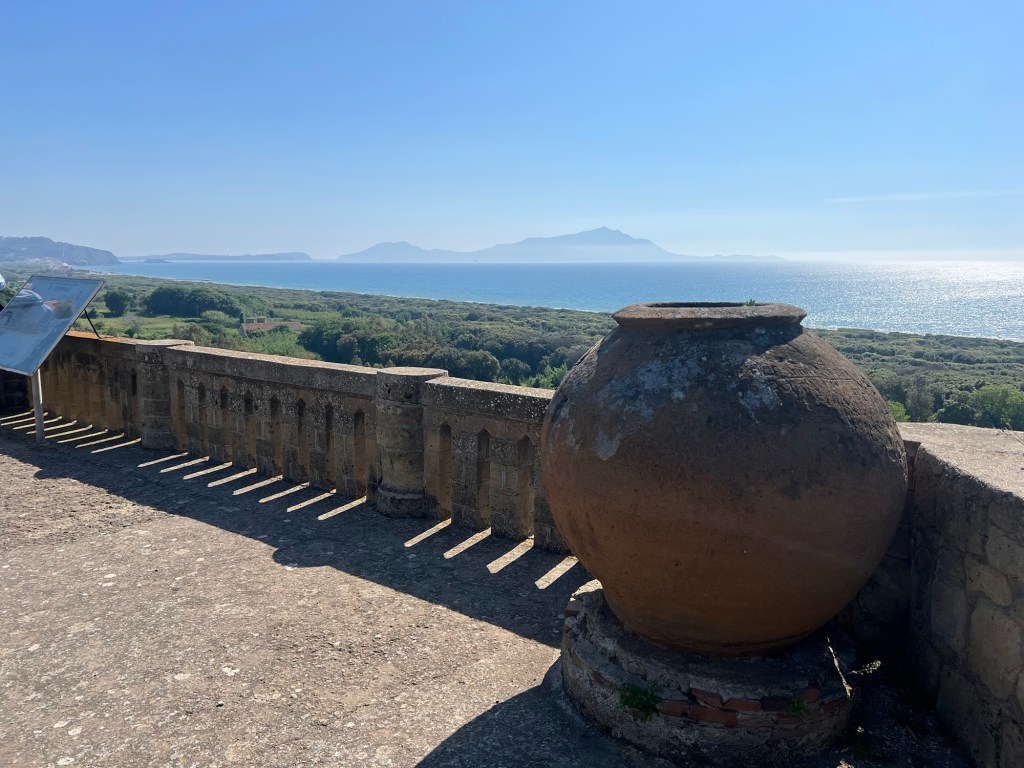
In contrast to most of the other places we have been, the sea is nearer here than it would have been in Roman times. The faint island in the distance is Ischia and the lump on the end of the promontory is Miseno. This was the headquarters of the Roman Navy in 79CE when Vesuvius erupted. Pliny the younger, staying with his uncle, the Admiral Pliny the Elder, was an eye witness. He later wrote letters describing what he’d seen and the death of his uncle who had tried to rescue a friend https://en.m.wikipedia.org/wiki/Pliny_the_Younger.



Cumae
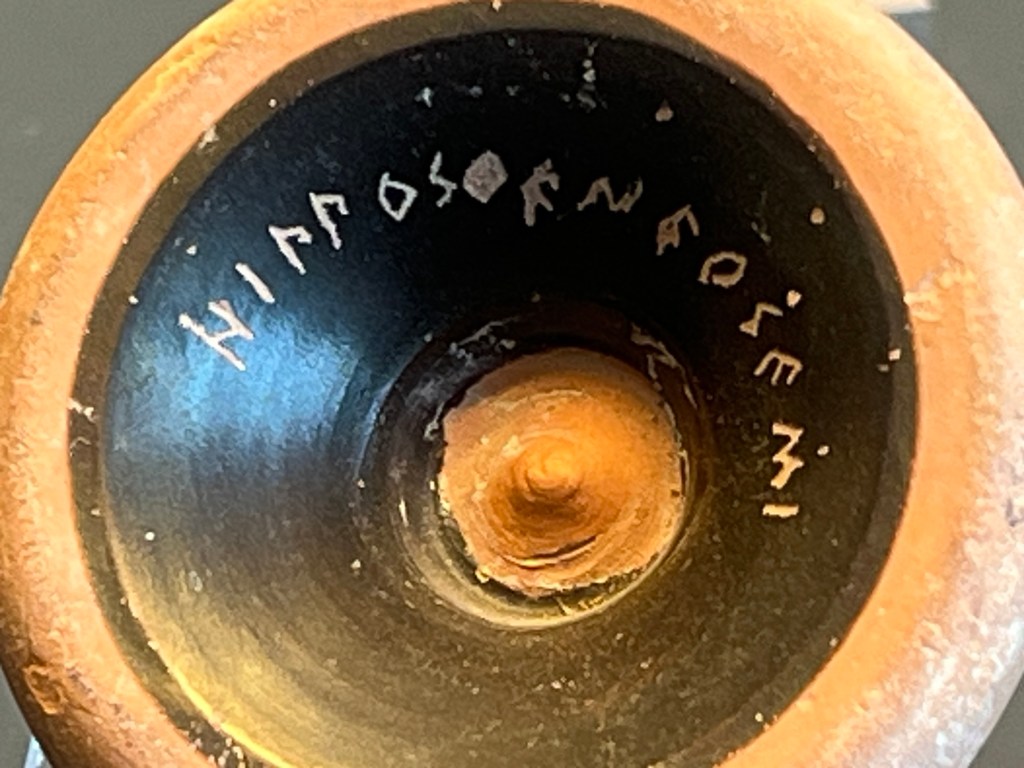
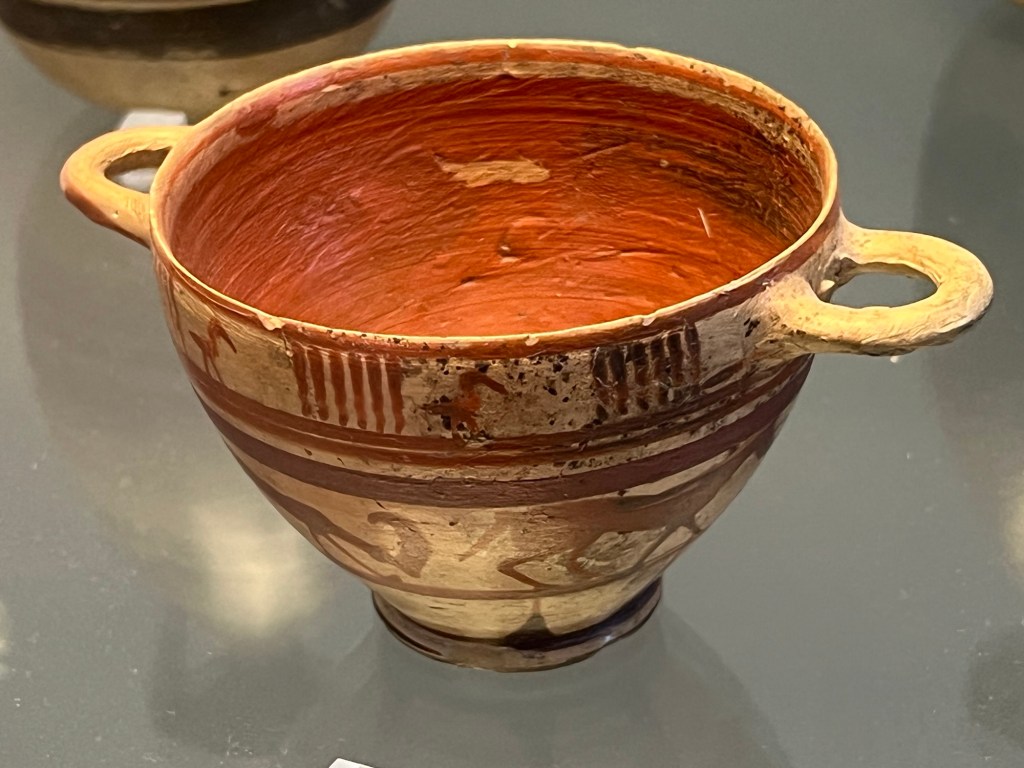
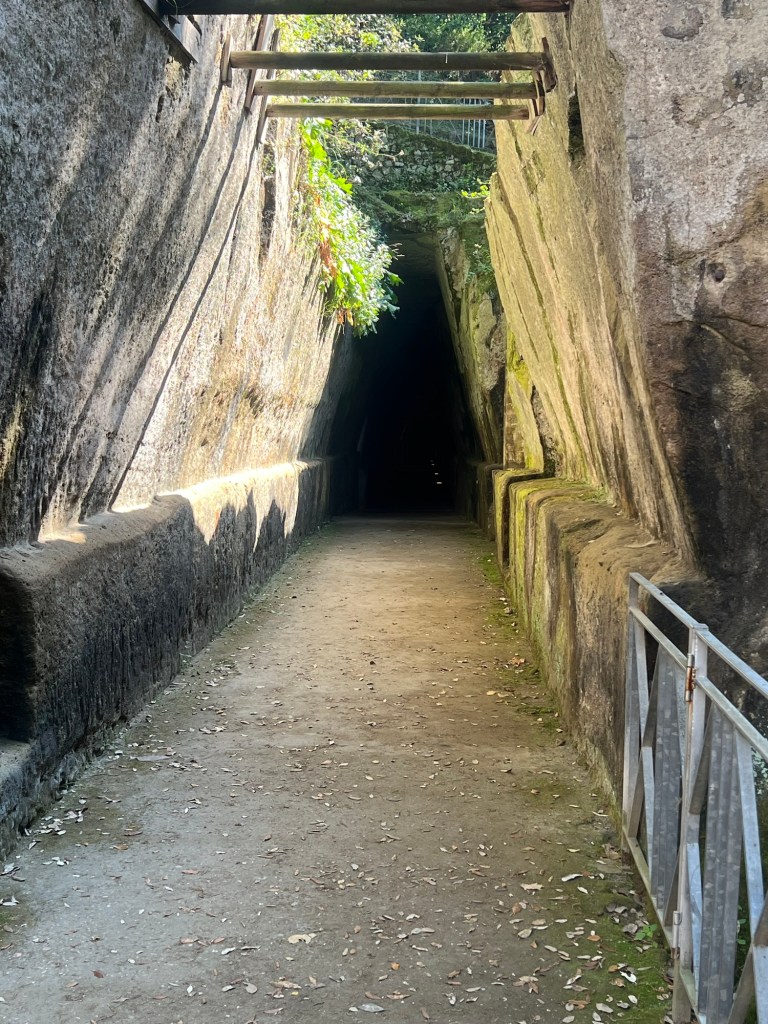
This was a settlement in the Bronze Age, was settled by Greeks in the Iron Age, morphed into a Roman town but was then destroyed at the end of the Empire by the destruction of the aqueducts.

 The Retirement Travels
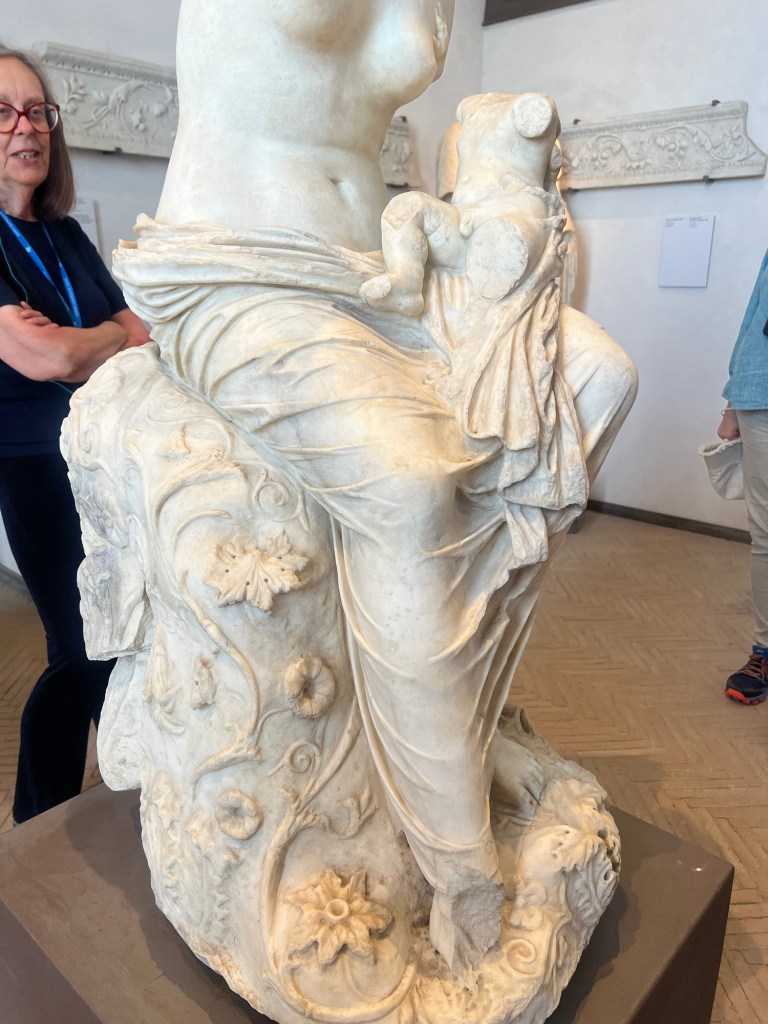
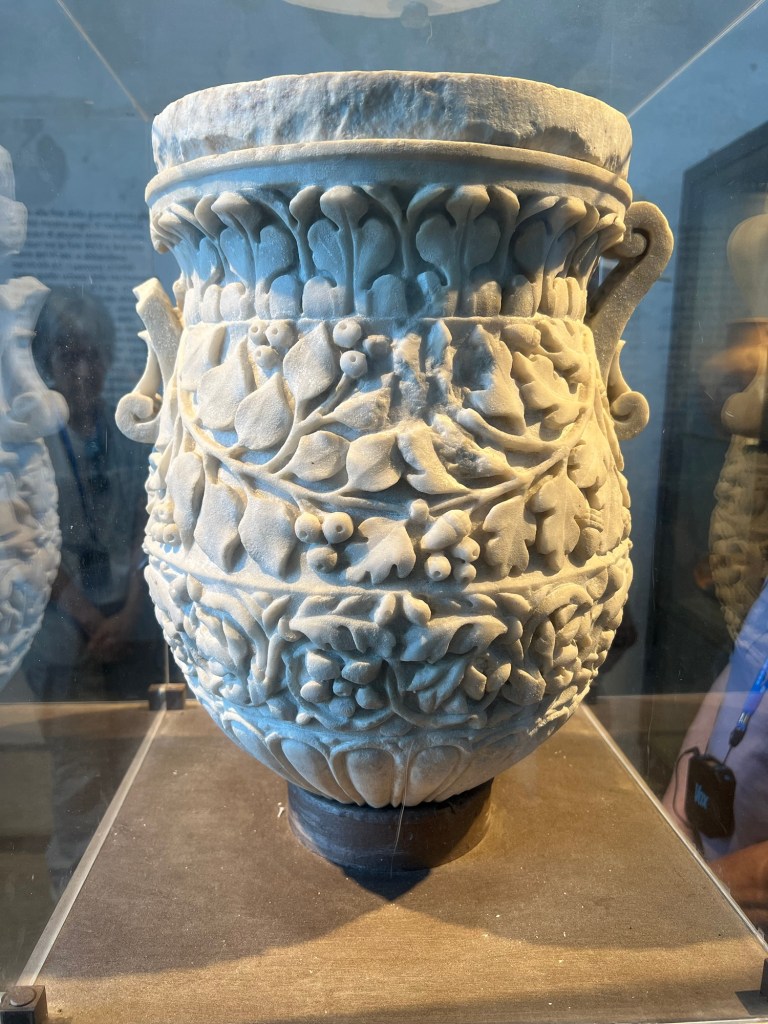
Wow! Lots to write and think about…the coin with the arena scene on it, could it show a lion fighting people riding ostriches? The dark jug with the sea-horse on it could have come from any posh contemporary ceramics studio. The Iron Age pot is more decorated than anything of the period I’ve ever seen! and the marble statue…despite the missing bits, you know that you’ve got a top knotch sculptor when he/she can create apparently solid flesh under a filmly dress. What fun and I think you’re right about the smog…definitely a better time to visit than high Summer.
LikeLiked by 1 person