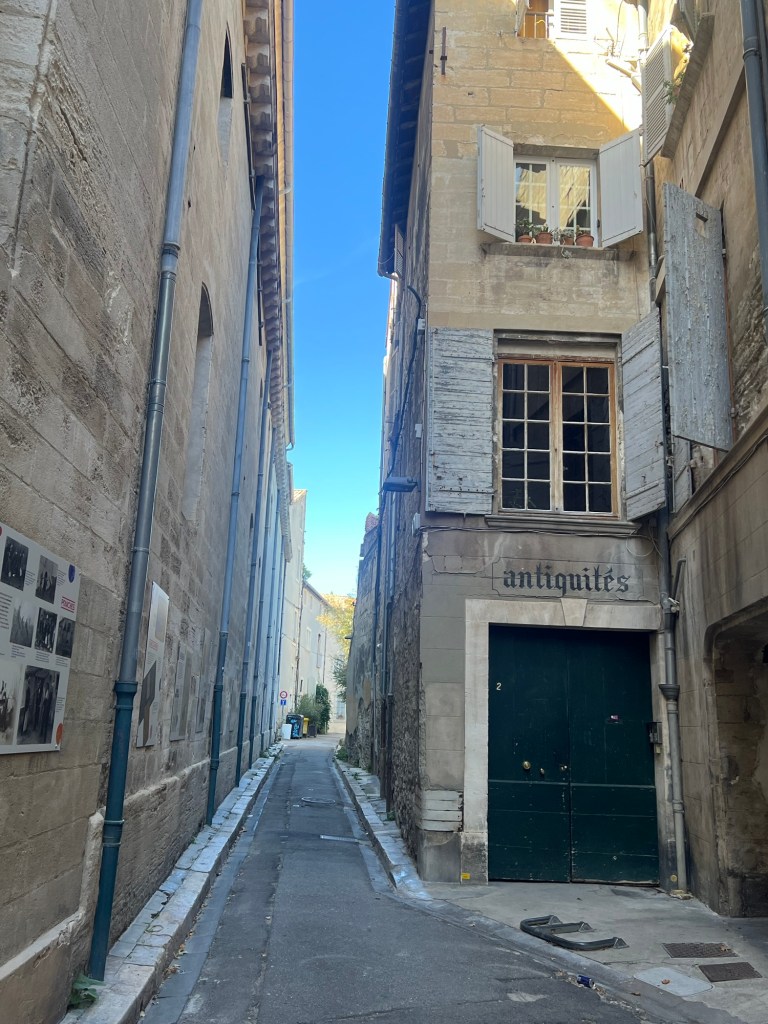
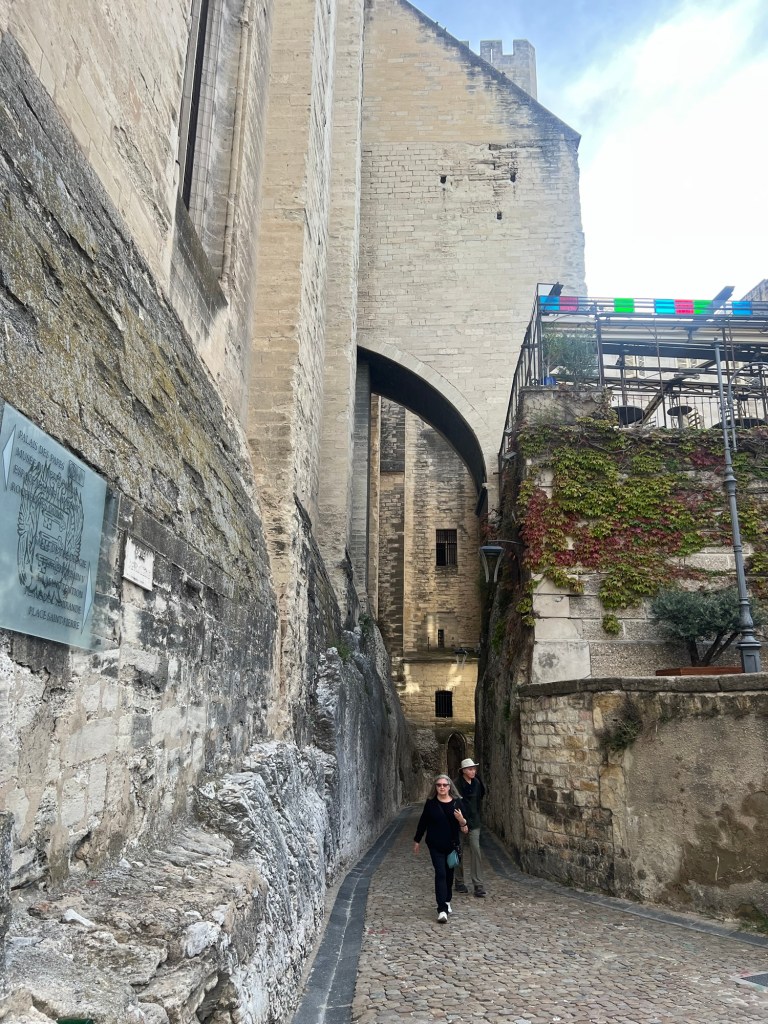
Taxi to the TGV station, TGV to Avignon TGV station, train to Avignon Centre station followed by a 20 minute walk. The streets in the old town surrounding the Palais des Papes are tiny and very confusing to anyone who wasn’t born and brought up here.
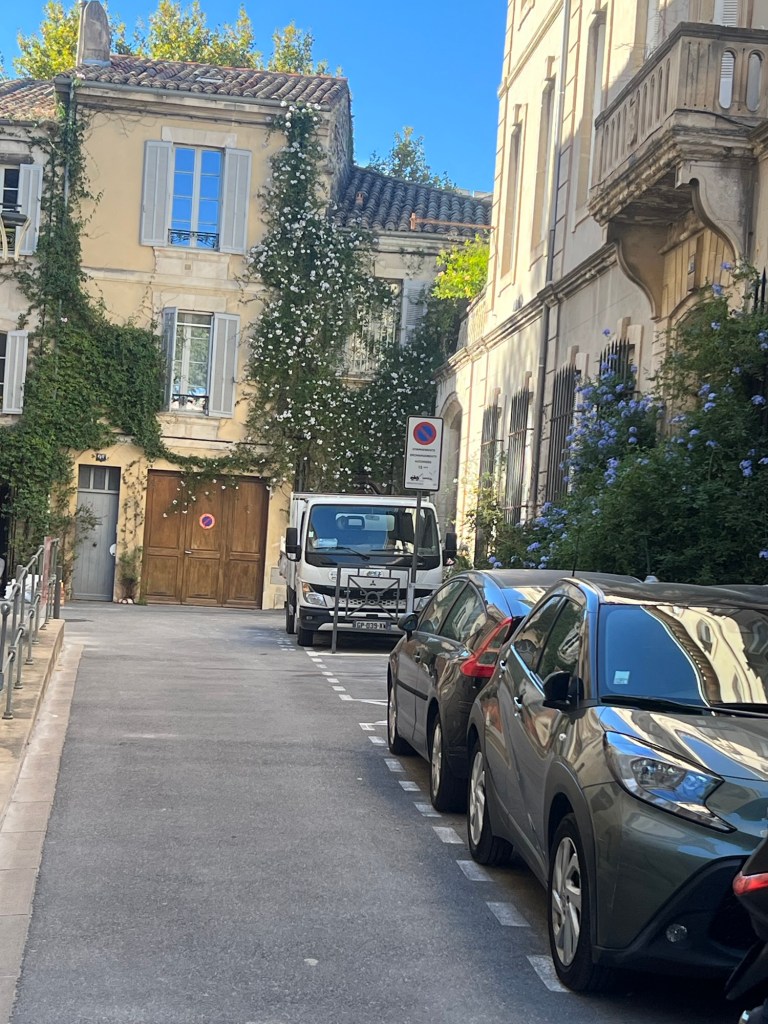
I am staying in a lovely old town house which styles itself ‘Chambres d’hotes’. A B and B I think.
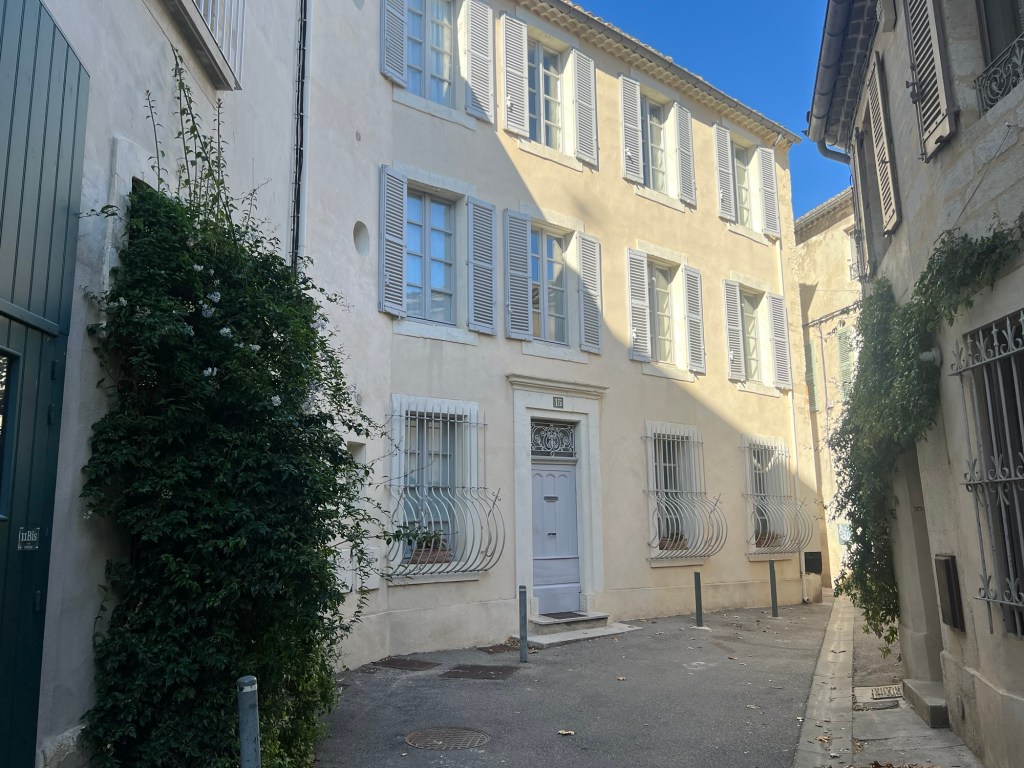
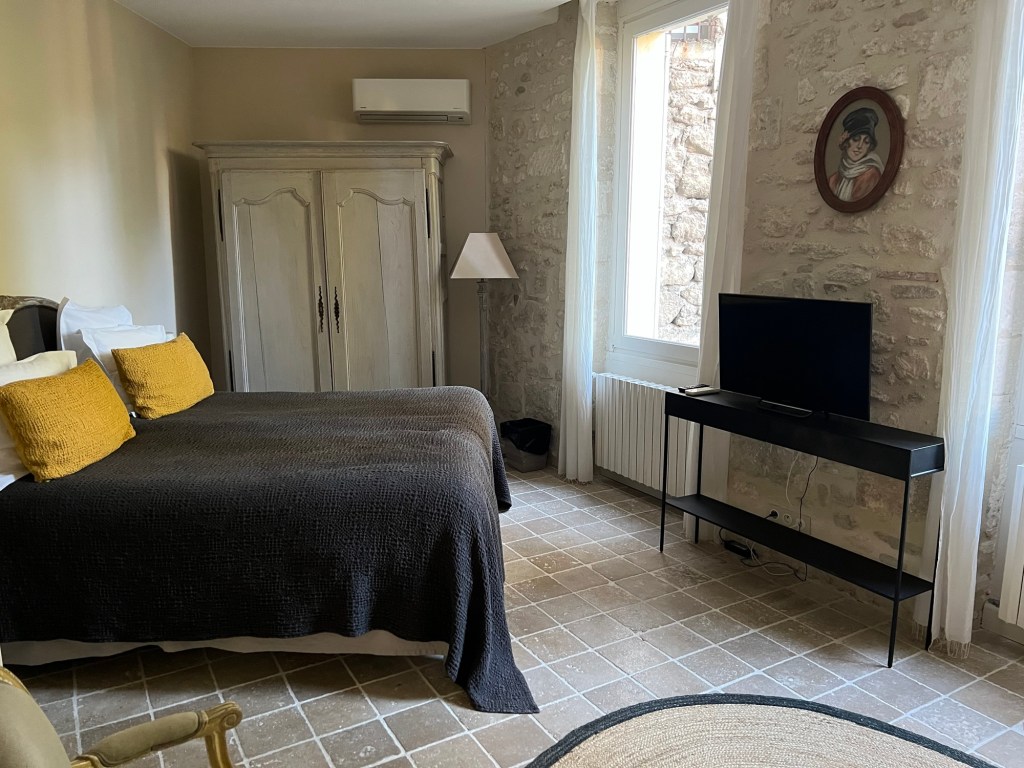

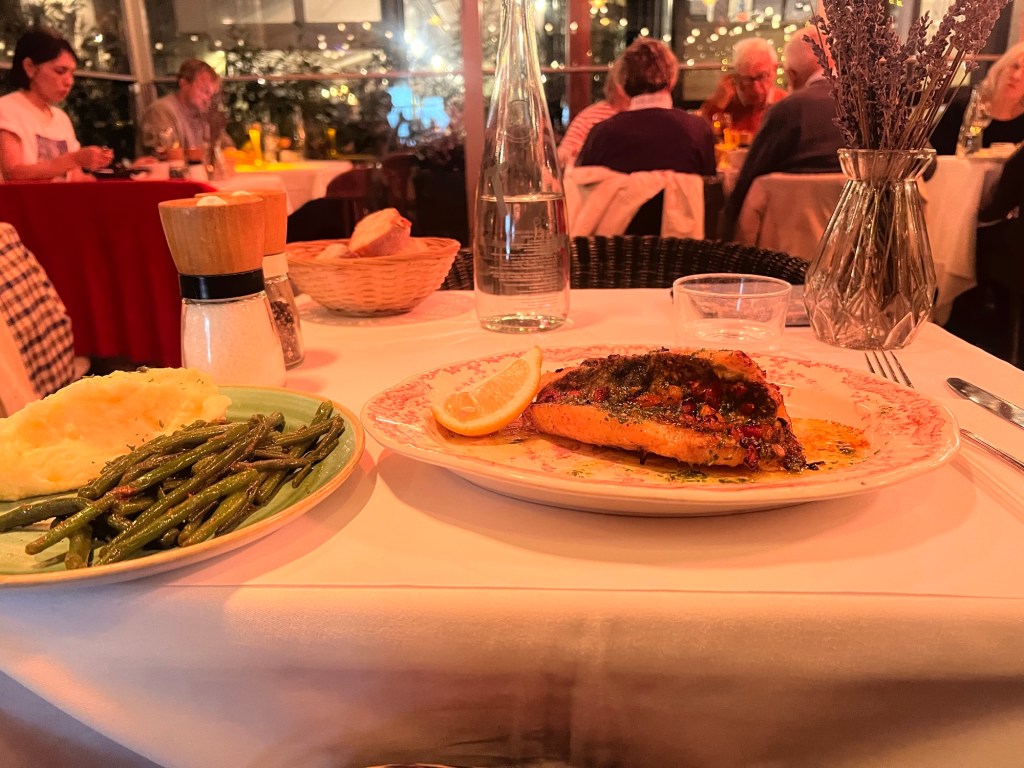
The B and B is very comfy – vast and supportive bed, nice facilities etc.
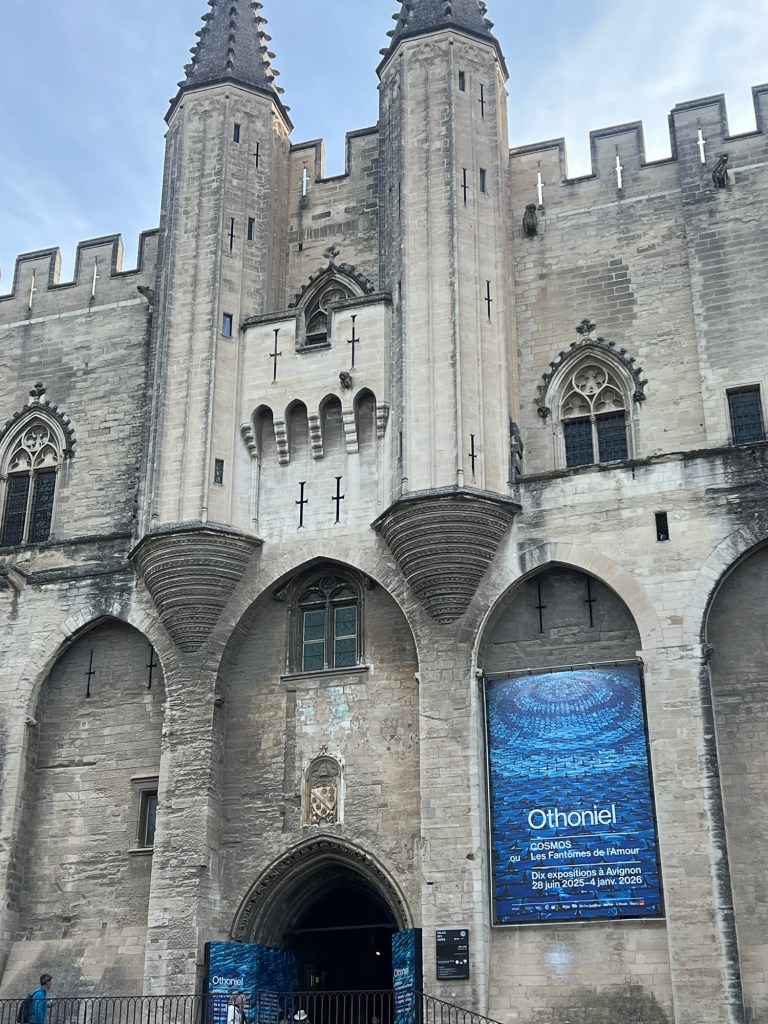
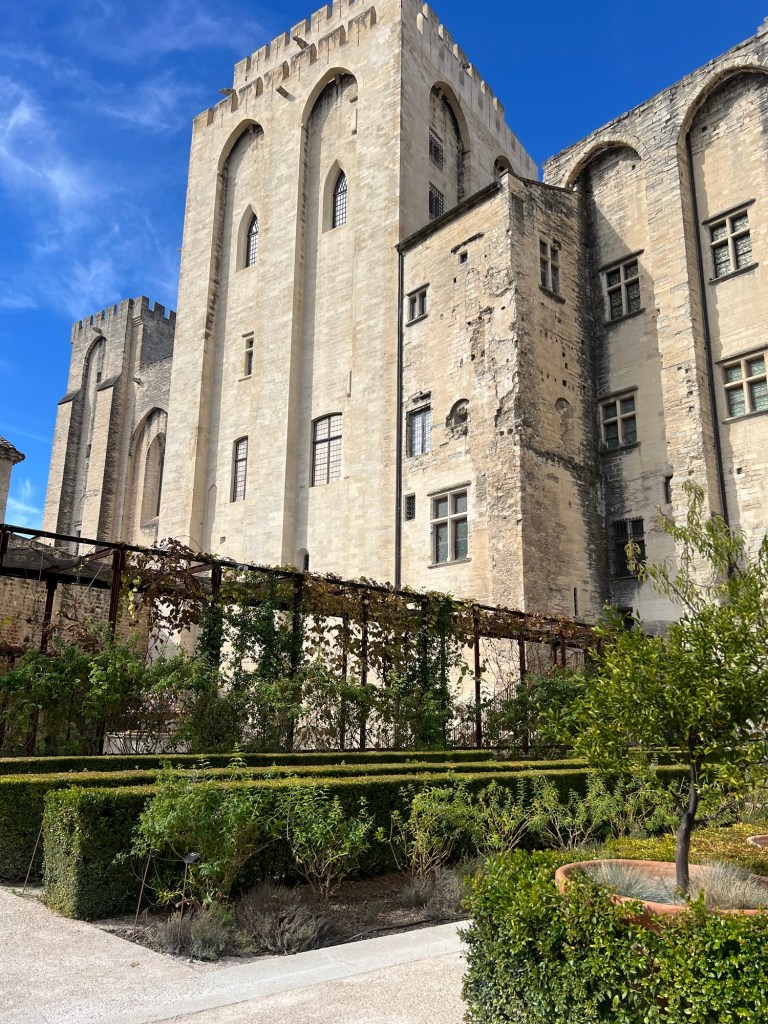
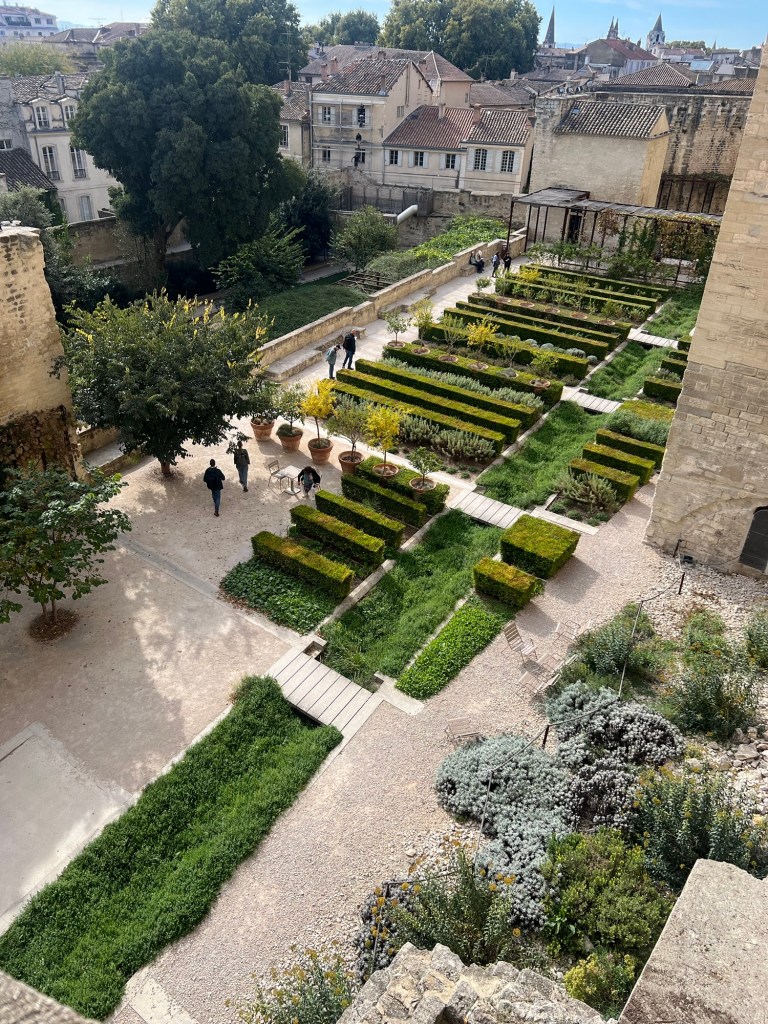
This morning (Tuesday) I went to the Palais des Papes – home of various popes for much of the 14C and the period at the end of the 14 and the beginning of 15C when there were two (or three) popes. The day started well – bought my ticket online, made sure it had arrived and popped round the corner. By the time I got there, the email ticket had disappeared. Off for coffee – and there it was. The palace give you a tablet computer with information and visual replicas of what the rooms used the look like. Unfortunately, they don’t tell you how to use it. You then have to walk through the central courtyard which is full of staging and seats and end up in a room which says it is point 4. Not sure what happened to 1,2 and 3 but they turned up somewhere else. The other thing they don’t tell you is how many stairs there are…….
In the early 14C, there were several French popes in a row. As Rome was riven with violence resulting from fighting between the Guelphs and the Ghibellines and the King of France was accusing the Templars of all sorts of unnatural practices (he owed them money he couldn’t repay), the pope at the time decided Avignon was much more in the thick of things than Rome. After the popes went permanently back to Rome, Avignon continued to belong to them until the French Revolution! The building belonged to the army from 1801 to 1906 when it was bought by the state. No one could do any comprehensive research on it until the Vatican opened its archives in 1890 but it is the biggest Gothic building in Europe and part of a UNESCO heritage centre.


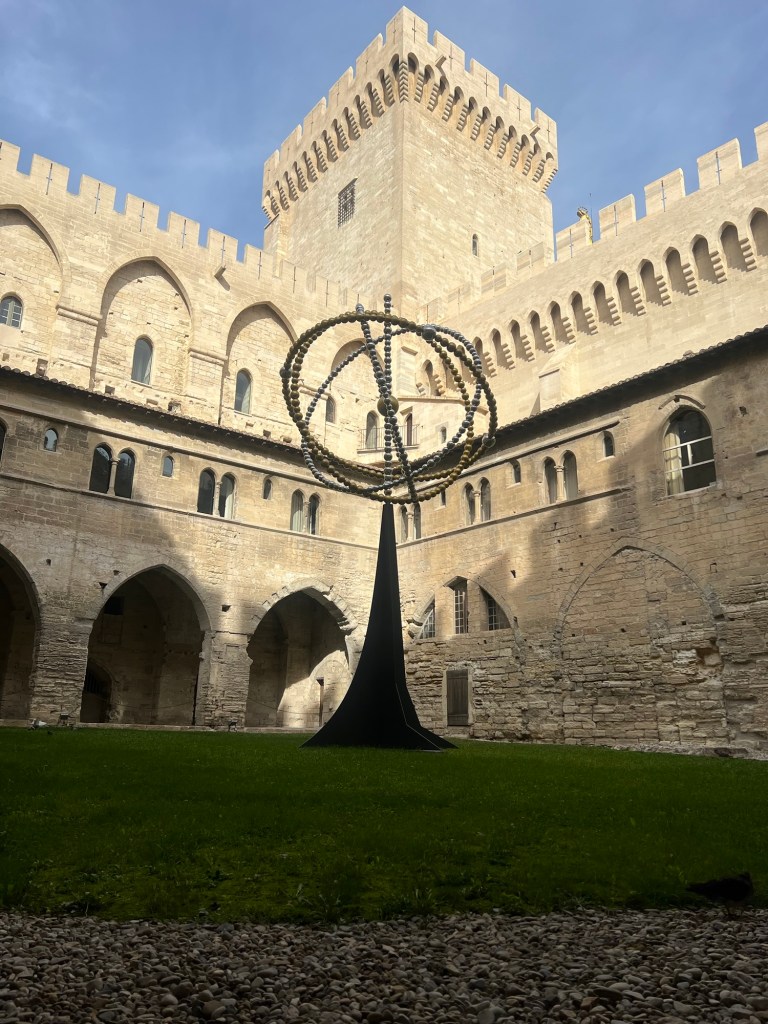


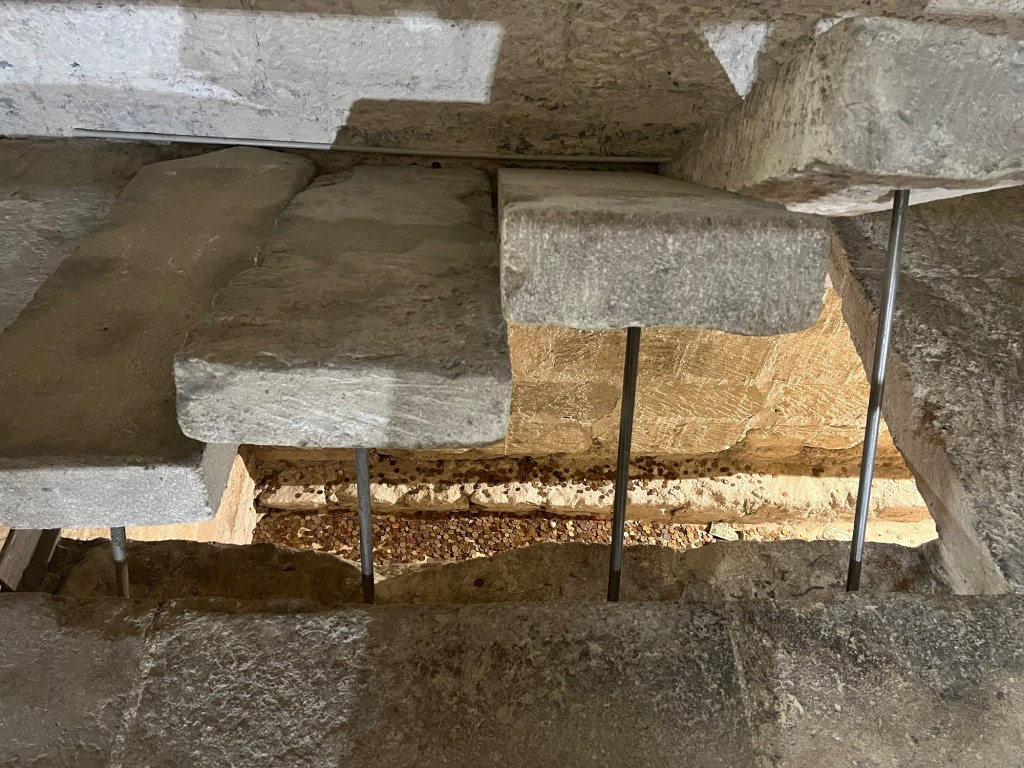
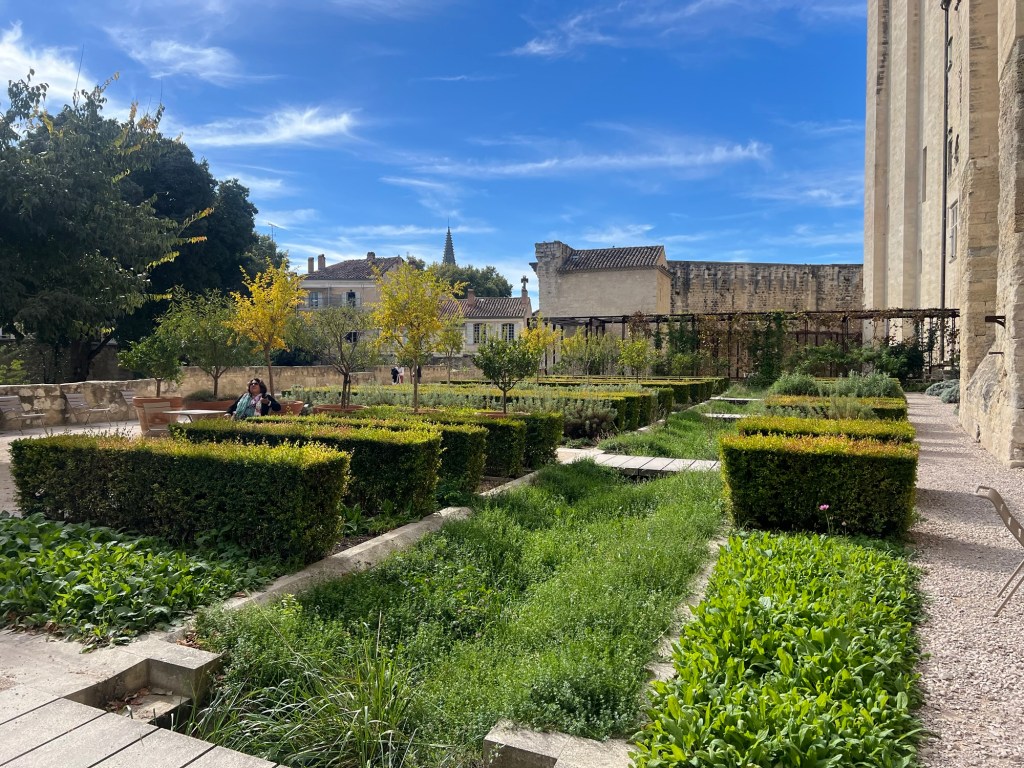
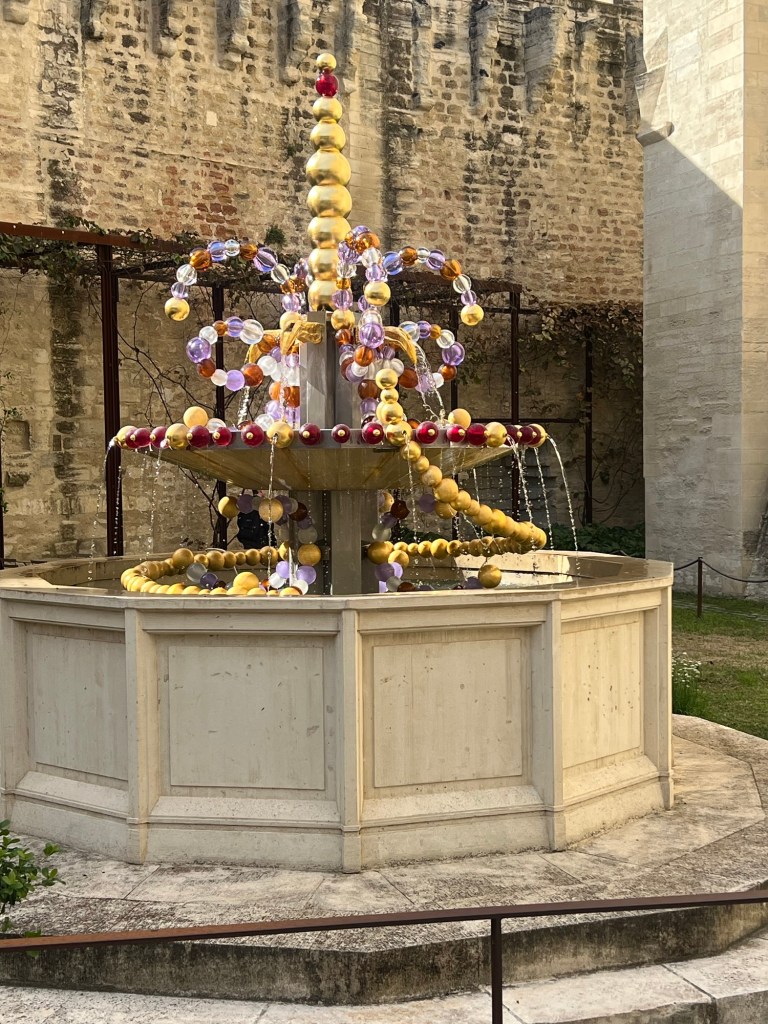

After the Palace (and lunch and translating for a group of ladies from Kent) I went to see the other famous thing.

The bridge was first planned in the 12C as it was very difficult to get a regular ferry going. Eventually built in the 13C and knocked down by floodwaters in the 15C.
Off to Carcassonne tomorrow. More news when I have it.


That’s definitely a superior B&B. I have to admit the first image of the outside of the palace was mildly terrifying, like something a set designer for a sci-fi movie would invent for a particularly formidable alien emperor…which was more of less what is was, I suppose. I love the gardens.
Hope that you ‘danced’ if only in spirit. Safe journey.
LikeLiked by 1 person
Had to avoid all the school trips doing just that!
LikeLike