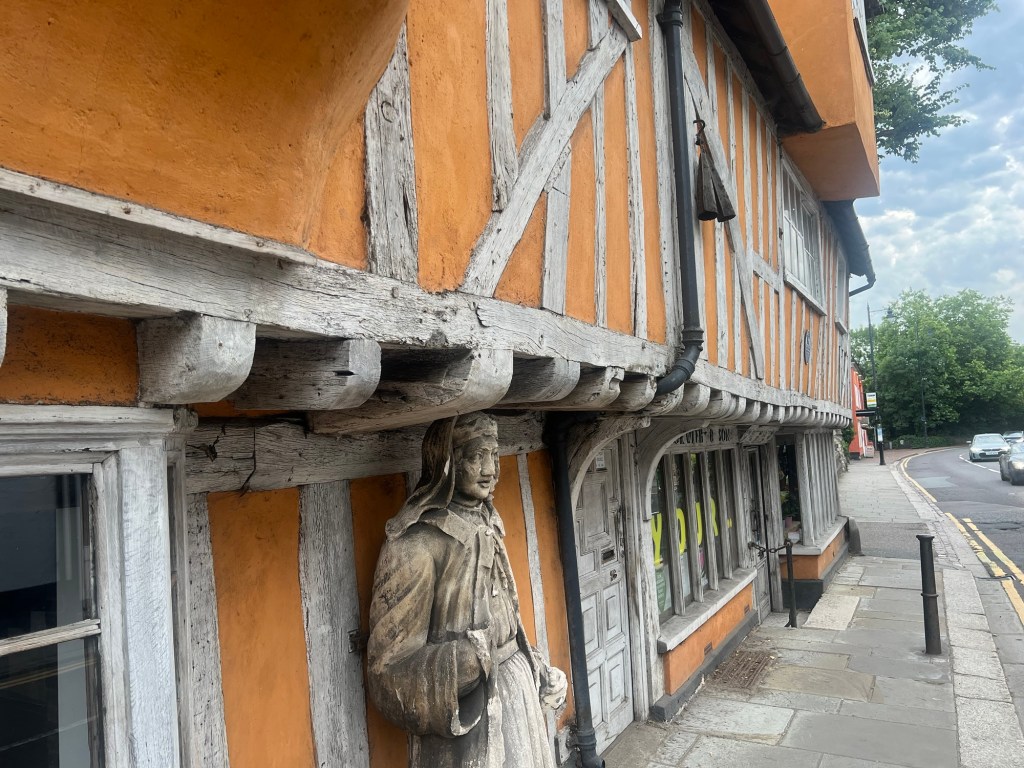
Off to Hertford to attend my friend Bob’s 80th birthday party. This was held together with their daughter’s 25th wedding anniversary. The time flies – she was around 10 when I first met her! The party was held at Place House in Ware – a mediaeval Manor House built around the 12 – 13C. Although much altered over the years, it retains some of its original features.
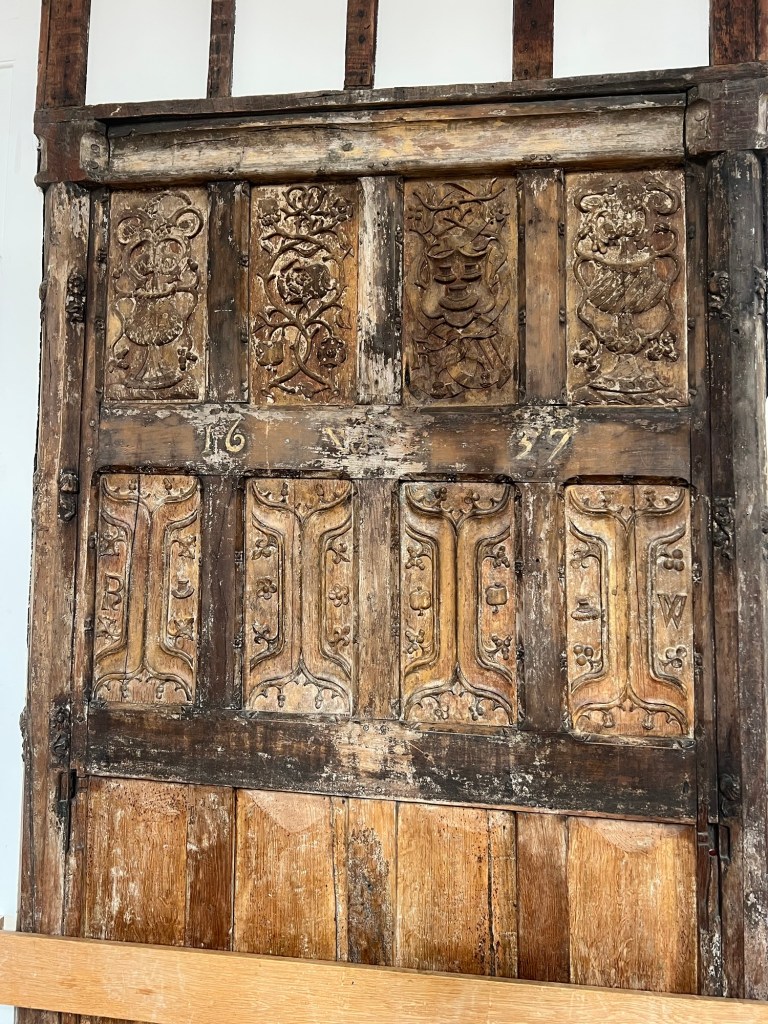
Panelling.
For some reason I don’t seem to have taken a picture of the house. Try this for further information.
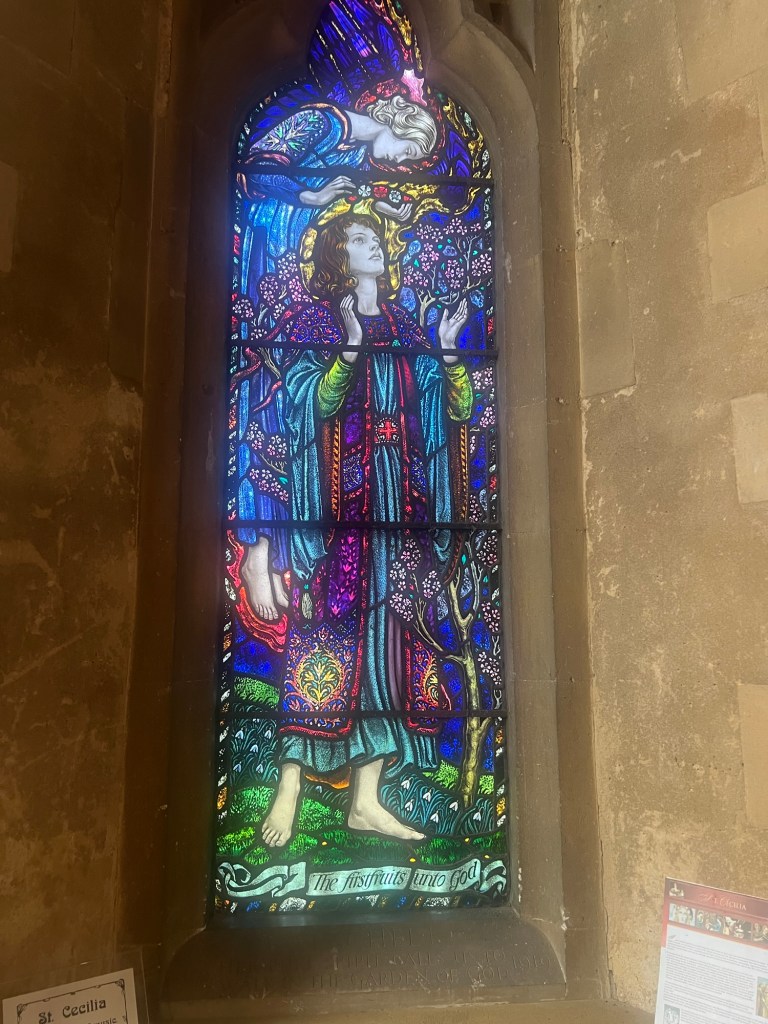
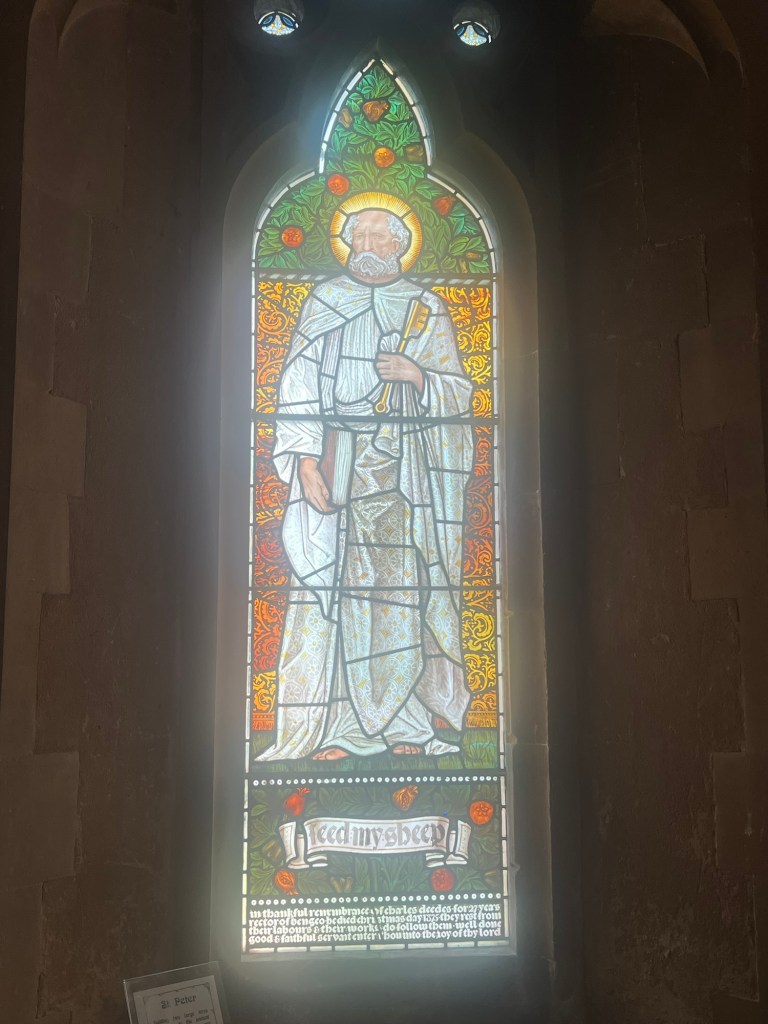
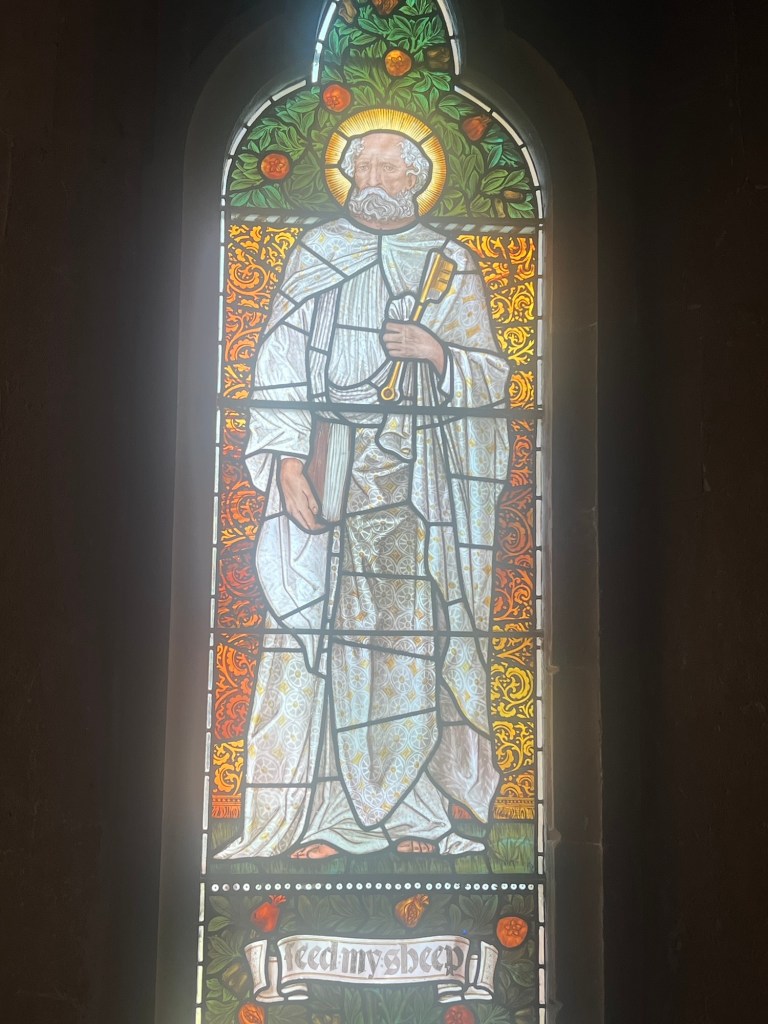
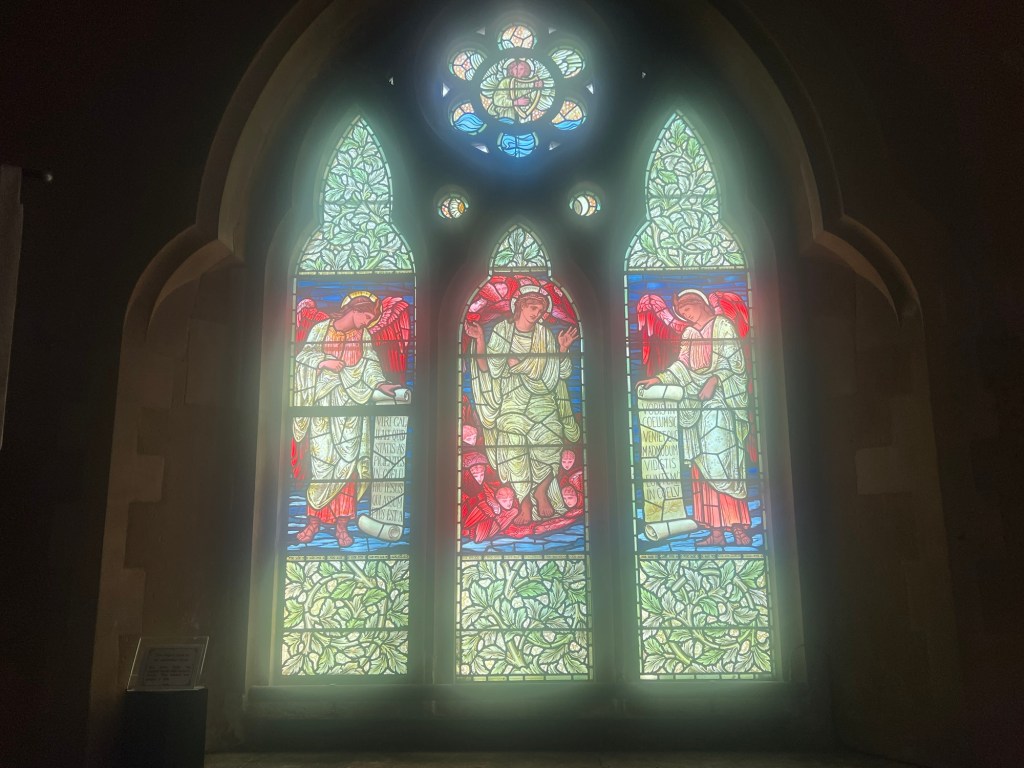
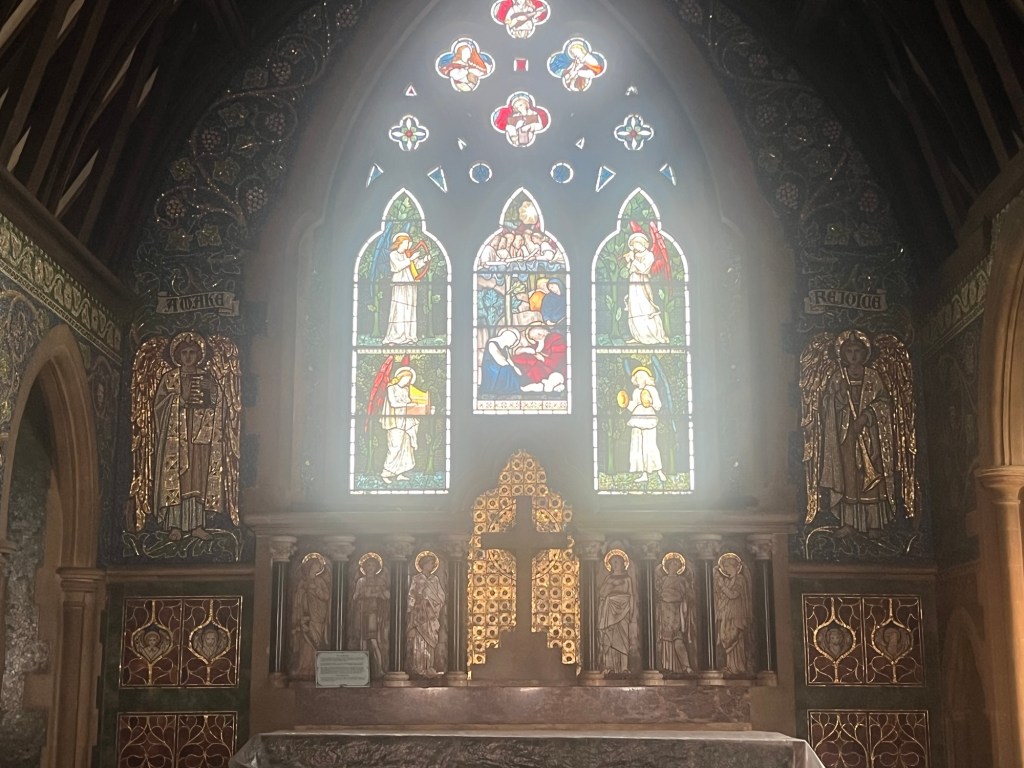
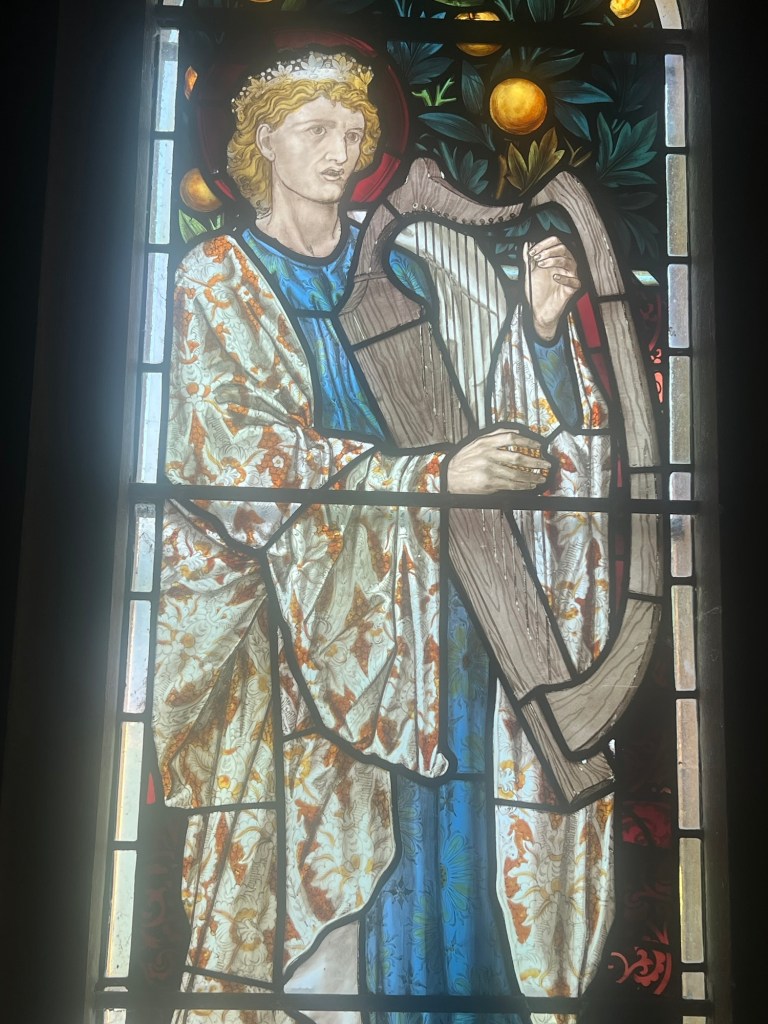
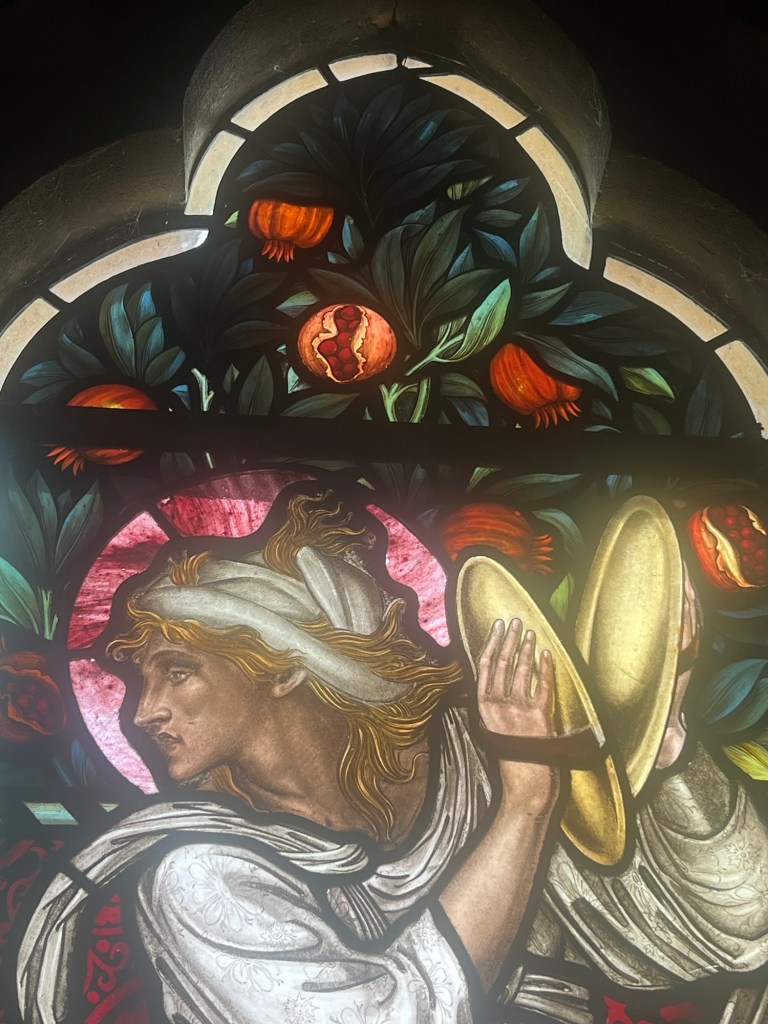
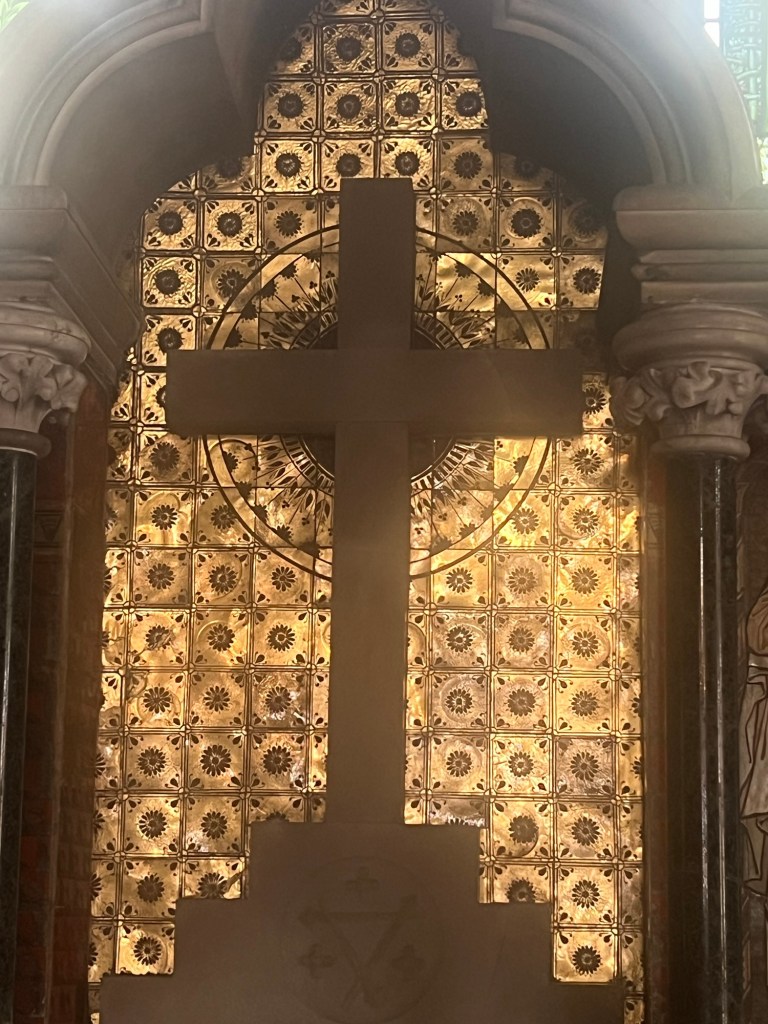
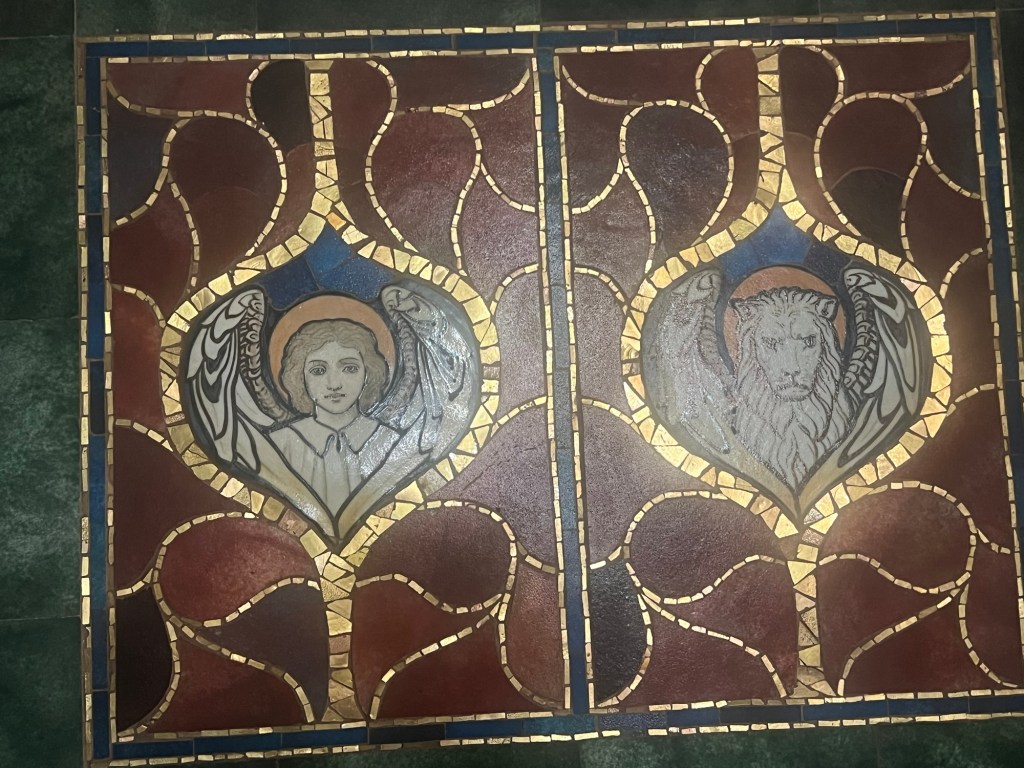
This window was installed in the 20C, rather than in the 19th. Apologies for the fog. No idea where that came from. This is one of the Burne Jones windows. There are some that look very like this in Trinity Church in Frome. The Burne Jones windows were designed by him and made in William Morris’ workshops. More Pre-Raphaelite fog. Apologies. The altar Close up of one of the Burne Jones windows. Psalm 150:5 commands believers to praise God with both “sounding cymbals” and “loud clashing cymbals”.The altar crossDetail of the wall panelling
London
After the party and a further day spent seeing the sights I went to London for the memorial concert for Ron Corp, conductor of Highgate Choral Society for nearly 40 years, for 22 of which I sat in front of him.
It was the most amazingly hot days – 35 degrees or so. London in that weather is dire! I’m so glad I moved.
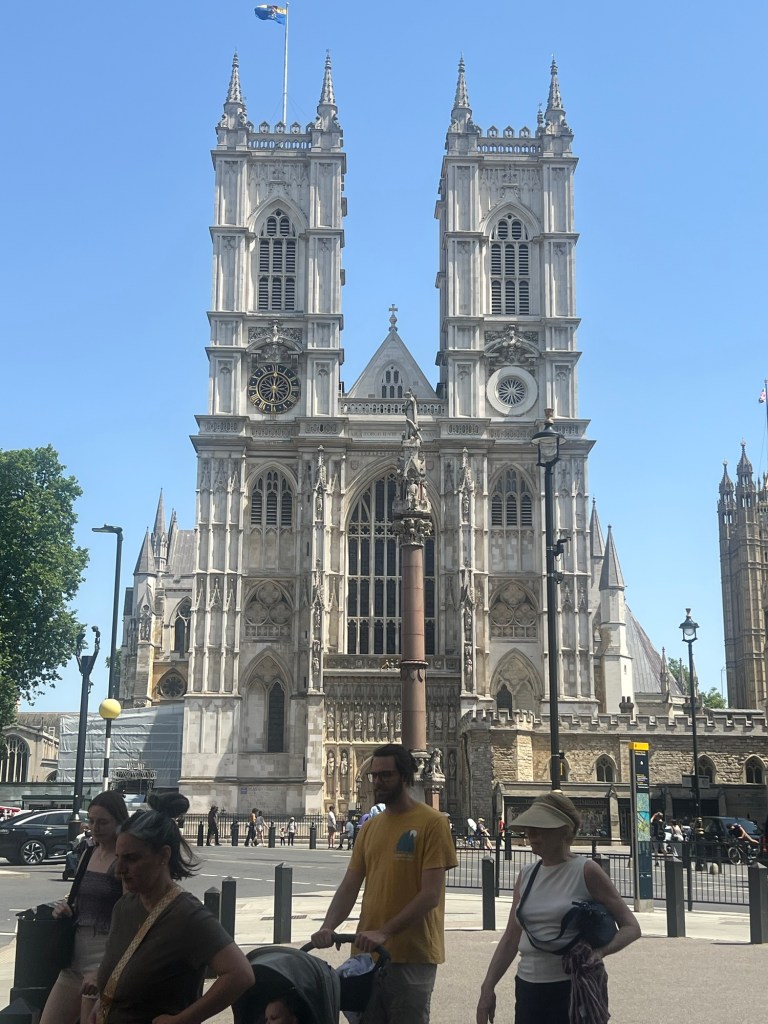
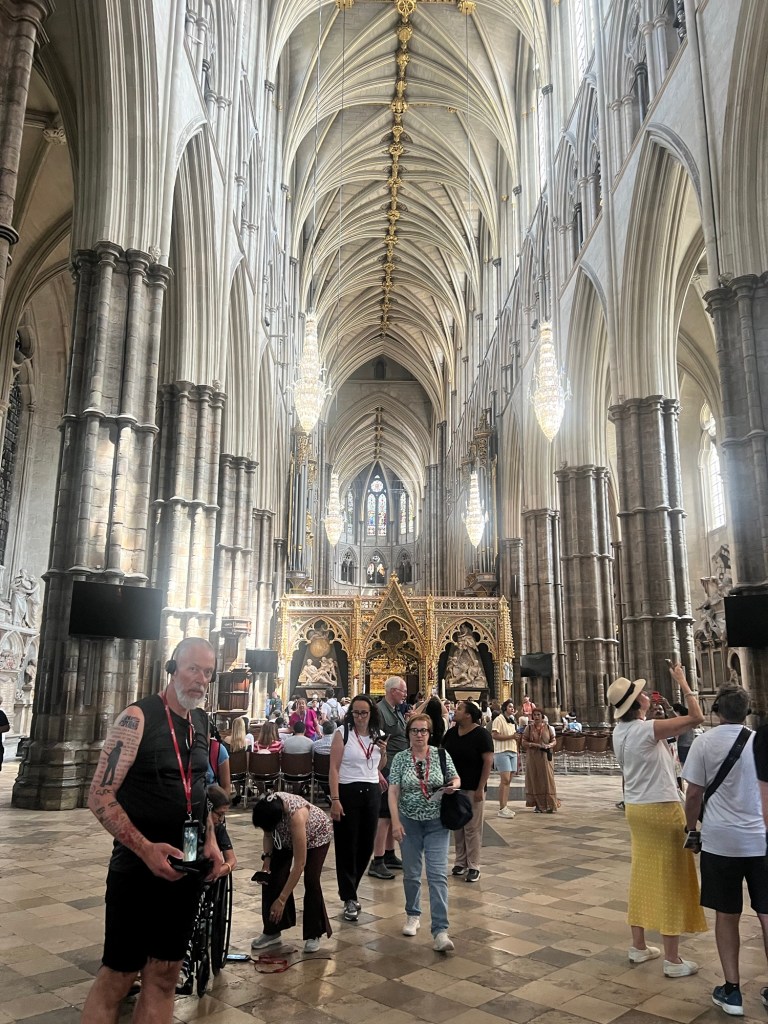
Before going to the concert I went to Westminster Abbey. Somehow Bath Abbey (where I volunteer) has negotiated a reciprocal arrangement with Westminster so that volunteers can get in for free. As it now costs £31…. Despite the cost, the place was heaving and very hot. The photos are quite random and I’m not sure I can remember everything about all of them.
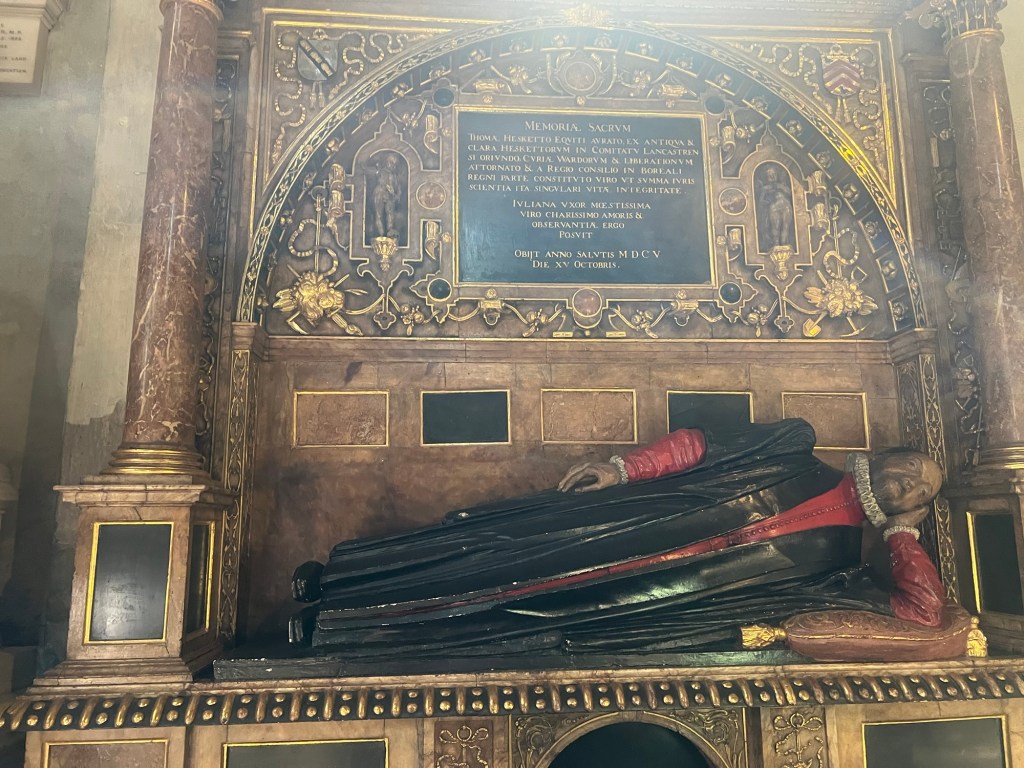
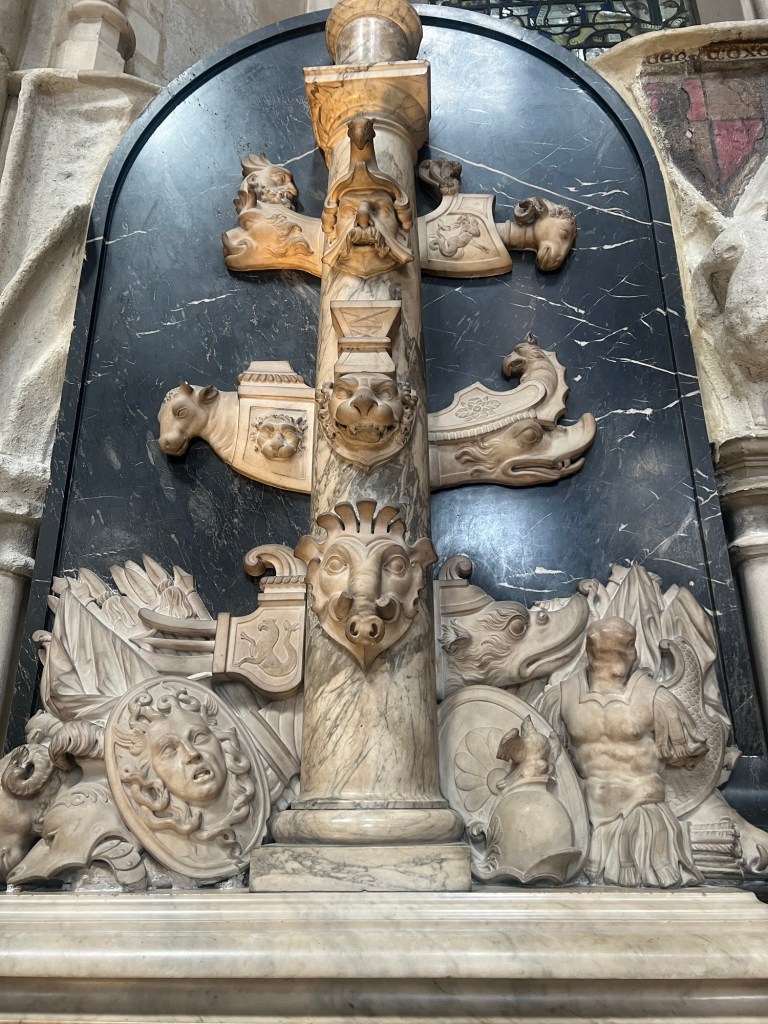
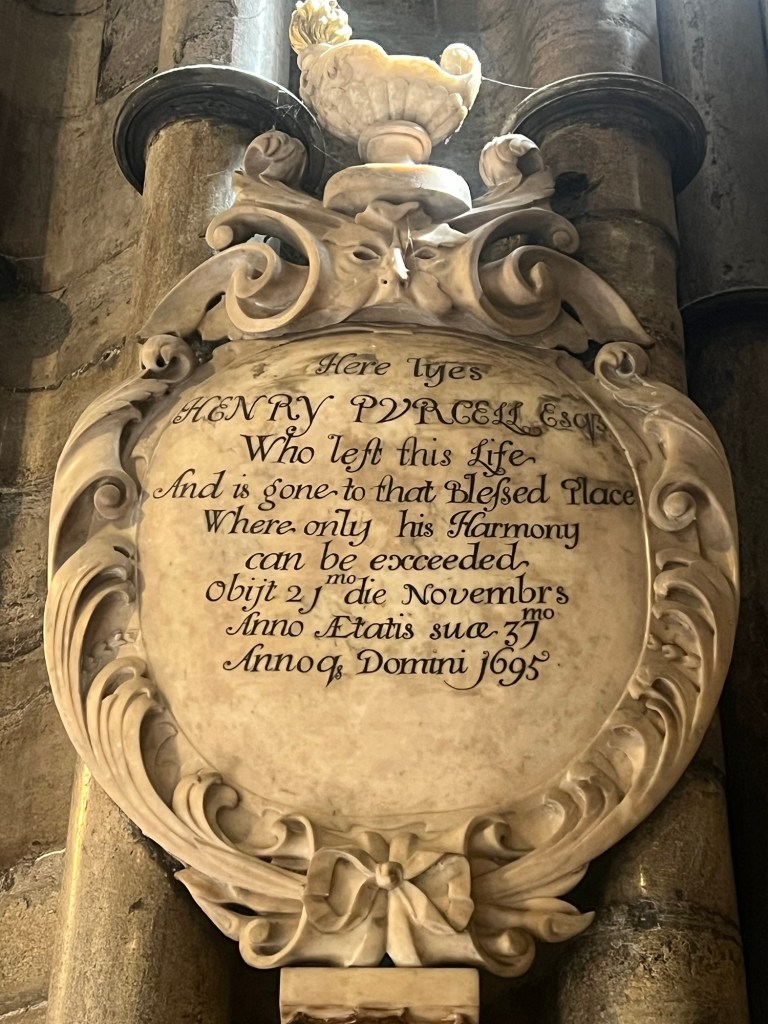
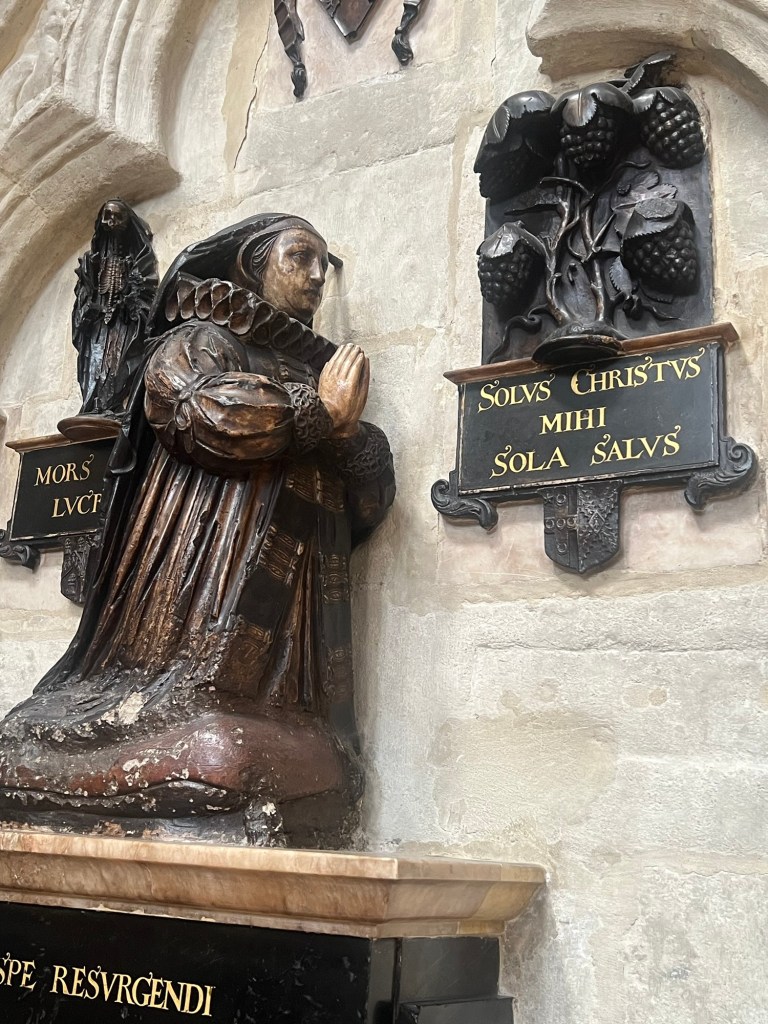
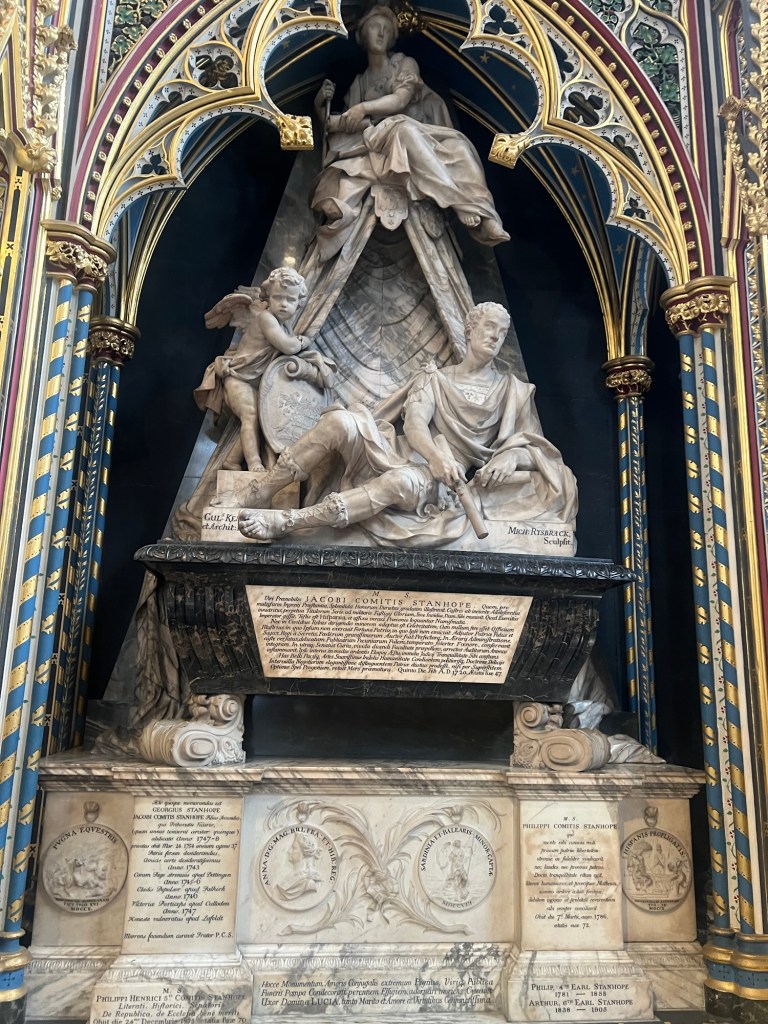
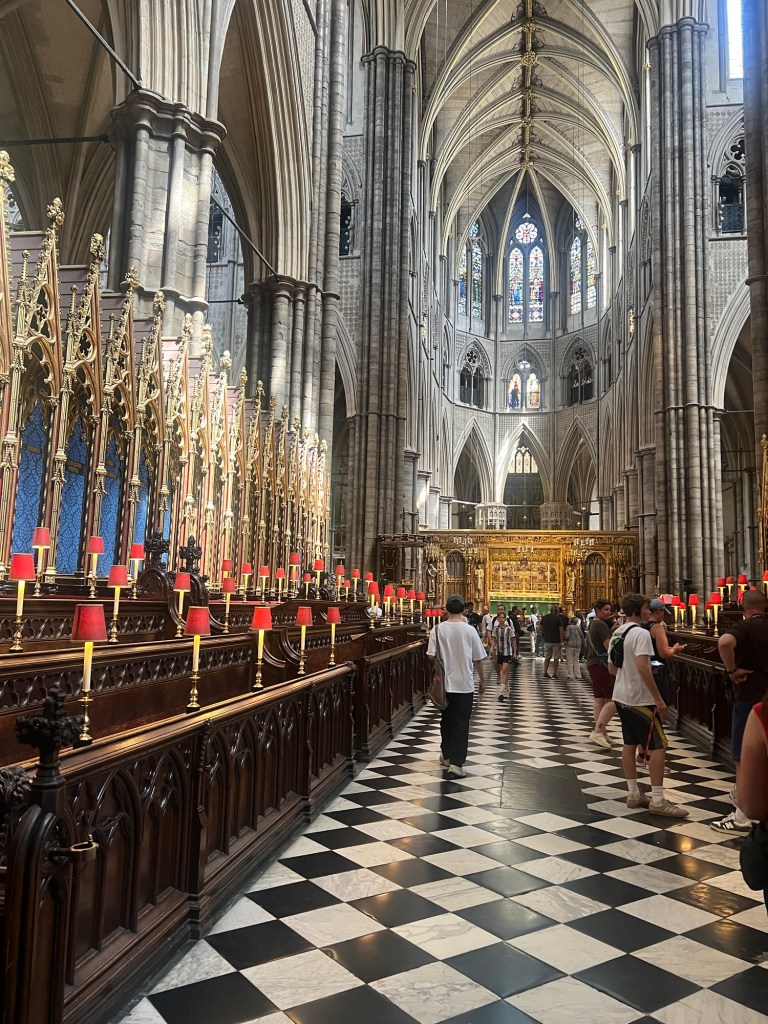
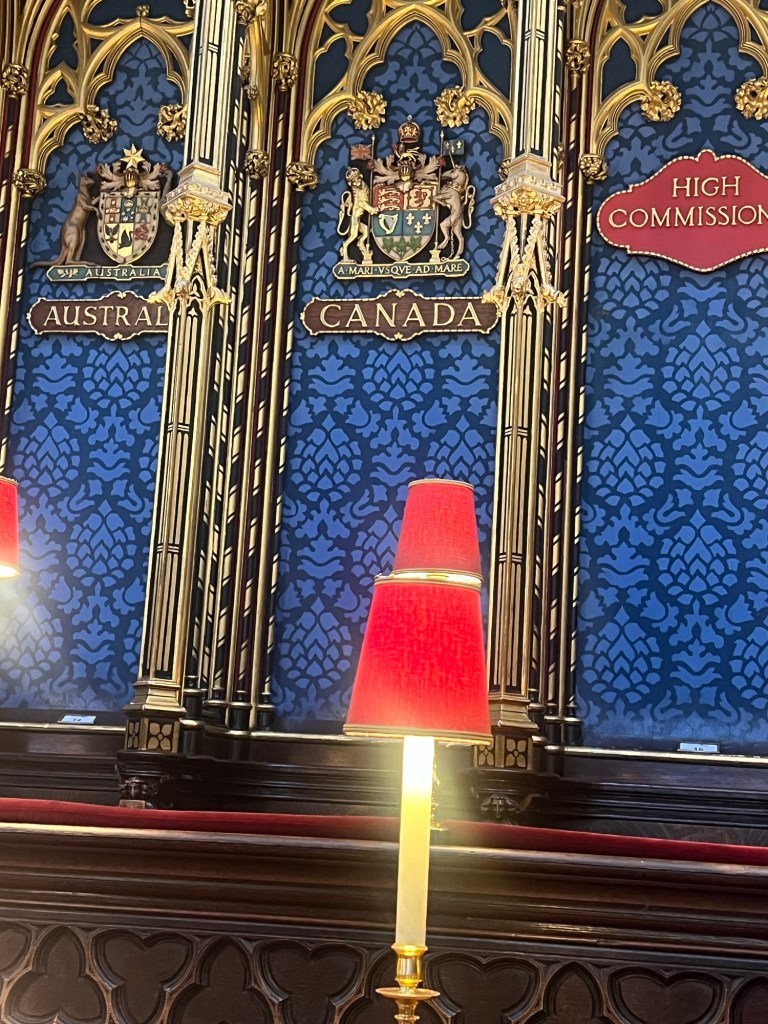
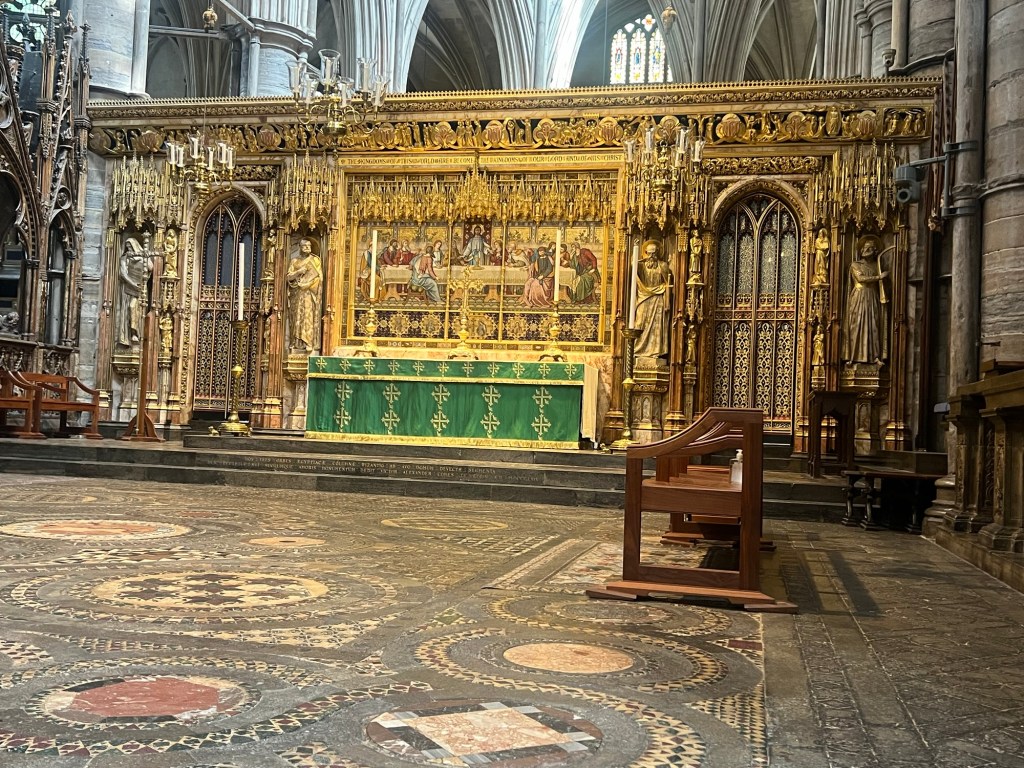
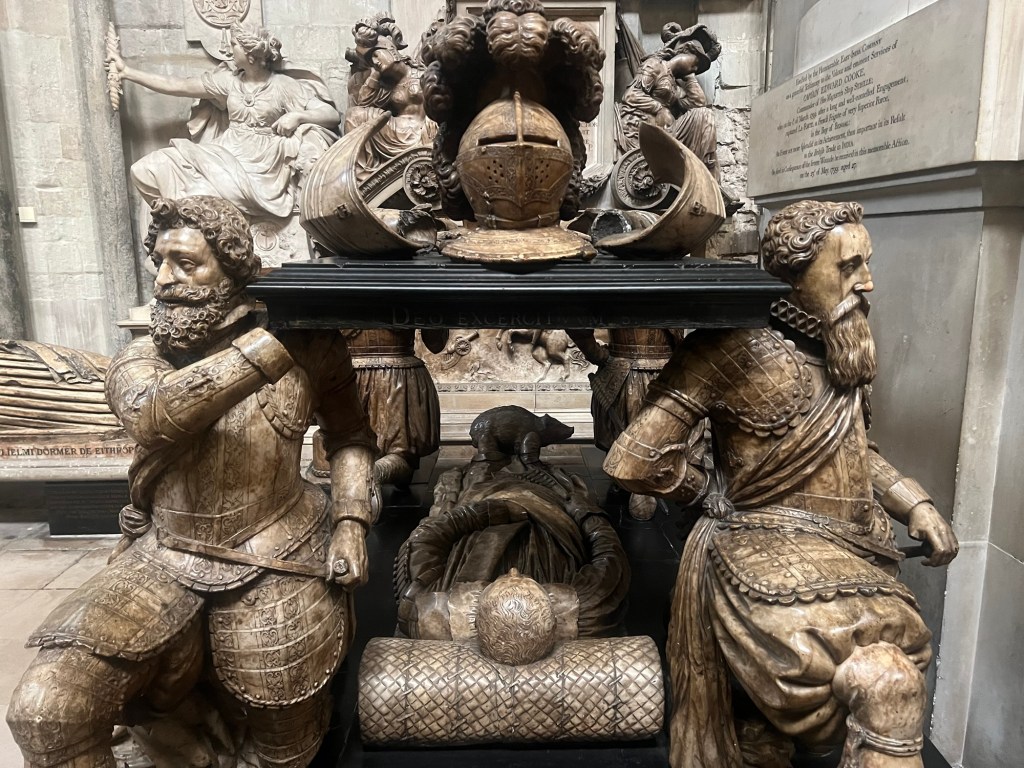
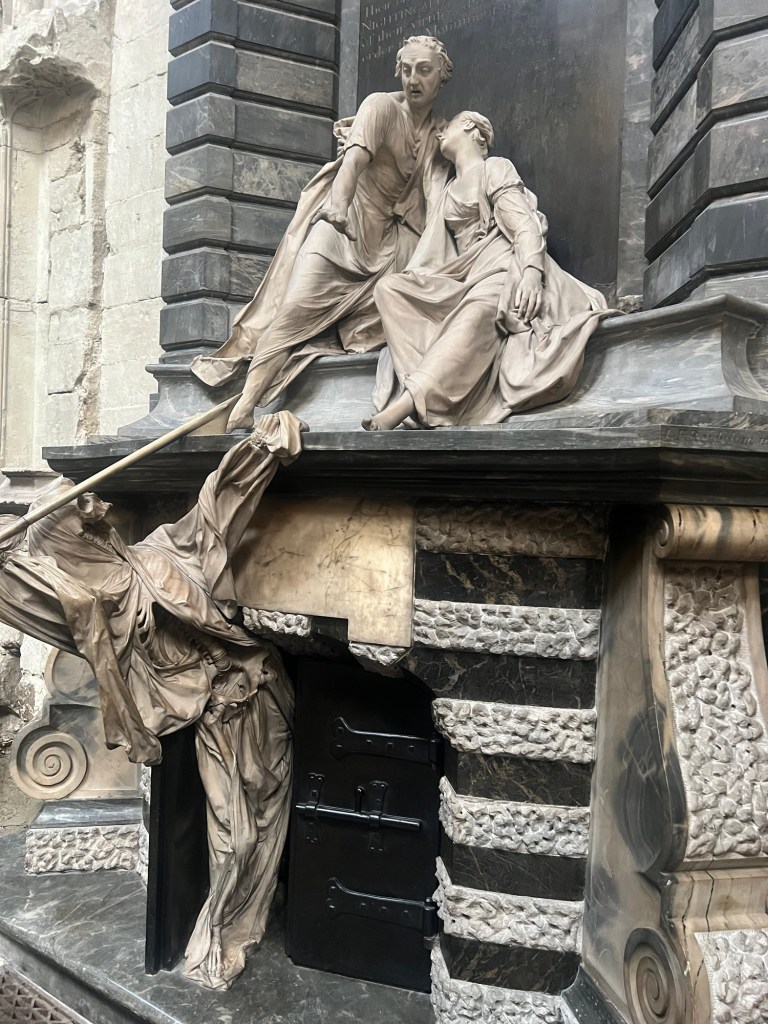
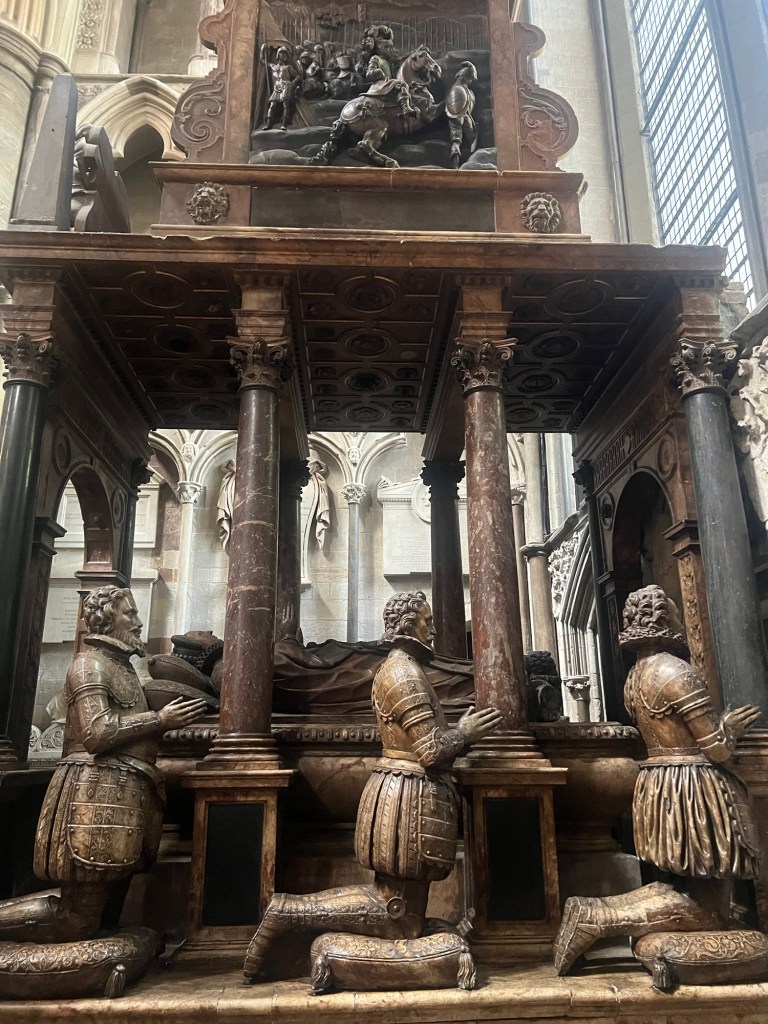
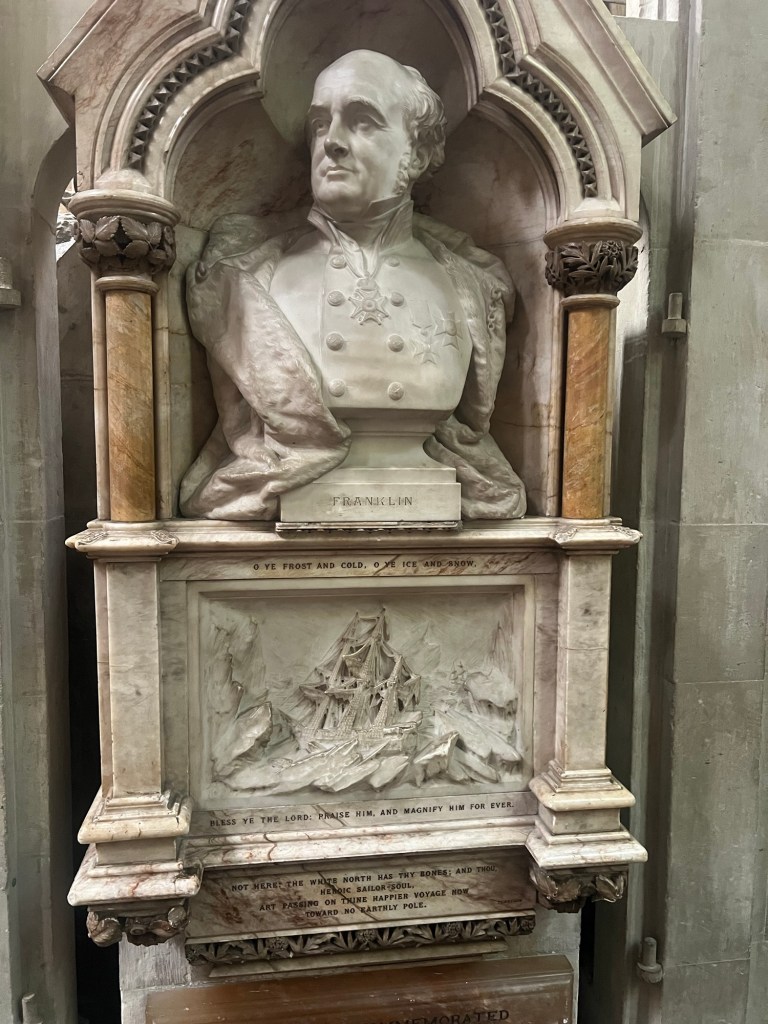
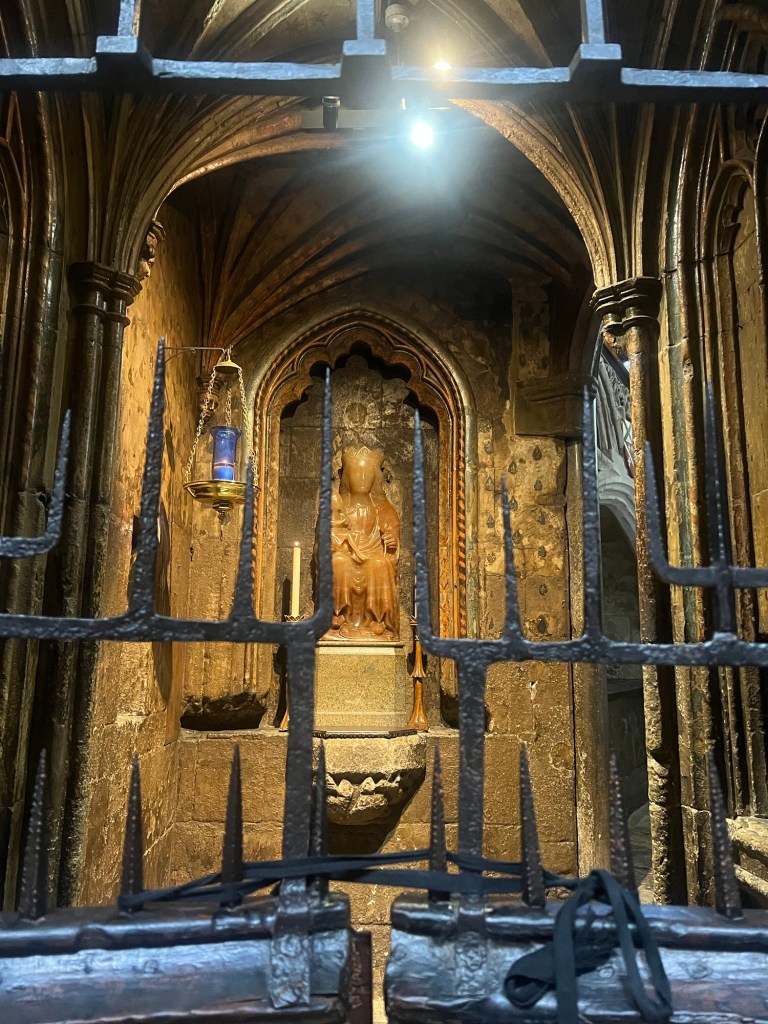
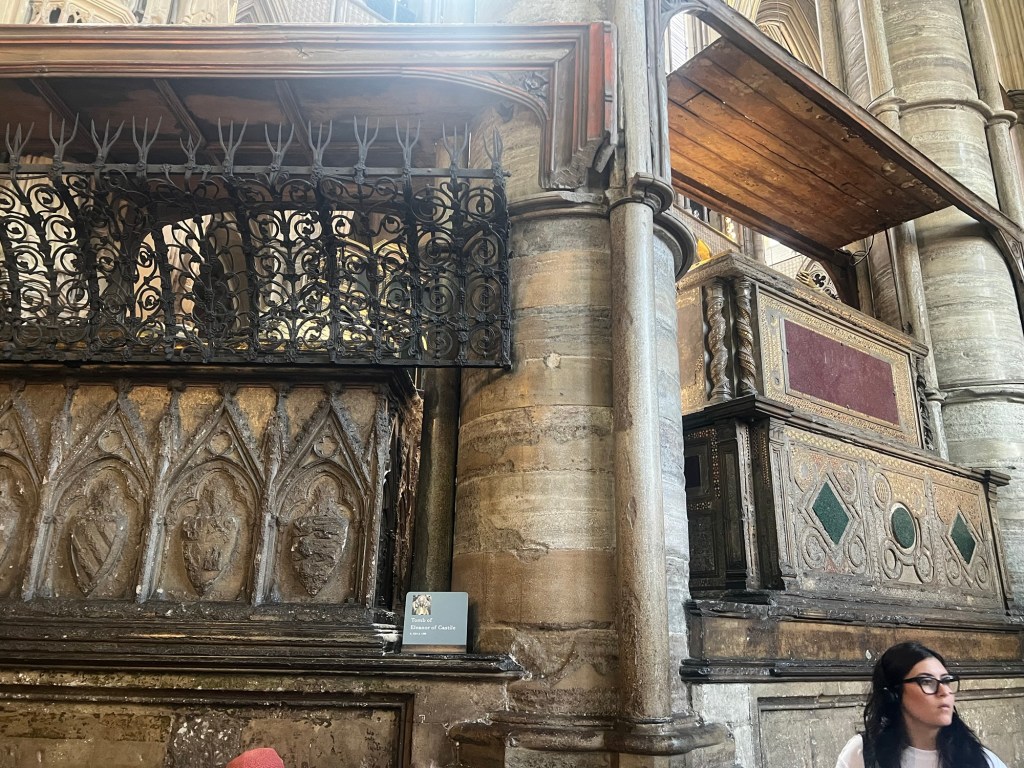
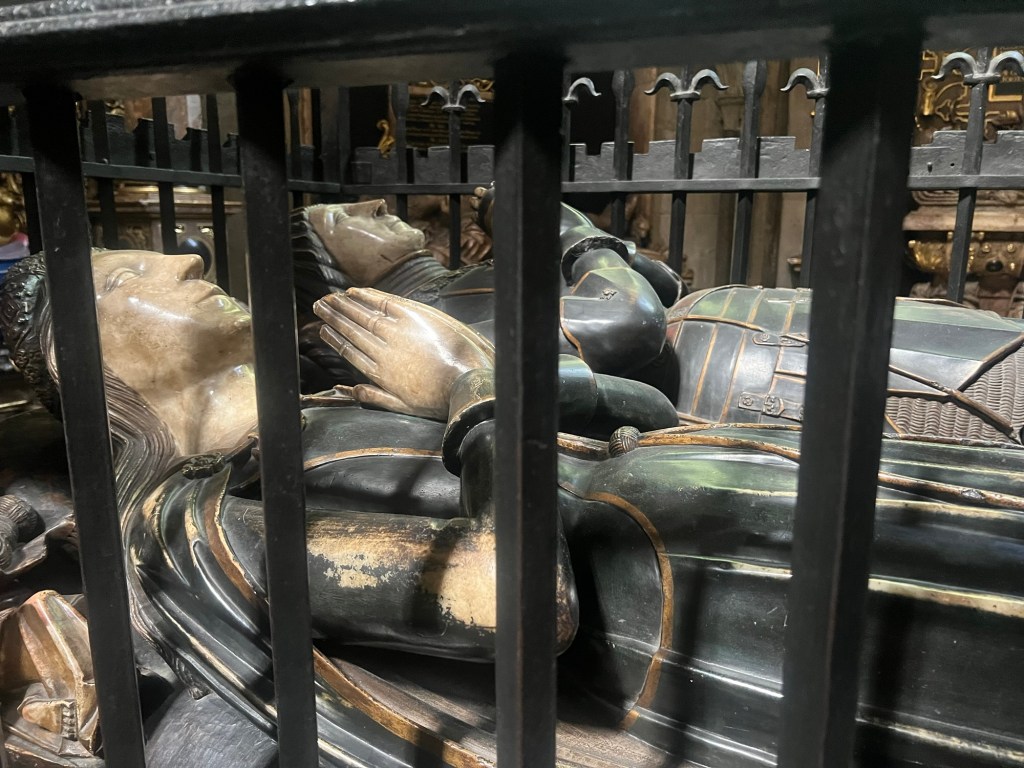
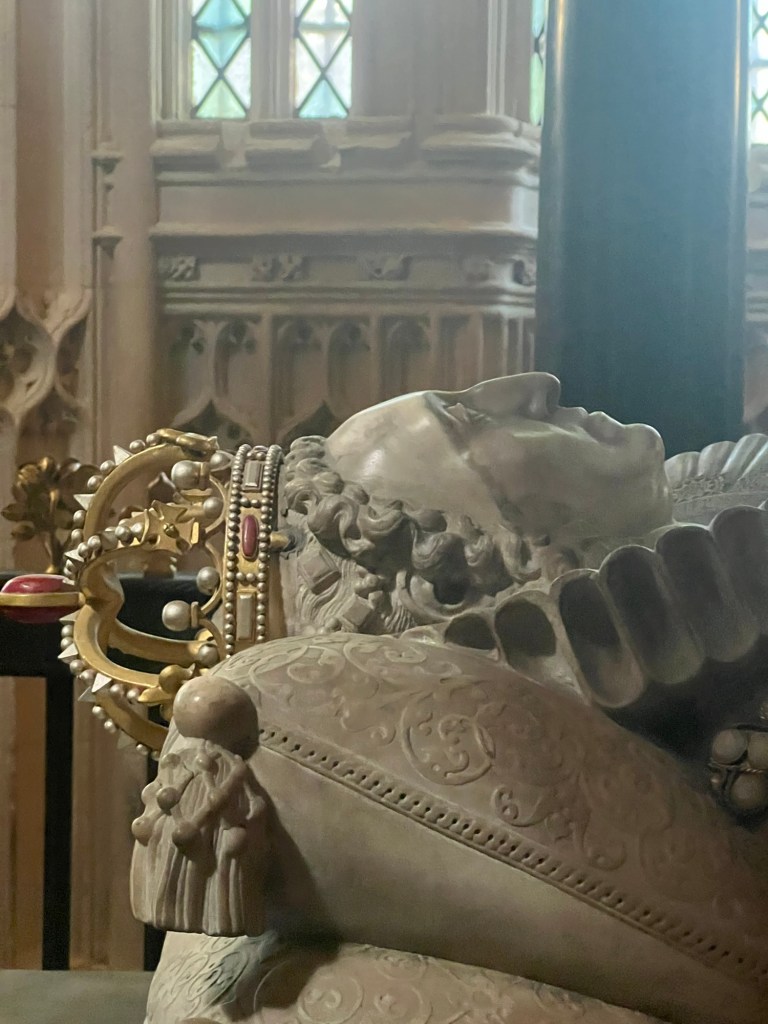
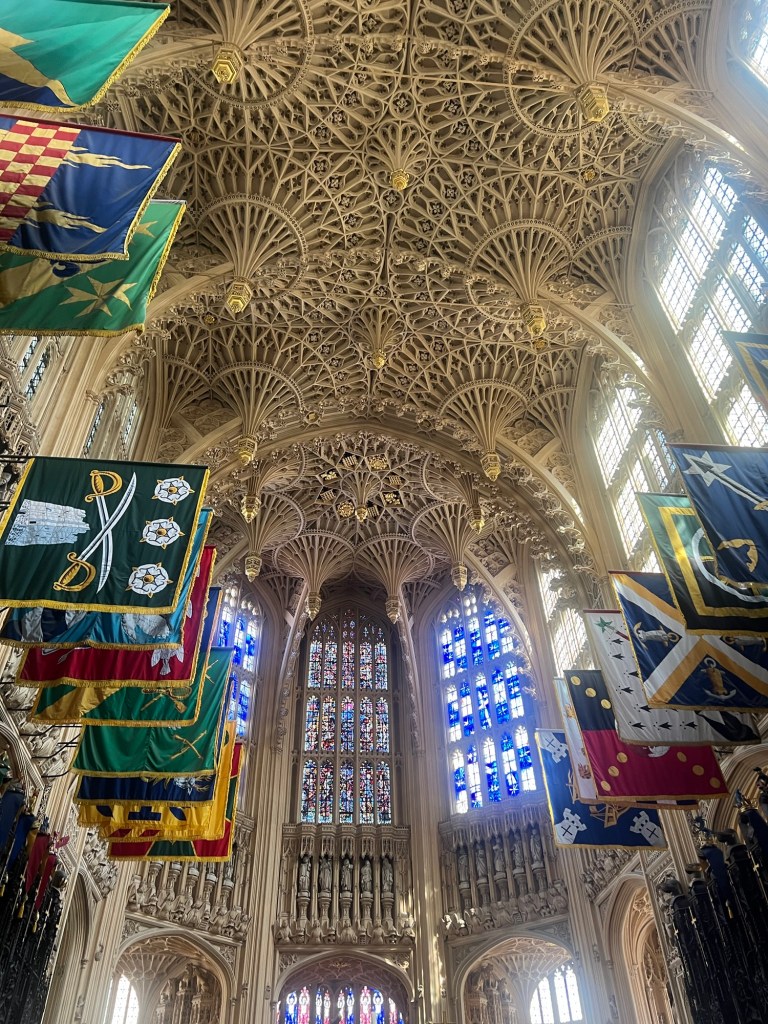
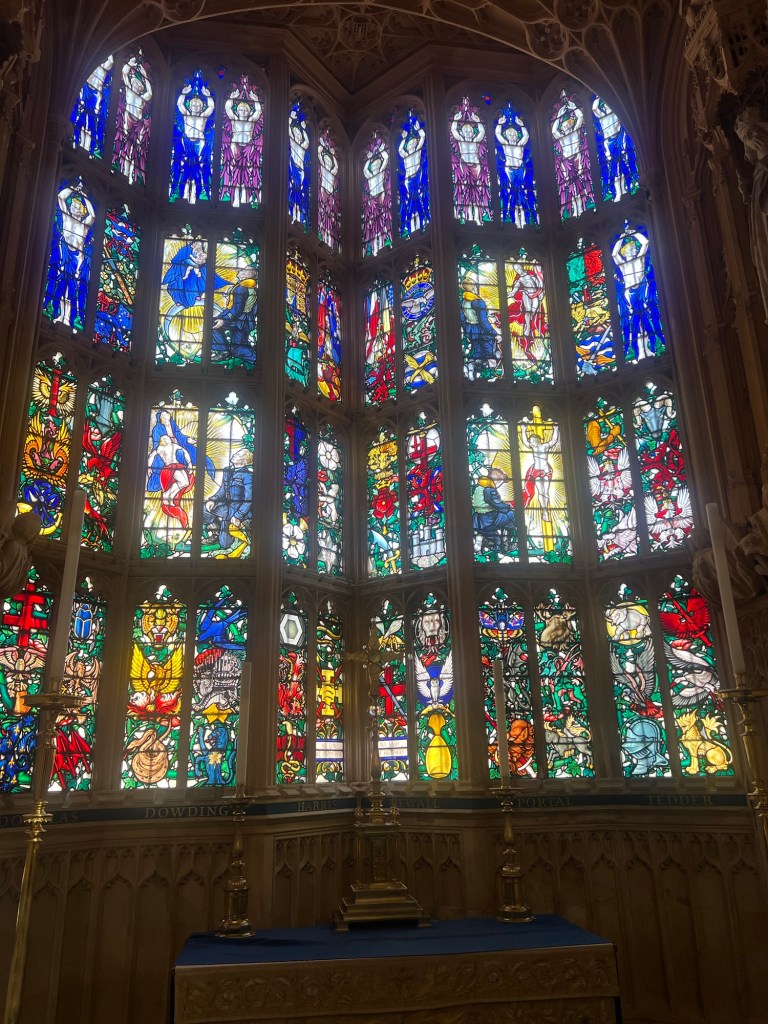
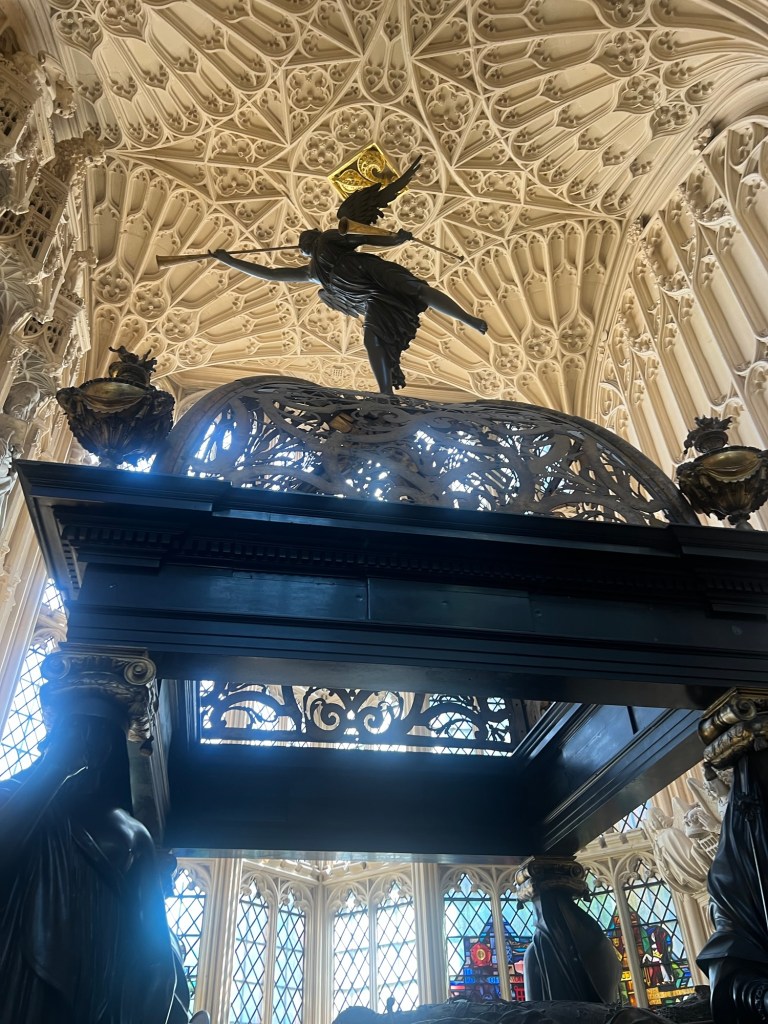
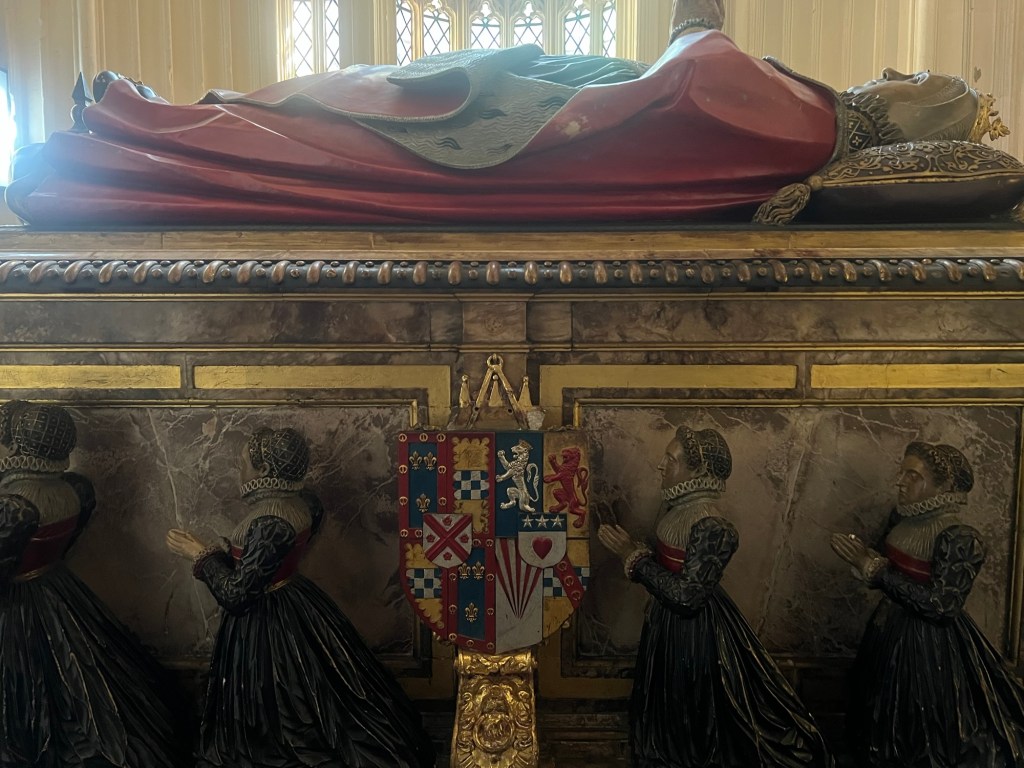
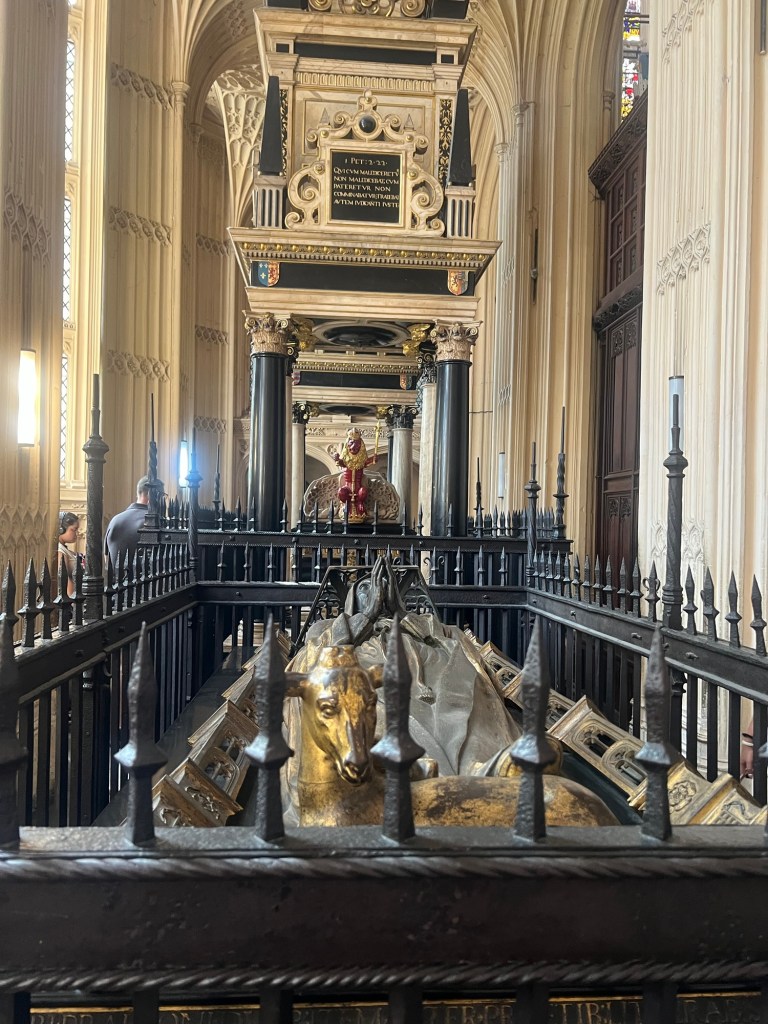
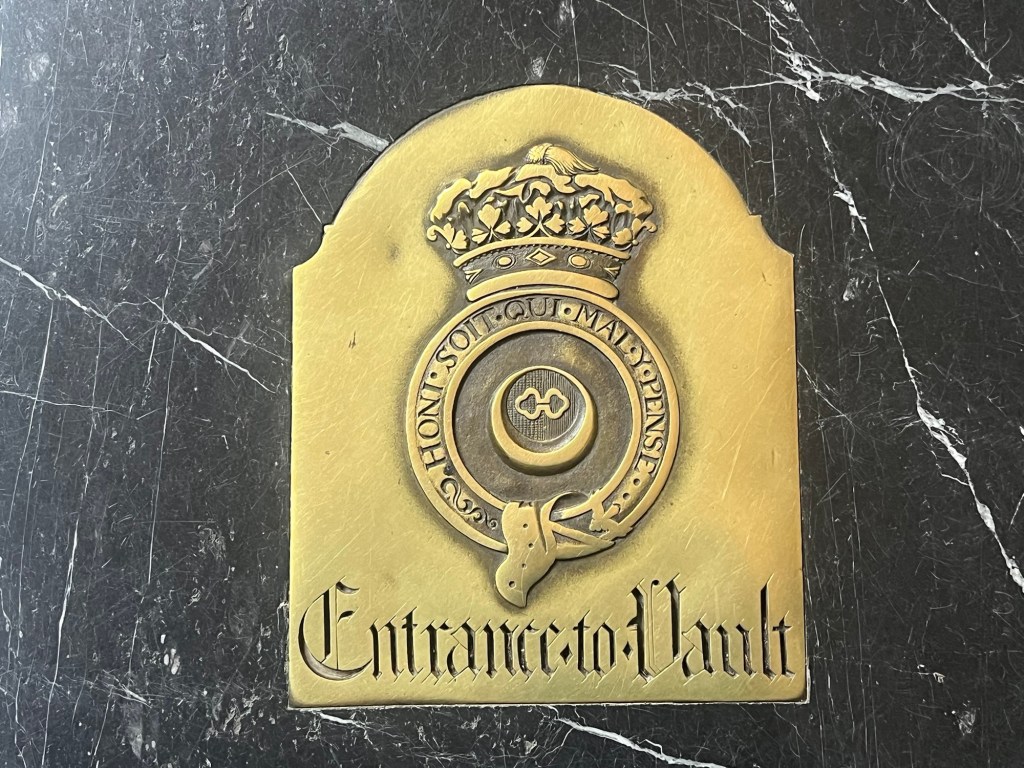
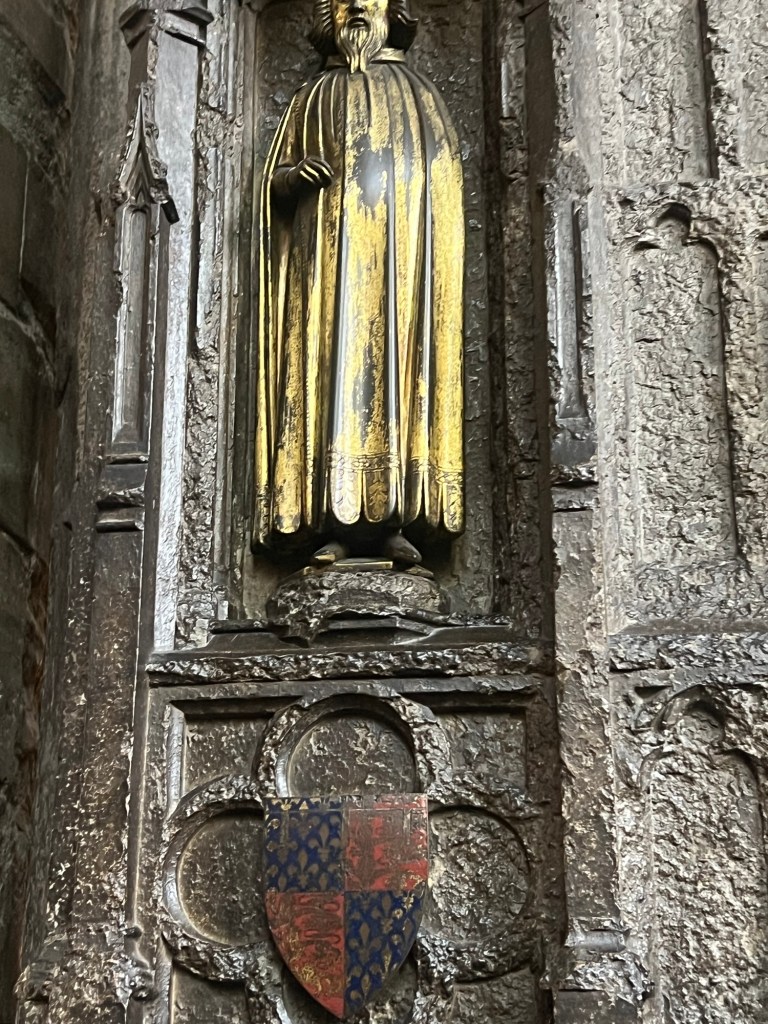
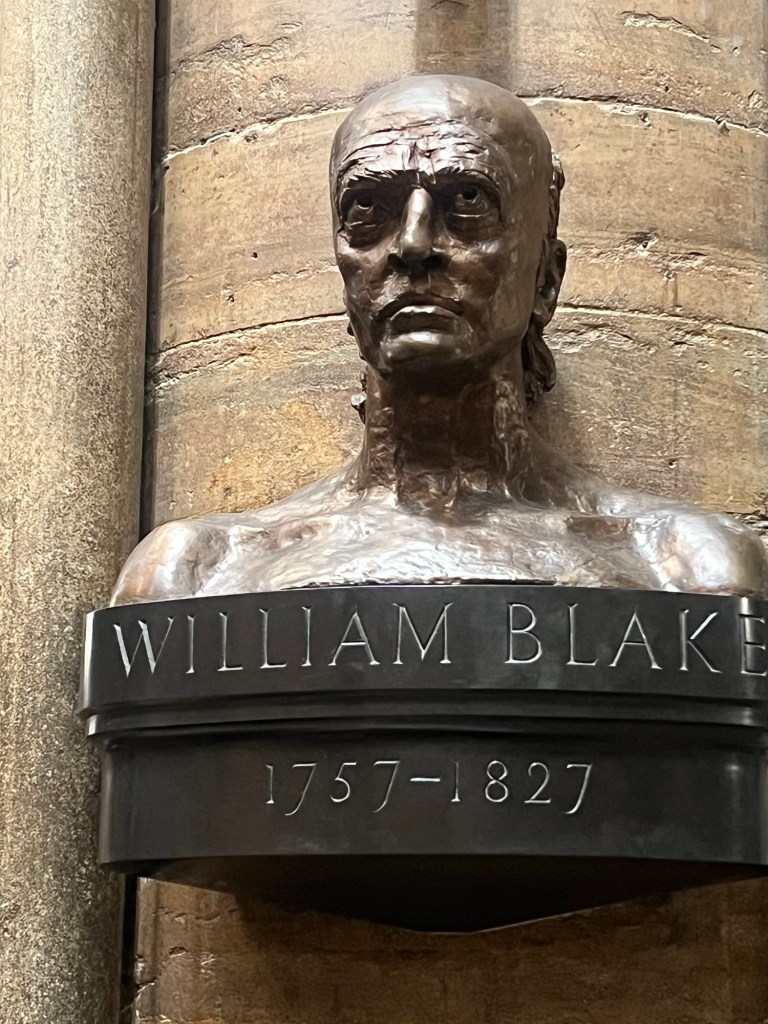
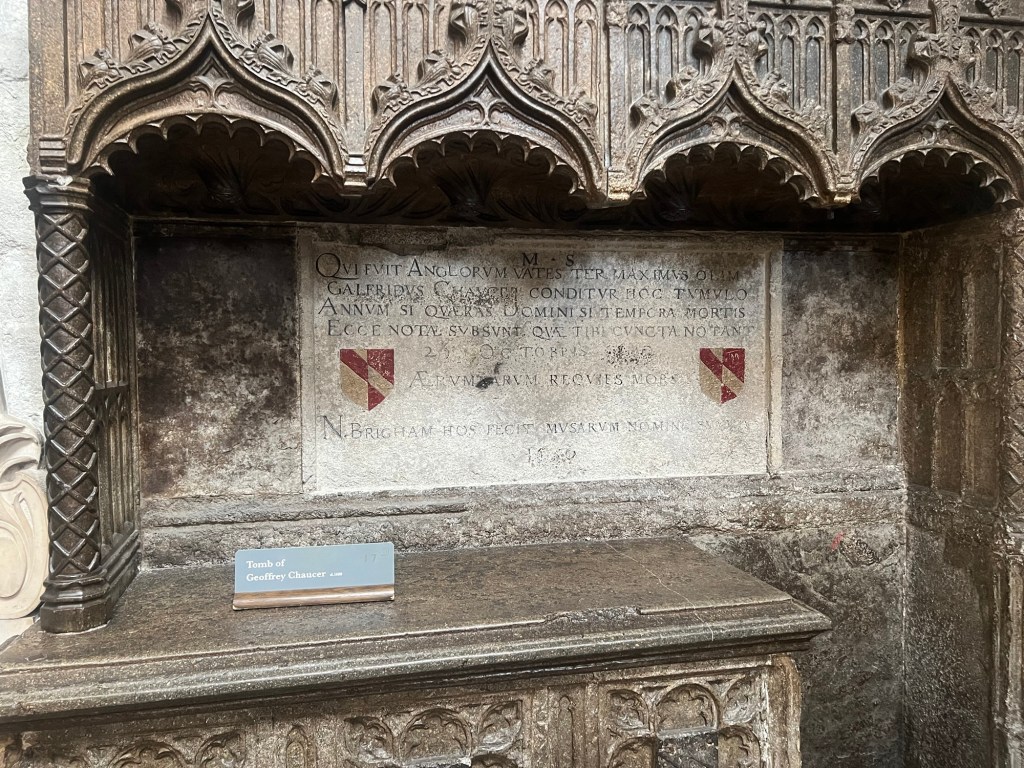
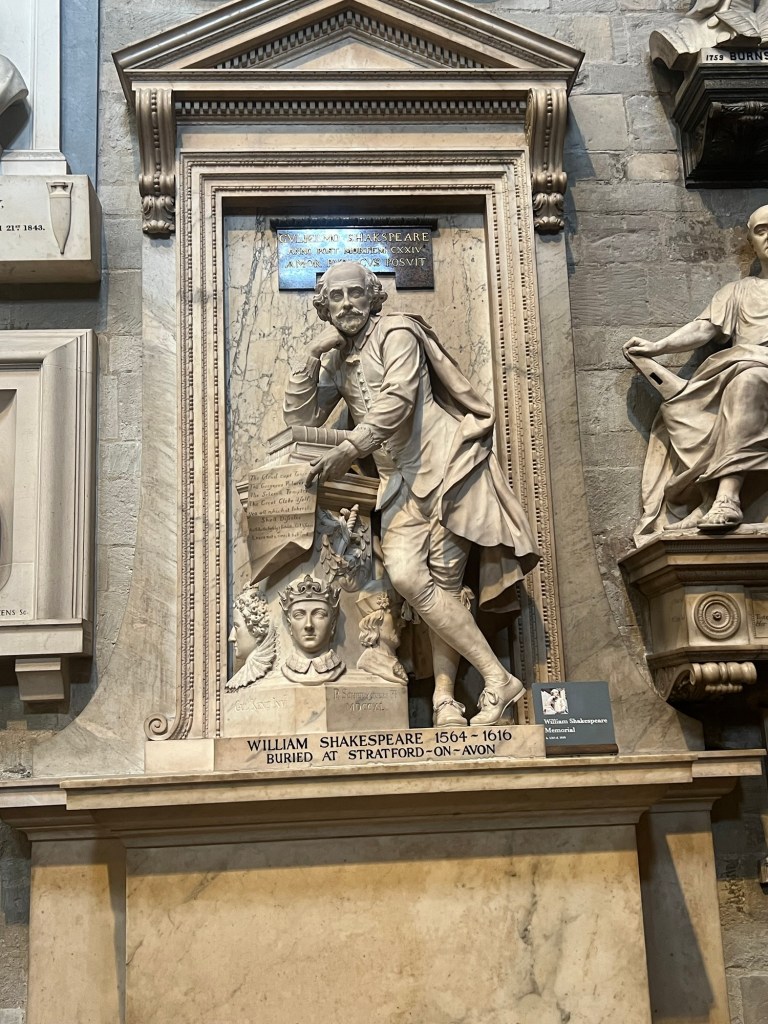
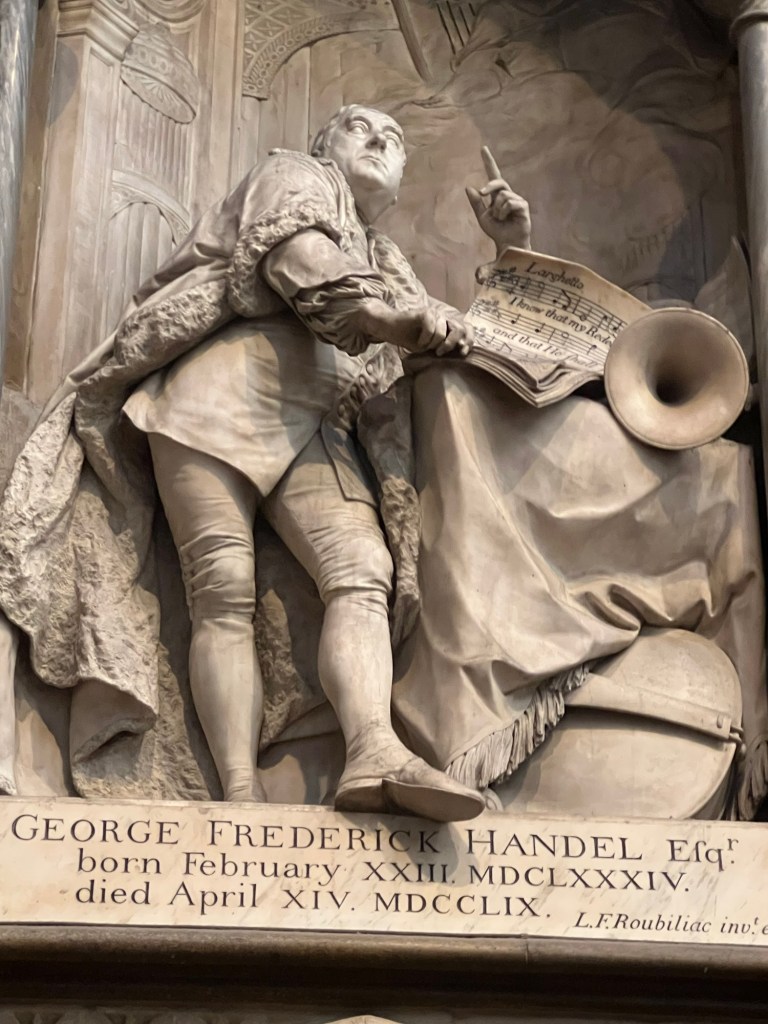
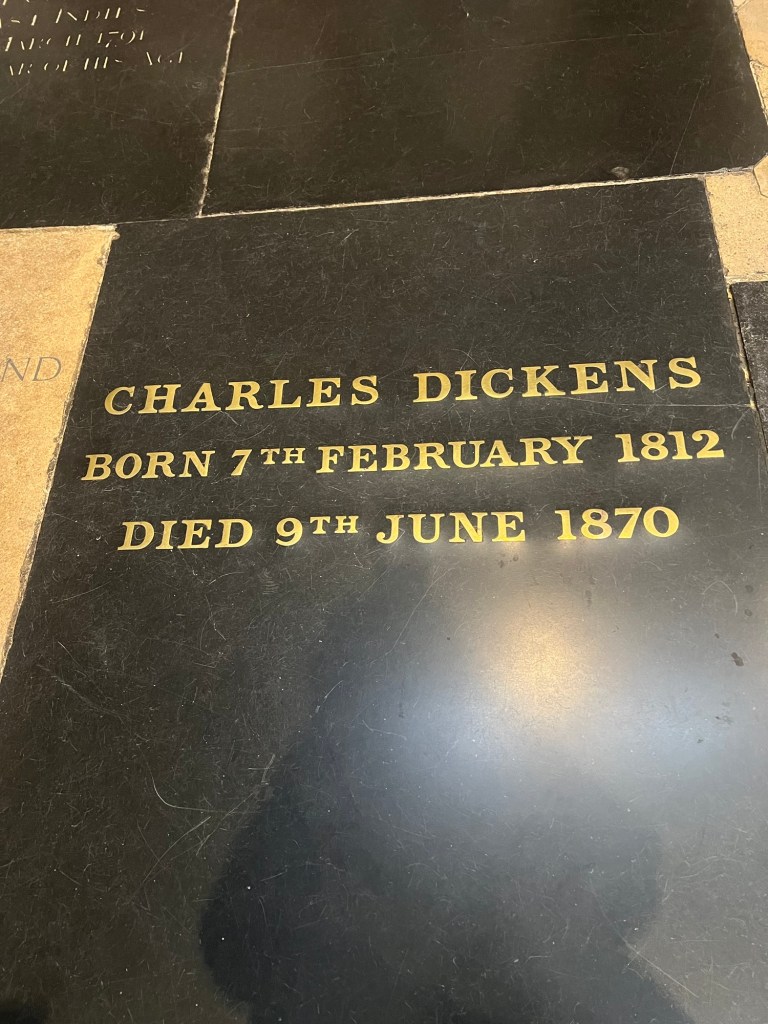
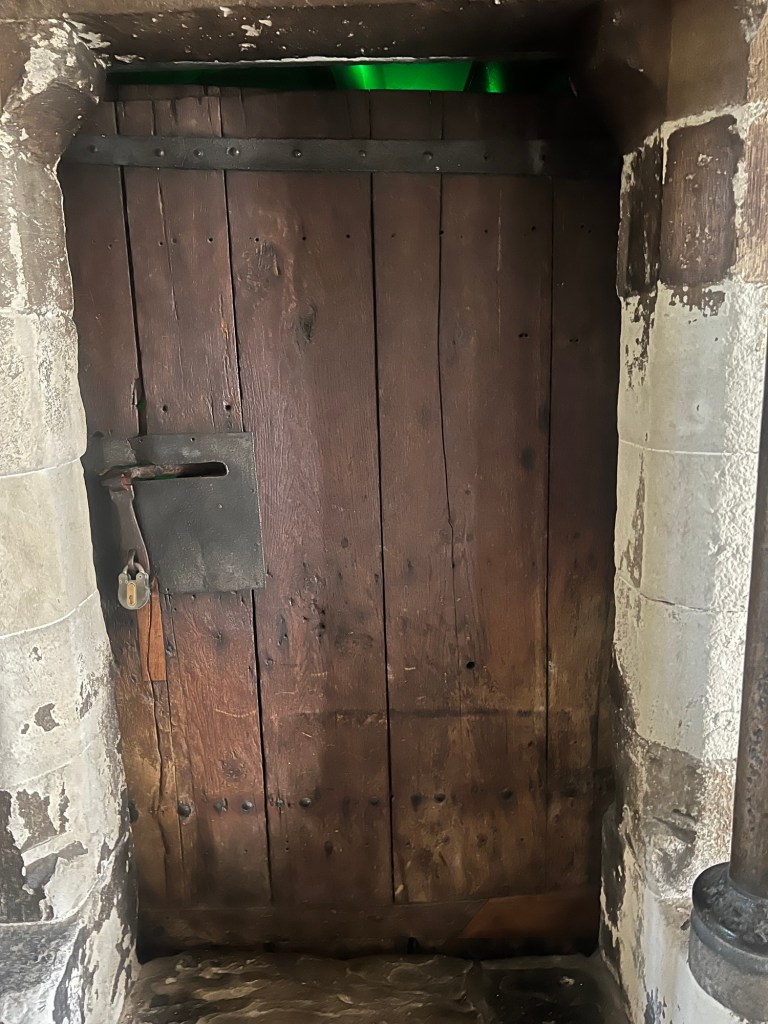
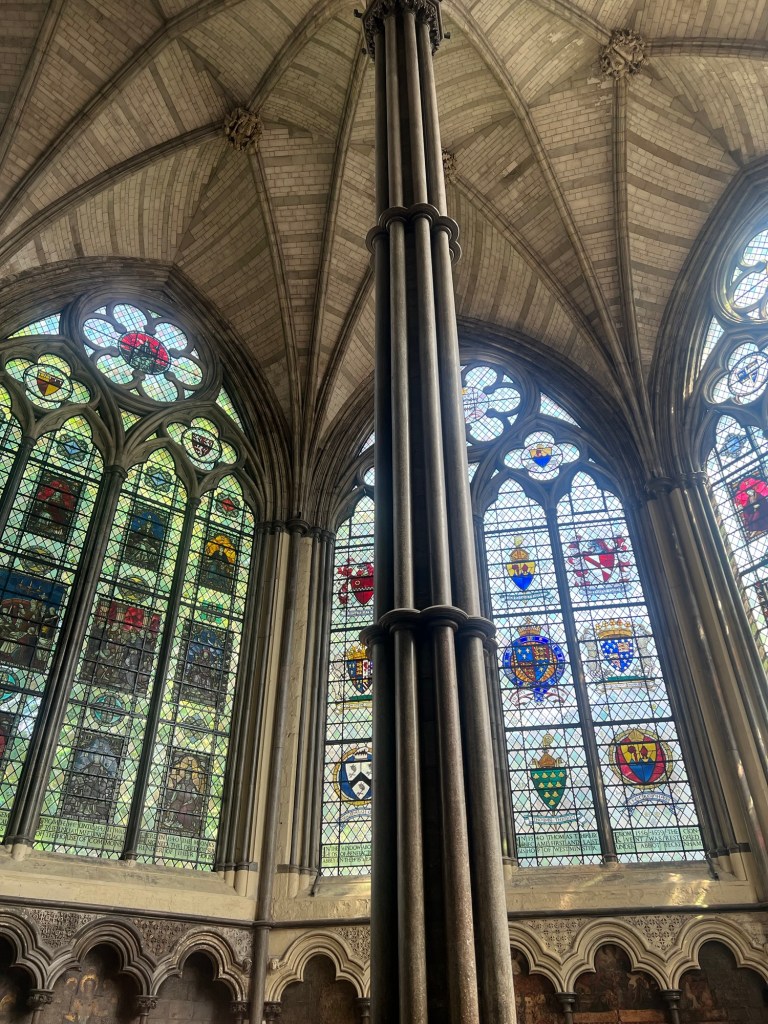
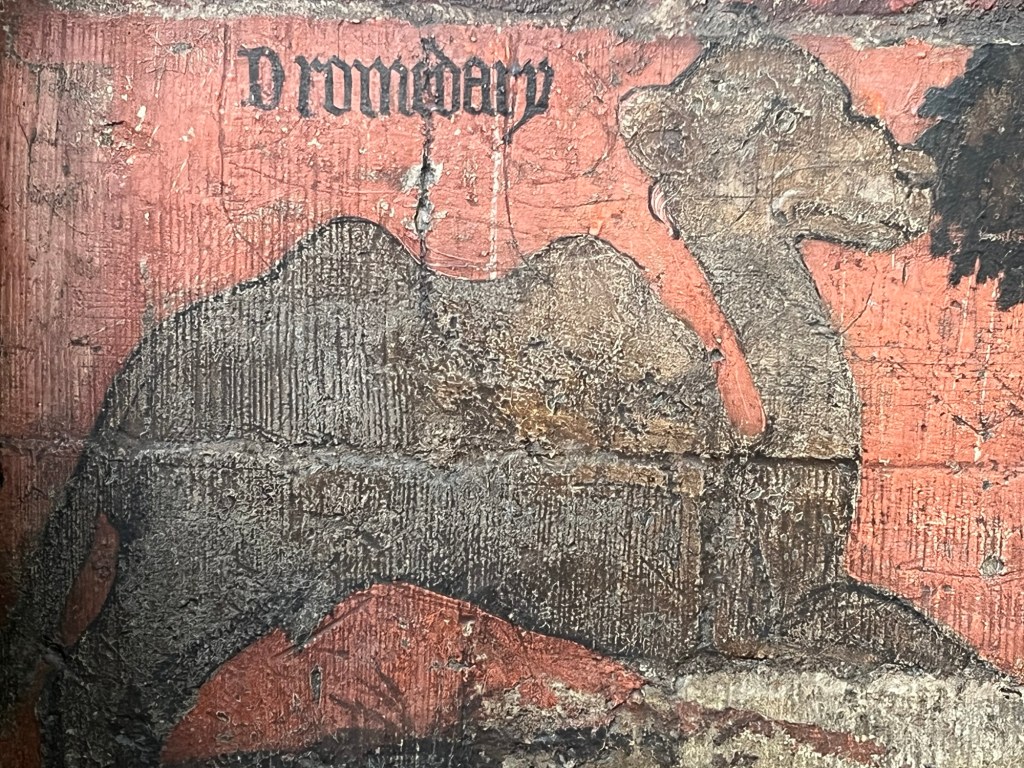
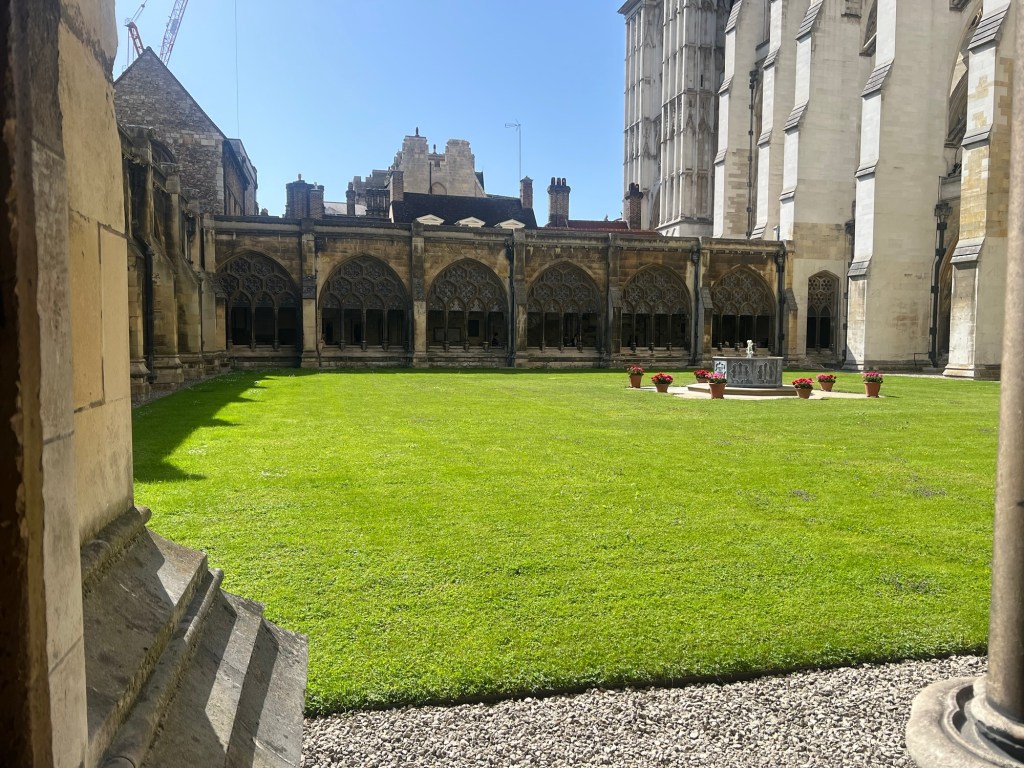
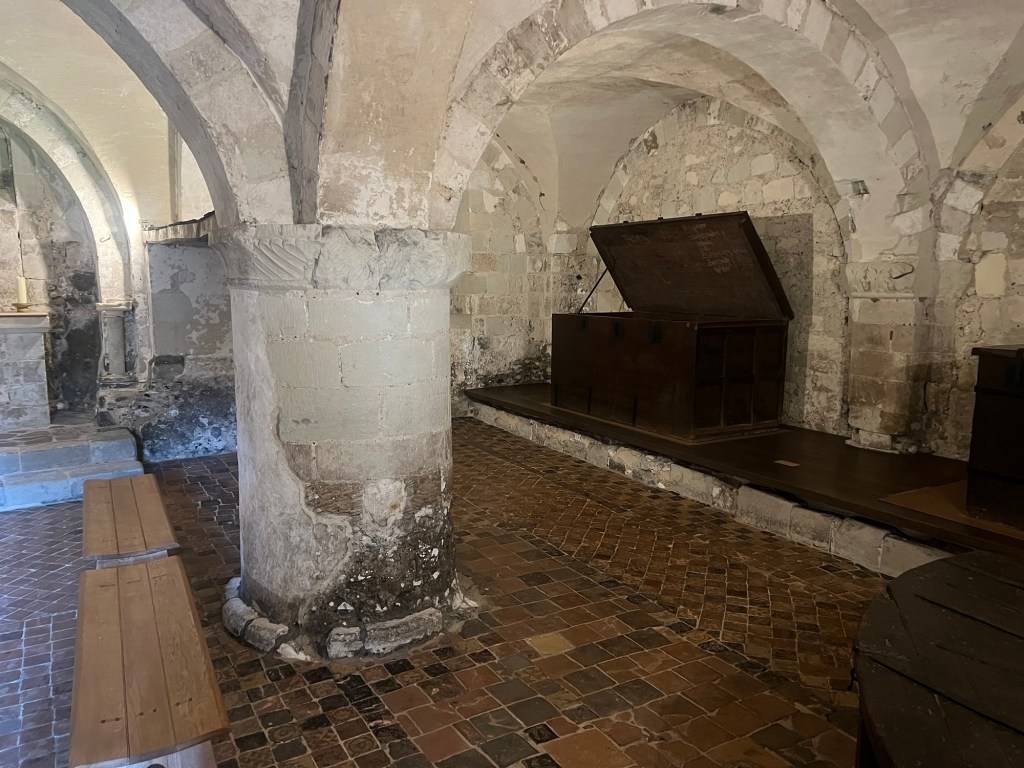
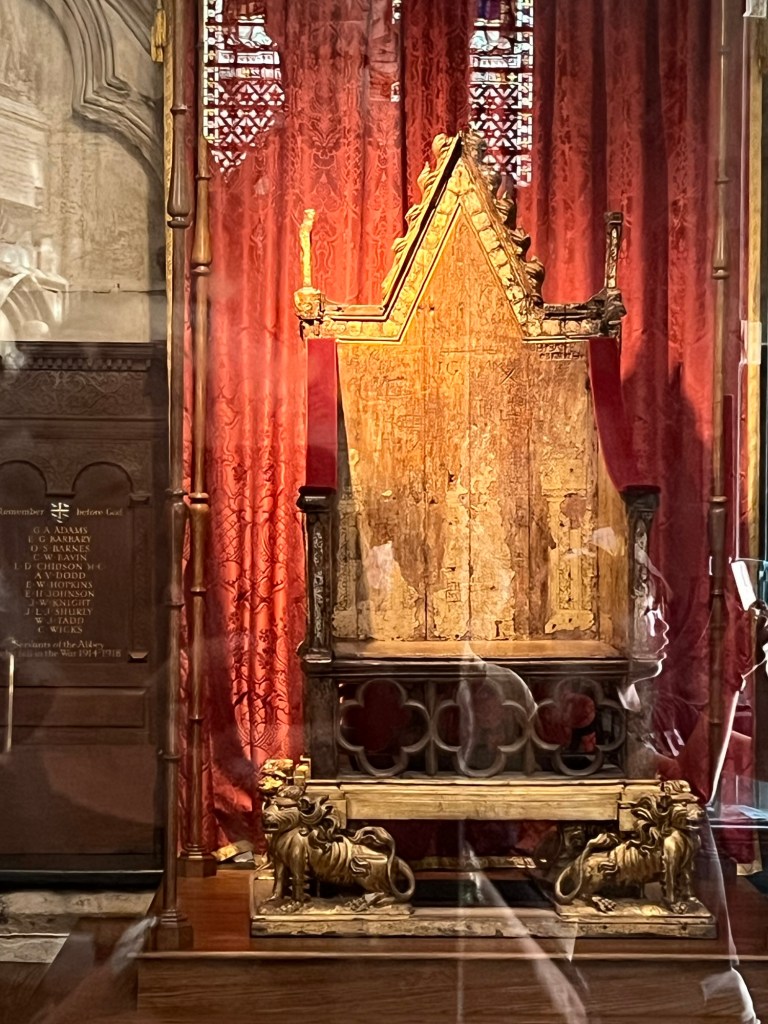
Westminster AbbeyThomas Hesketh. Impressive 17C tomb. This is from the tomb of an 18C admiral. It appears to be a Native American totem pole. Unusual. Henry Purcell’s original monument (he has two)An angel from a 17C memorial. The interior of the Abbey. James, Lord Stanhope. The sculpture is by Michael Rysbrack, one of the best known sculptors on the early 18C. He did Hercules in The Pantheon at Stourhead. The choir The choir stalls are marked with the titles of the people who get to sit there during coronations. The High Altar with the Cosmati Pavement in front of it. https://www.westminster-abbey.org/history/explore-our-history/cosmati-pavement#i3663 The retable, or picture over the altar, is 13C and the oldest in the country.This was the extremely impressive tomb of someone whose name wasn’t visible. He is lying at the lower level with his armour laid out at the top. There are four gentlemen holding up the upper level and, at his feet, there is a tiny pig. Or possibly a wild boar. All made of marble. This is also VERY impressive. The woman at the top died in childbirth and her husband is defending her against Death who has emerged from the basement with a spear. The writing (above their heads) implies the monument is to both of them so maybe he died (of grief?) before it was finished. Another blindingly impressive 17C monument. The supporters are the man’s 6 sons, 5 of whom had predeceased him. Franklin of North West Passage fame. https://en.wikipedia.org/wiki/Franklin’s_lost_expeditionThe oldest chapel in the Abbey, probably dating from Edward the Confessor’s time. The bust is a modern copy of what disappeared at the Reformation. Henry V on the left and (possibly) Richard III on the right. Mary Queen of Scots. She was moved here by her son, James I, when he became King of Scotland and England Elizabeth I. The nose is distinctive. Henry IV’s Lady Chapel. Stained glass!I don’t know whose tomb this is but it is definitely worth a look! I also don’t know who this is – female and royal obviously but beyond that, who knows? A line of female royals, including Mary Queen of Scots and Elizabeth I The title says it all Detail from Henry I’s tomb, showing his son, The Black Prince. I think this must be a 20C sculpture, despite Blake being a 19C poet. Geoffrey Chaucer’s tomb. This is a 19C rearrangement. His memorial was the first one in what is now called Poets Corner. Interestingly, he was buried in the Abbey because he was a top civil servant; nothing to do with the Canterbury Tales. William Shakespeare – little known playwright (ha!)Handel – who looks as if he is about to fall off his shelf. Hallelujah! This tomb was opened in the 20C and was found to be full of flowers. Some of them were wildflowers, wrapped in rags, showing that poor people had cared enough to attend the funeral. This is the oldest door in Britain. https://www.westminster-abbey.org/history/explore-our-history/britains-oldest-door#i3657The Chapter House, dating from the 13C https://www.westminster-abbey.org/history/explore-our-history/chapter-house#i365813C wall paintings in the Chapter HouseThe cloister. It is impossible to tell that there is this open space behind the Abbey from outside. The Undercroft. This is almost the only remaining piece of Edward the Confessor’s Abbey. The 14C Coronation Chair. https://www.westminster-abbey.org/history/explore-our-history/the-coronation-chair#i3662 An American visitor standing next to me asked if it was true that King Charles had had to carve his name on it like all his predecessors!
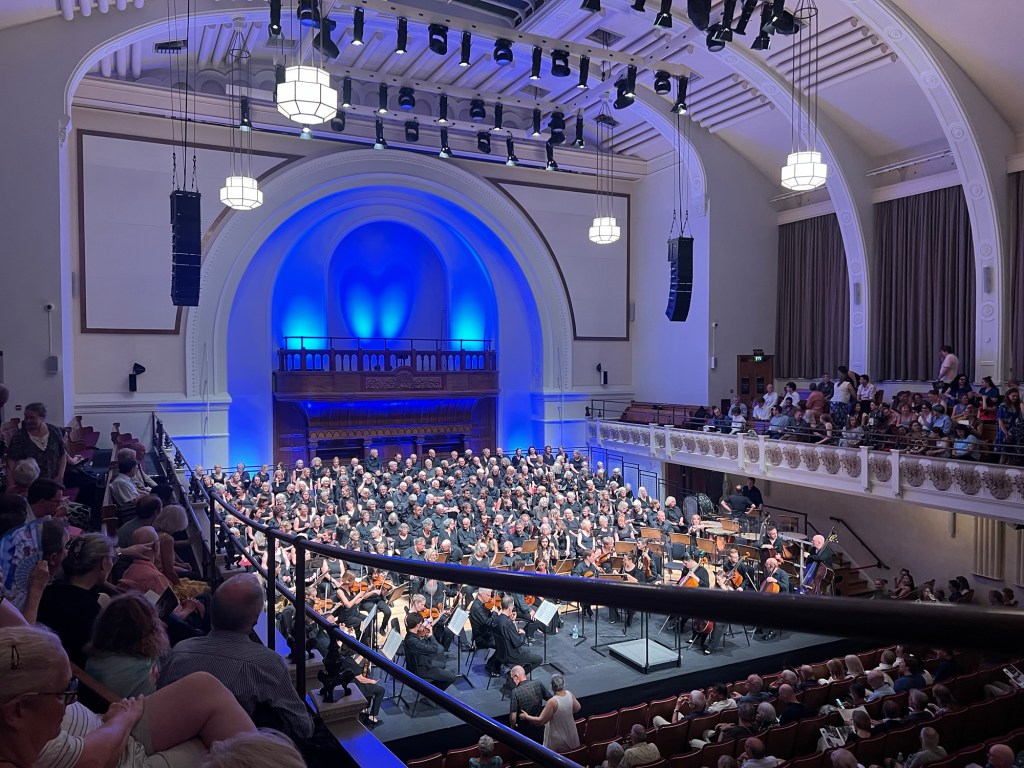
After the Abbey I went off to Sloane Square for the memorial concert at the Cadogan Hall. I had a very expensive dinner in a nice restaurant (with air conditioning) first. The concert was of Ron’s music and included both his big choirs – Highgate Choral, The London Chorus, his orchestra, the New London Orchestra and the alumni of his children’s choir, the New London Children’s Choir.
Choirs and orchestra ready for the off!
As a postscript, I discovered two days later that I had been dehydrated whilst in London. I found this out by my cheek swelling up and becoming painful. Apparently, dehydration can cause your salivary glands to become blocked. Who knew?
 The Retirement Travels