This is the largest town on the islands, home of the Earls since medieval times and home of St Magnus Cathedral
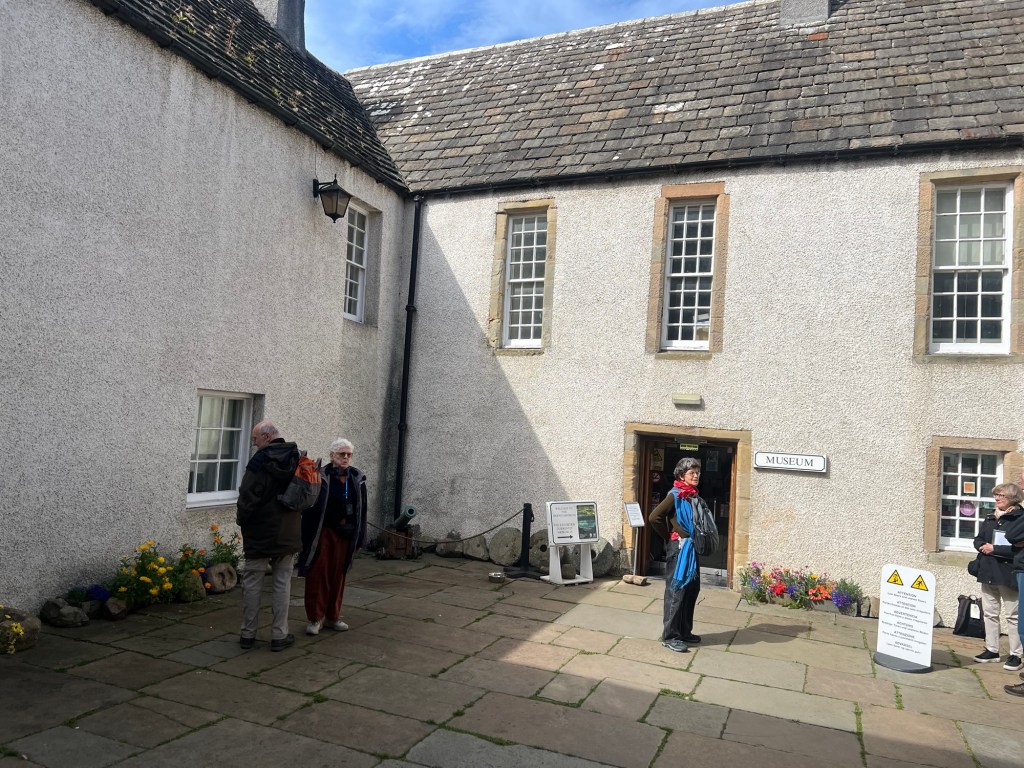
Orkney Museum
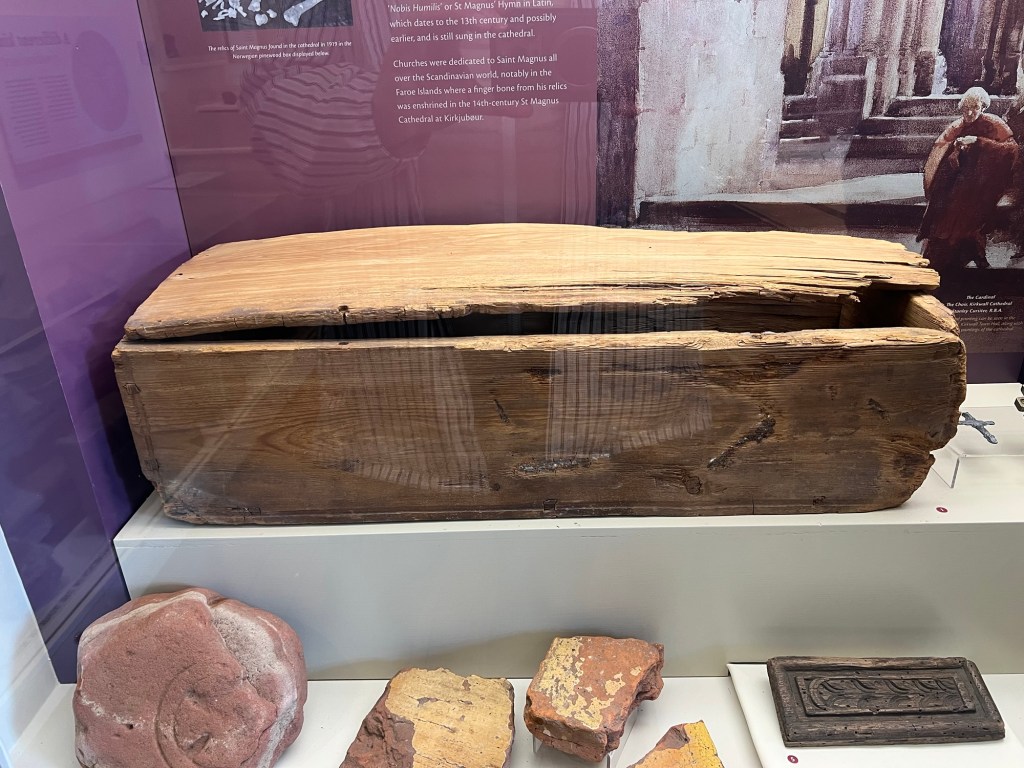
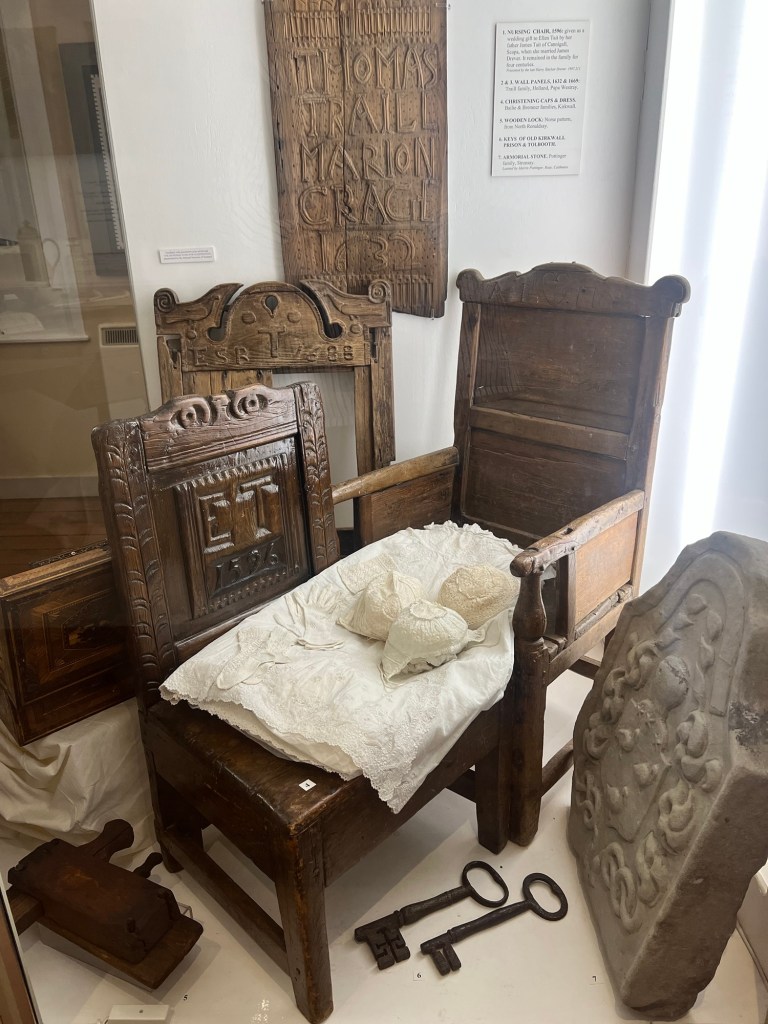
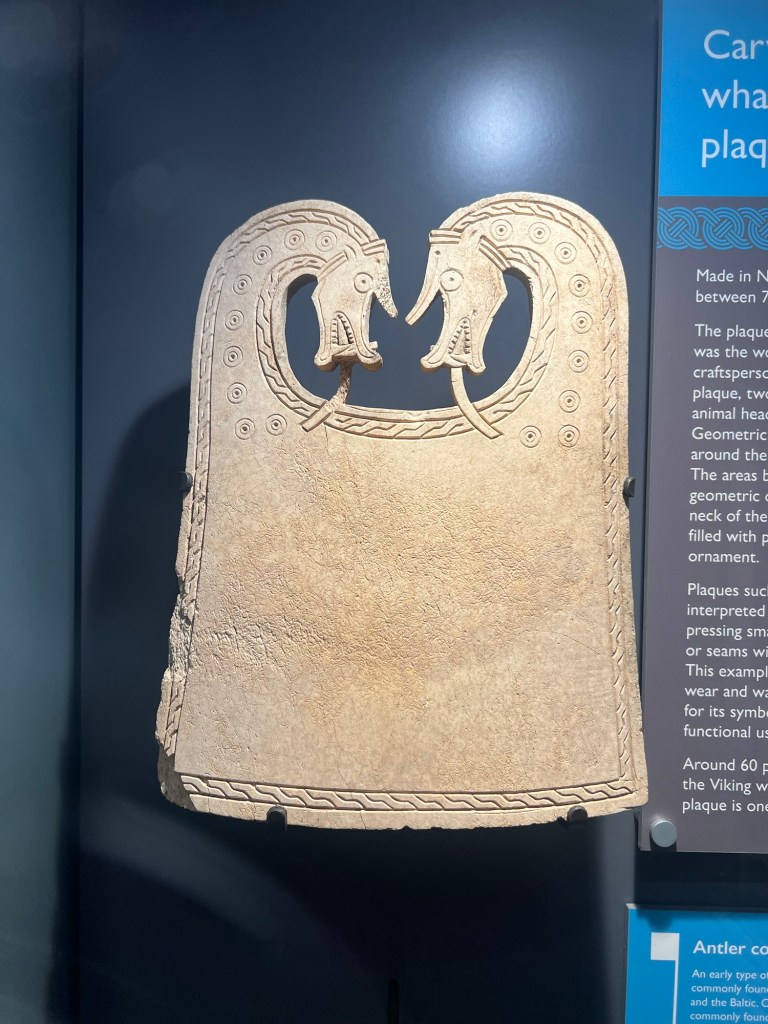
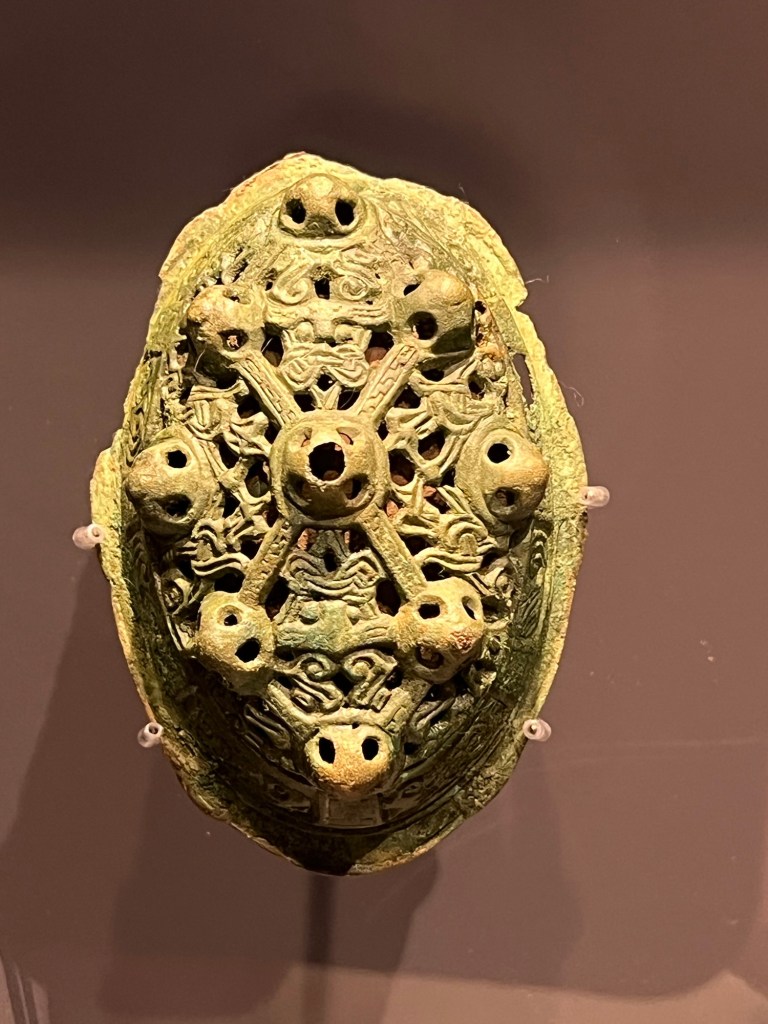
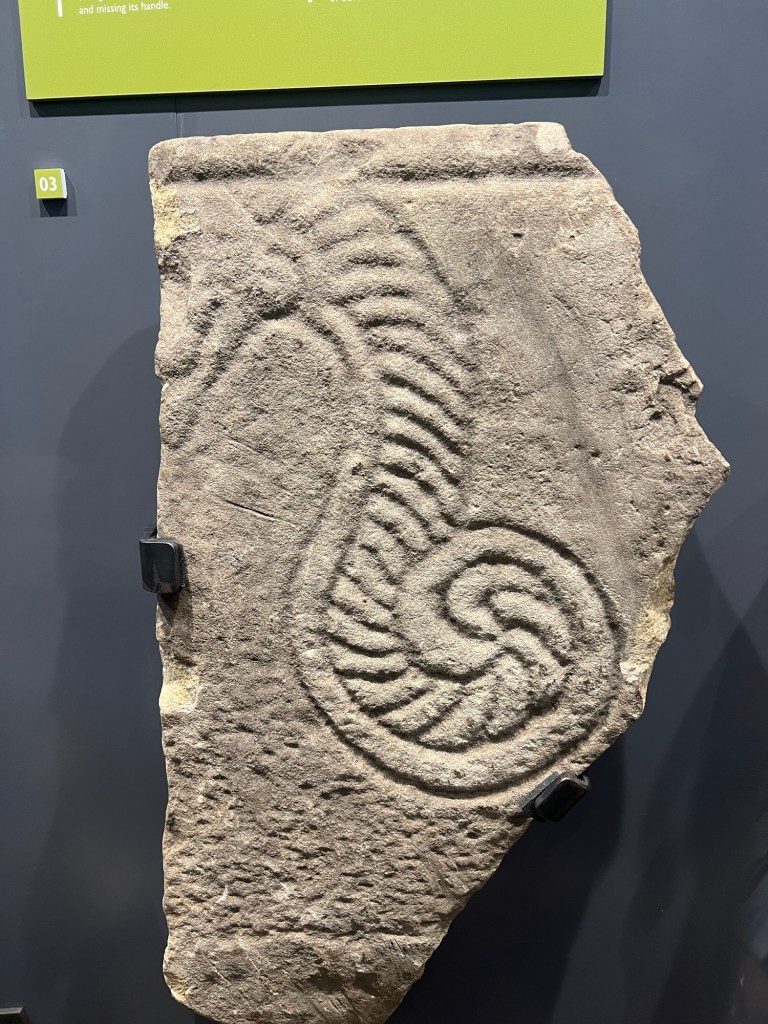
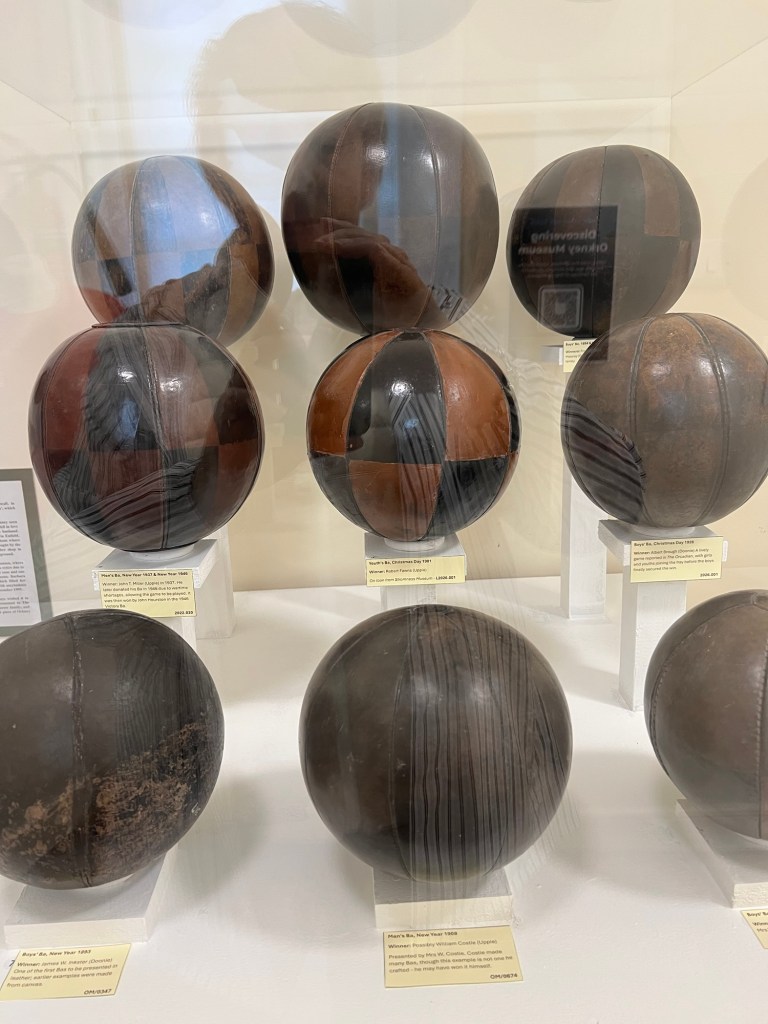
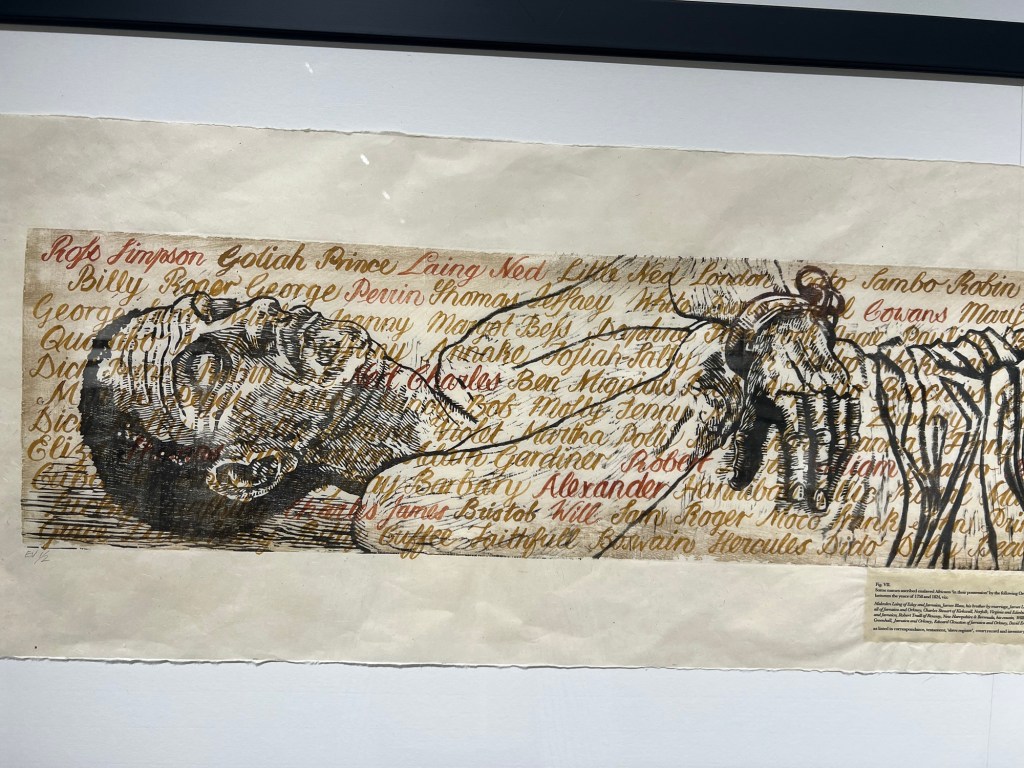
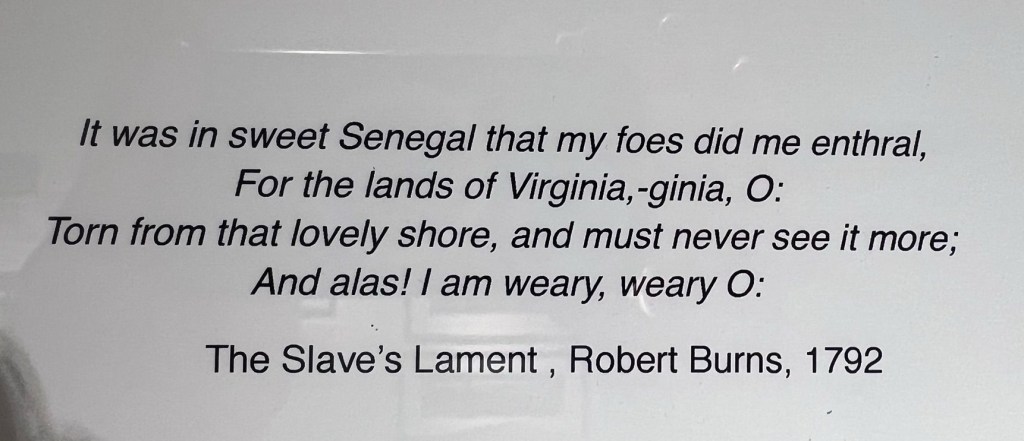
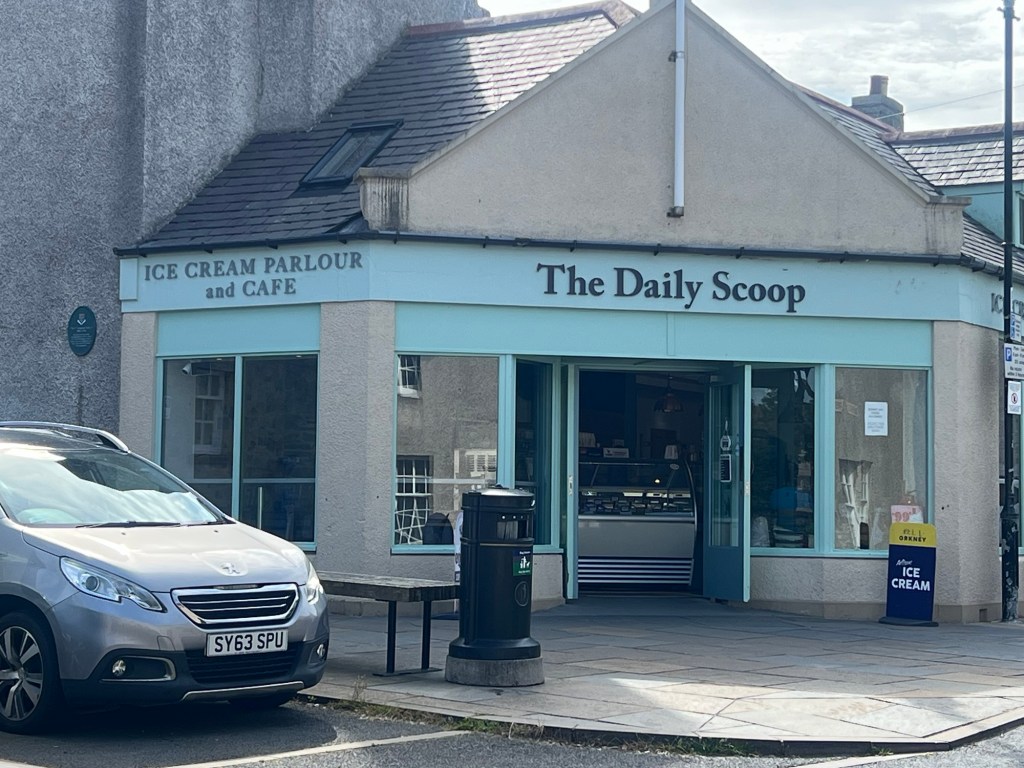
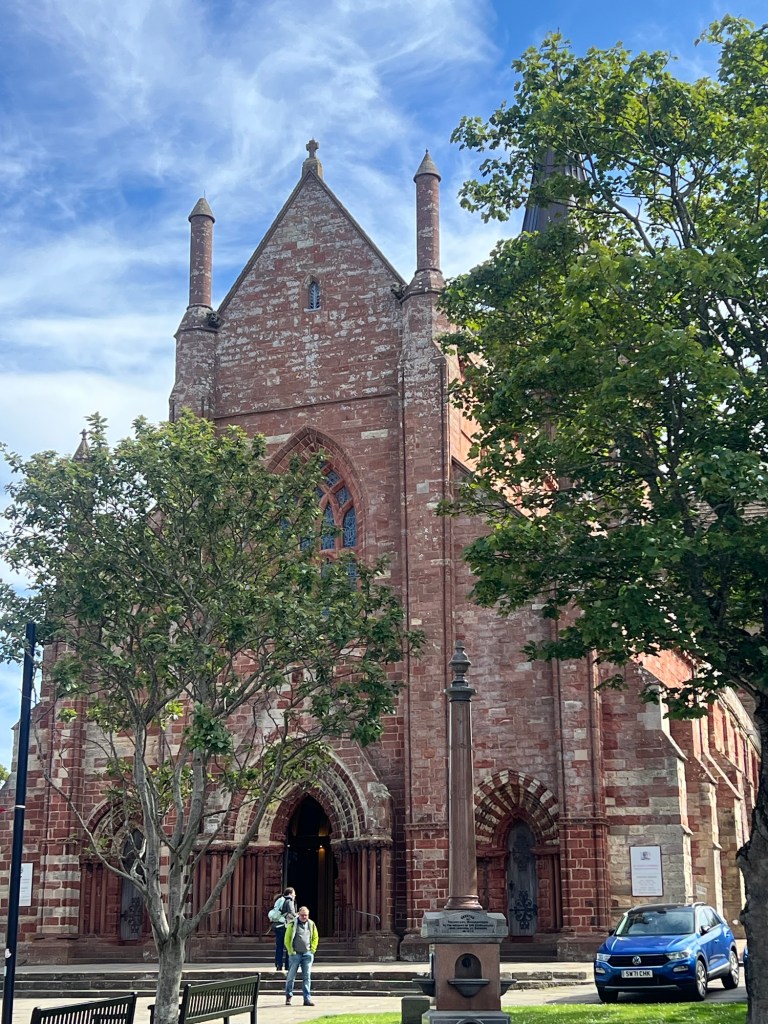
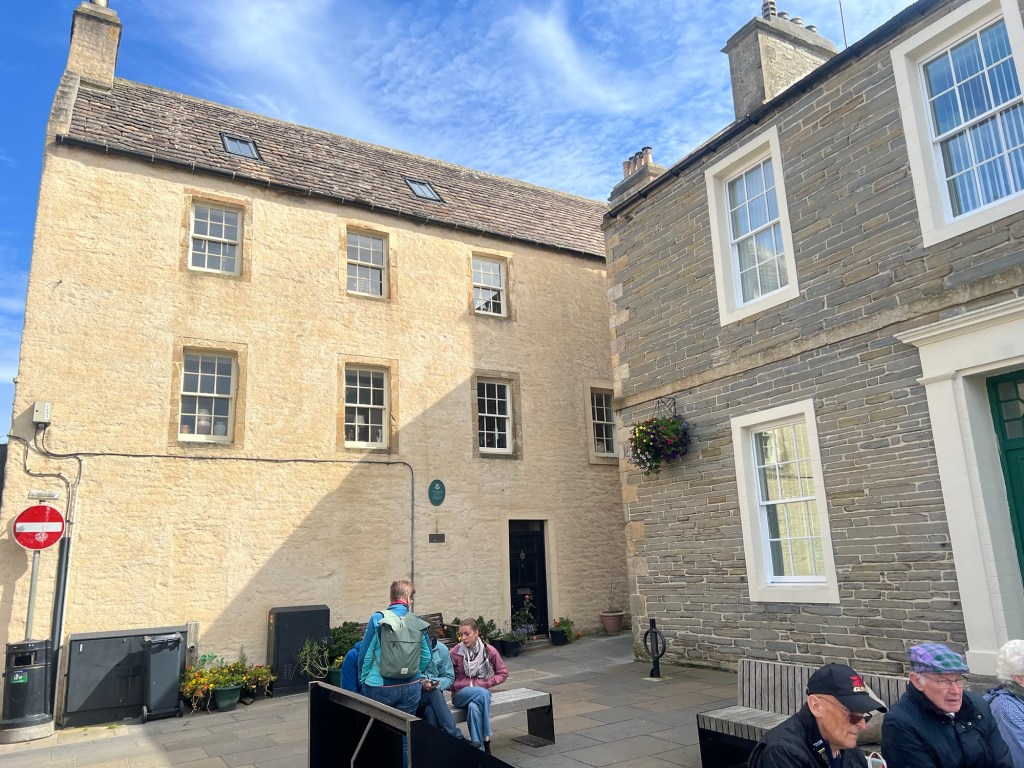
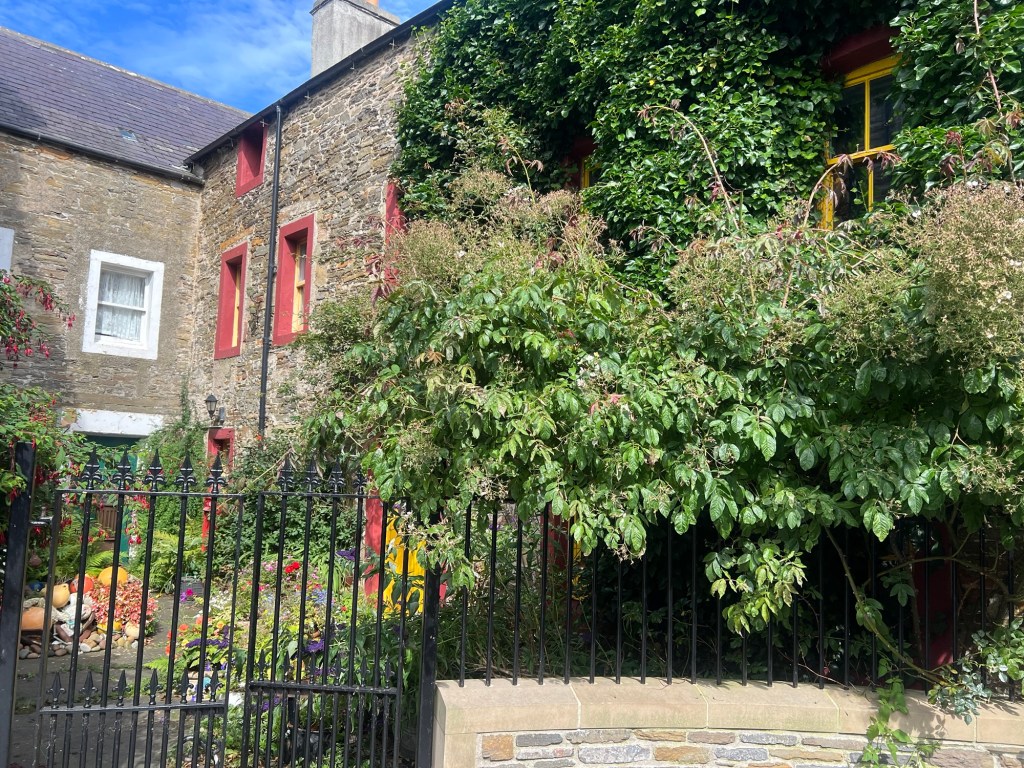
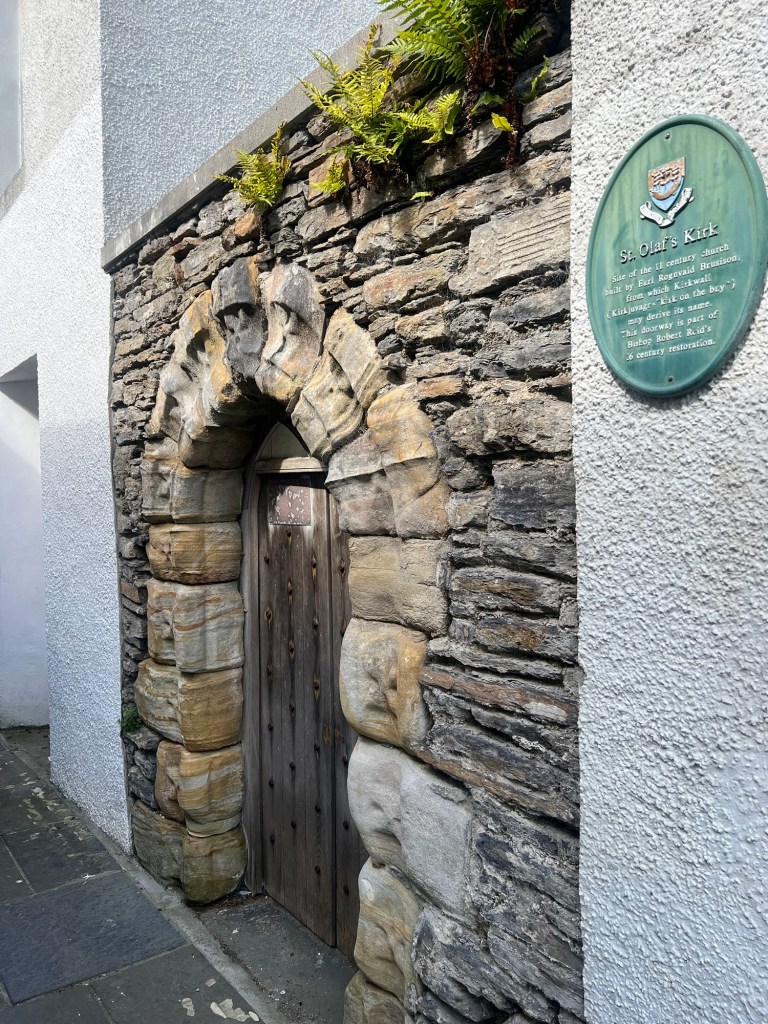
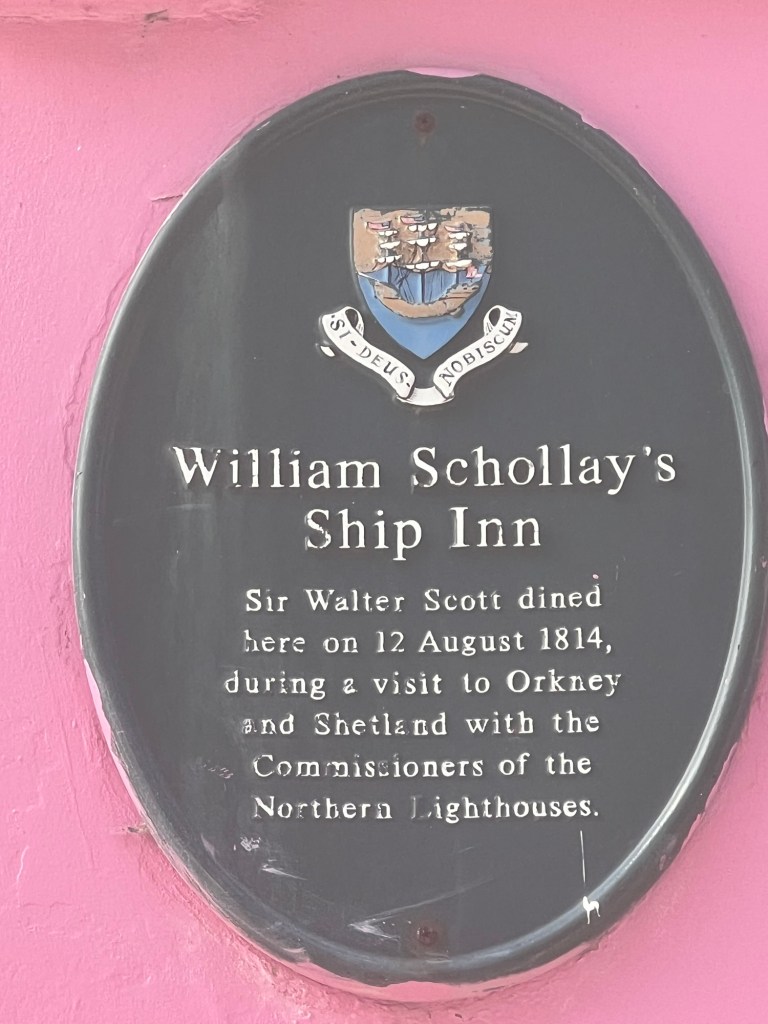
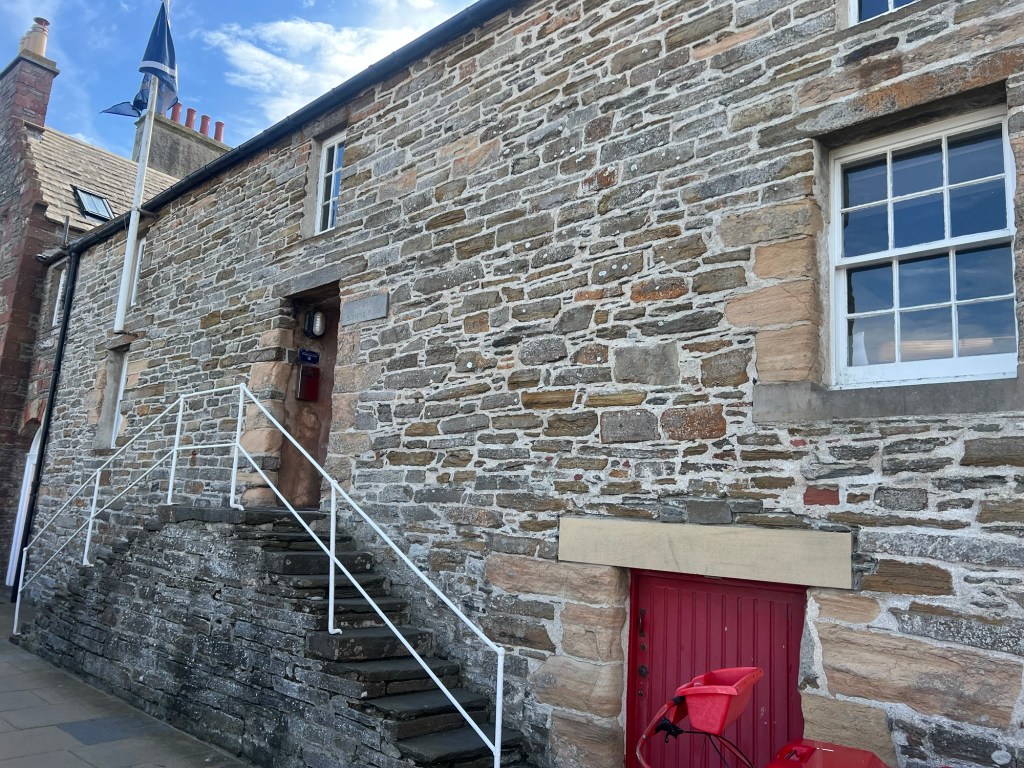
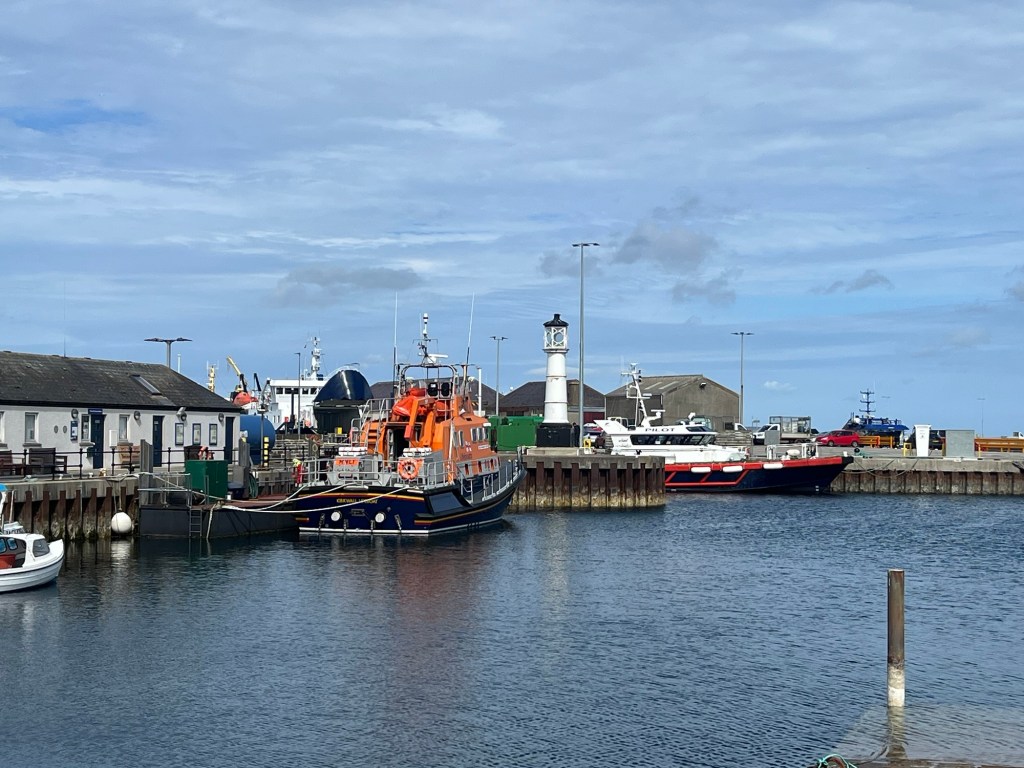
This is the museum. It was originally two mediaeval houses built for cathedral staff with 17C and 18C extensions. In the middle of the 19C, the relics of St Magnus were found hidden in this box in a pillar in the Cathedral, presumably to hide them from the Protestants. The box has been carbon dated to the 12C, which means it is the original box in which the relics were brought from the island where he was executed.17C cradle and baby clothes. The keys are from the town lockup. Whalebone ivory plaque found in a boat burial. The boat contained the remains of 3 people, an elderly woman, a middle aged man and a child. They have been found by DNA testing to be closely related. The burial was found when the sea eroded the cliff it was buried in. A lot of archaeology is disappearing into the sea.A gold Pictish brooch found with the burial of a young woman. Pictish symbol stone Balls from the Ba’ Game. This is traditional football, played from one end of the town to another. There is a men’s game and a boys’ game. After the Second World War, it was proposed to have a women’s game. This was cancelled after one season for being too violent.Part of an art display about Orkney’s connections with slavery. The anti slavery movement had many famous adherents. Shop next to the Cathedral. Nice ice cream as well. The cathedral. 17C house that was the Town Hall until the mid 18CThe oldest house in town – lived in by another archaeologist. Part of St Olaf’s Kirk, the oldest church in town. This arch was moved here when the rest of the church was knocked down. What they left out of the plaque is the fact that Sir Walter was left with the bill! The Girnell. 17C warehouse for the grain the tenants had to pay the laird as part of their rent. The kiln for drying the grain was demolished in 1933.Kirkwall harbour.
Lamb Holm
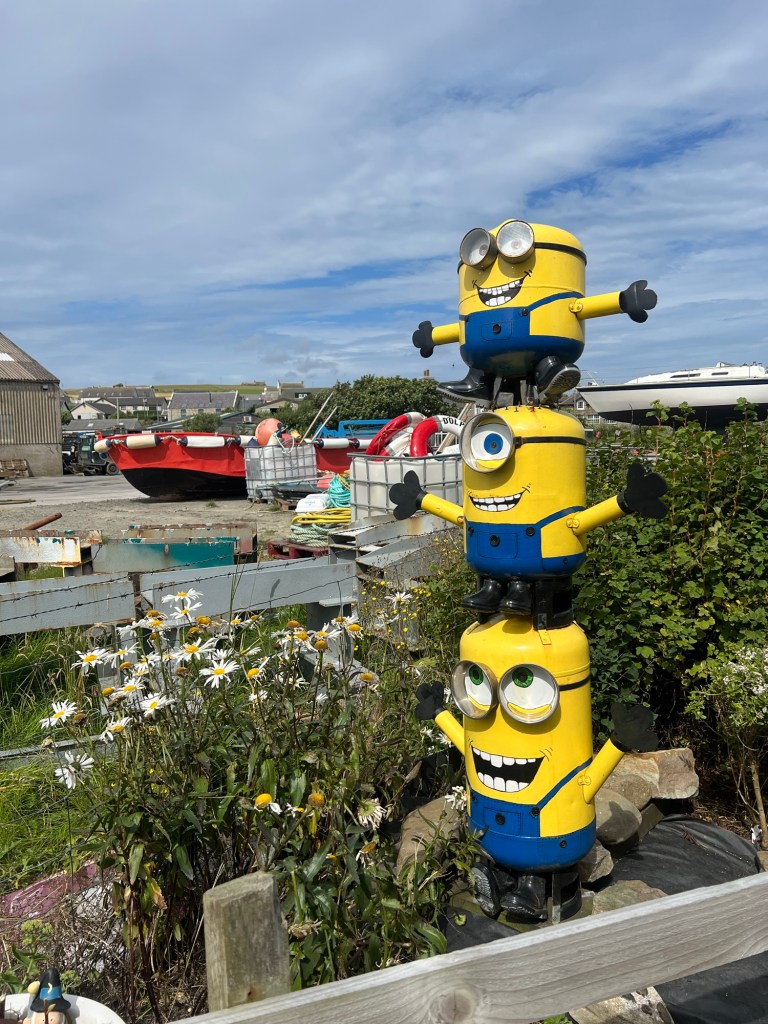
Minions in the boatyard outside where we had lunch.
The Italian Chapel
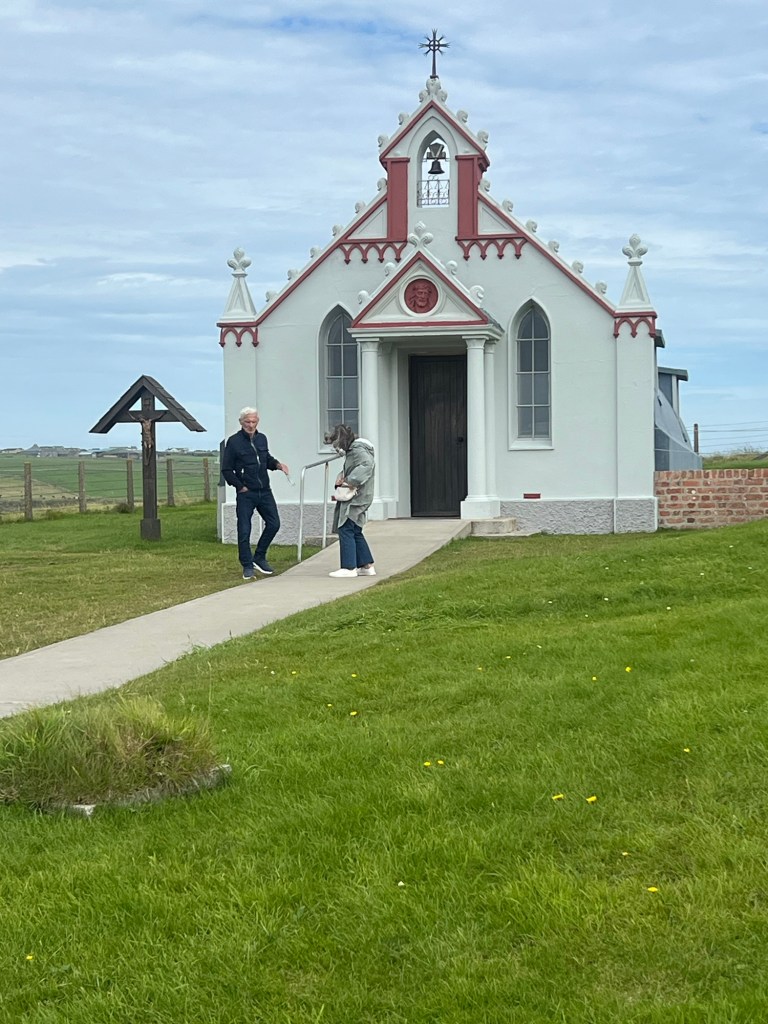
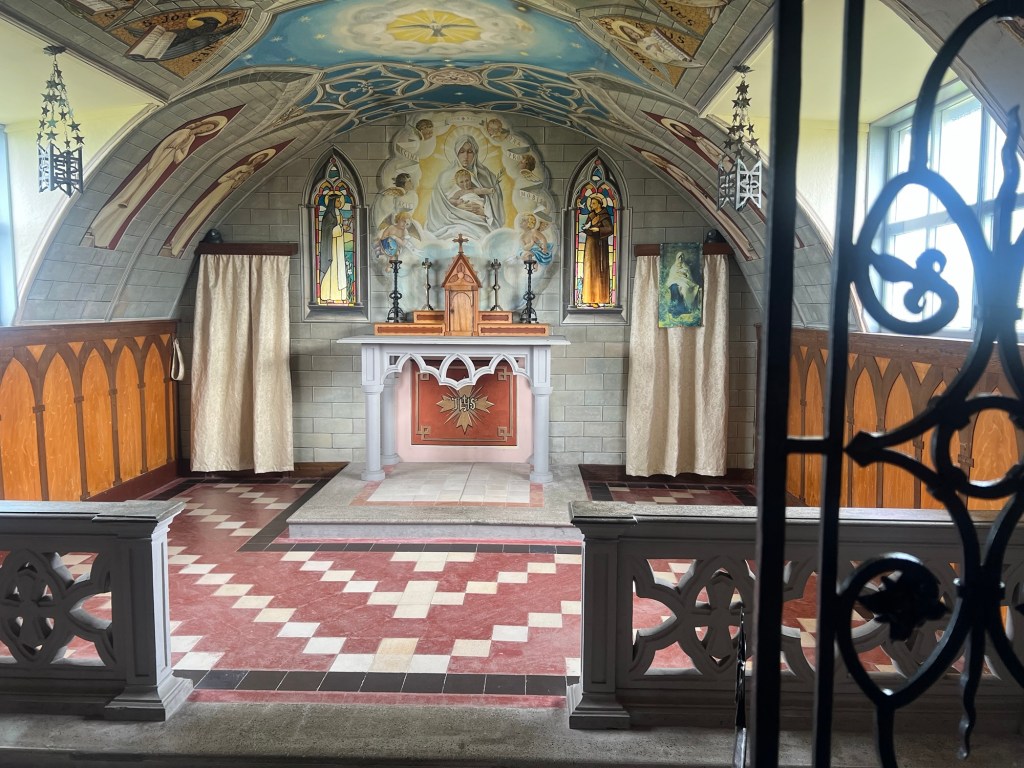
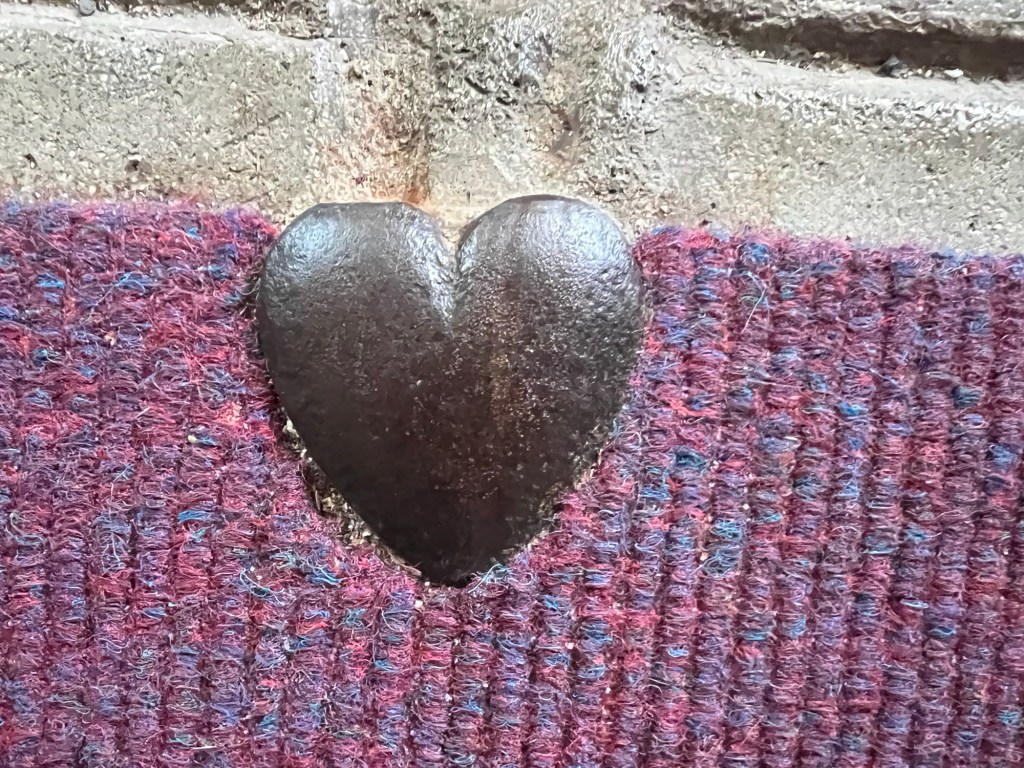
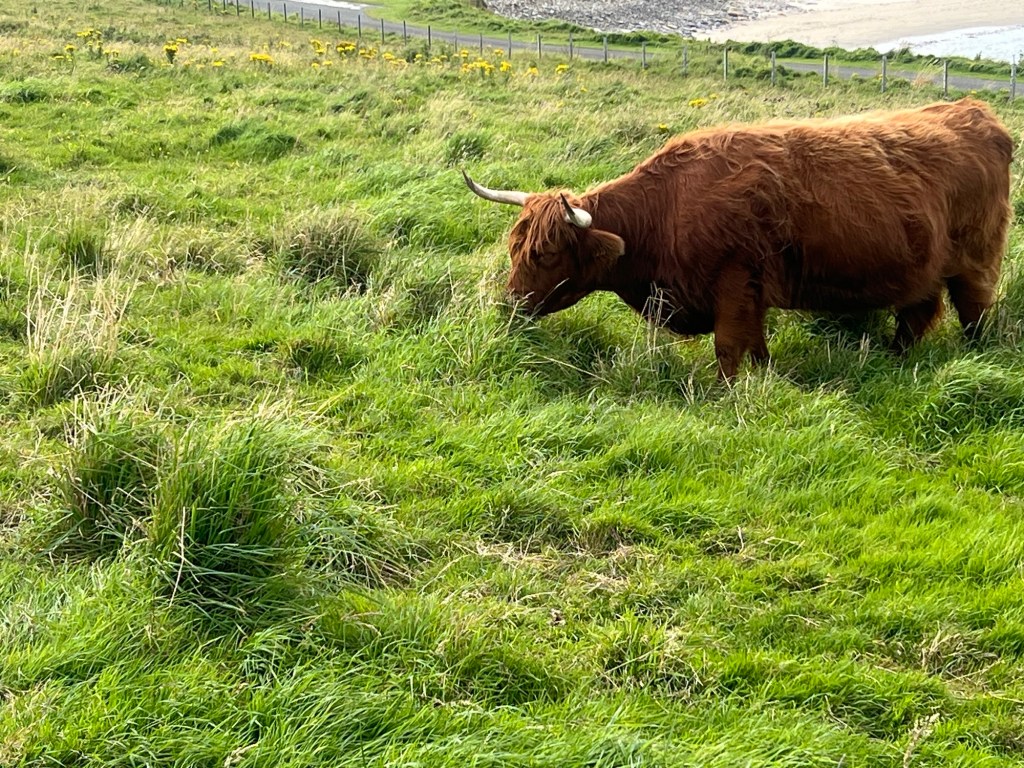
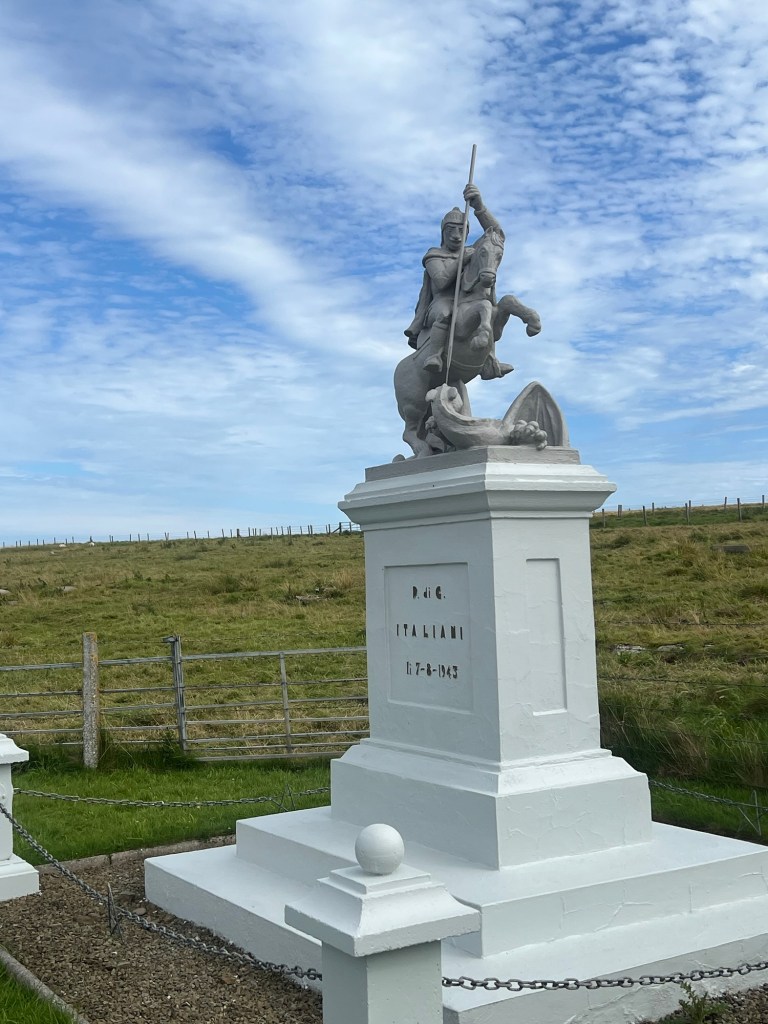
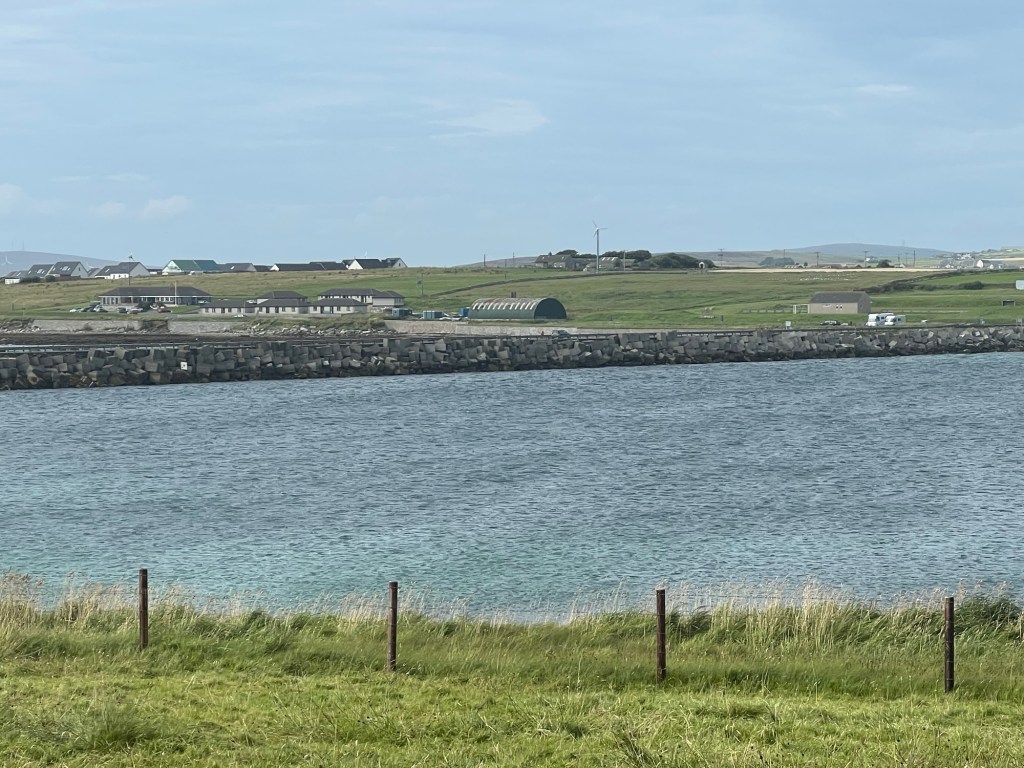
The Italian Chapel. Built from two Nissan huts by Italian prisoners of war during the 1940s. https://www.orkney.com/listings/the-italian-chapelInterior of the chapel. The tiles came from a ship that had been sunk as part of the anti U boat barrage into Scapa Flow, as did the wood for the upper part of the altar and the panelling on the sides. The rood screen was made by a blacksmith from steel salvaged from various ships. The paintings were made by Domenico Chiocchetti. In 1960, the paintings were fading but no one knew how to get hold of him. The BBC got interested in the story and put out an appeal on the Italian language branch of the World Service. Someone who knew him heard this and he returned to touch up his art. Most of the men who worked on the chapel visited regularly after the war and one or two of their children and grandchildren still do.Giuseppe Palumbi, the blacksmith who made the rood screen and the candlesticks on the altar (from stair rods from one of the sunken ships), had a relationship with a local girl whilst he was in Orkney. At the end of the war, he had to go home to his wife and child in Italy but he put this heart in as the stop for the gates in front of the altar to give his girlfriend a memory of him. One of the only Highland cows we saw on this trip – outside the chapel. Signor Chiocchetti’s first artwork. Made of concrete for the prisoner of war camp. The concrete for this and the chapel was provided by the company installing the Churchill barrages – where most of the prisoners worked after Italy surrendered. It shows St George and the dragon and says ‘Prigionieri di guerra Italiani, li 7-8-1943’This is one of the Churchill barrages, put across the minor exits to Scapa Flow after the sinking of the Royal Oak in the Second World War. https://www.orkney.com/life/businesses/listing/churchill-barriers
Many thanks for these. By all accounts, Sir Walter was a pretty hospitable chap, so I doubt he would have been too upset…and he did later get a novel out of the visit…The Pirate, not one of the better known ones possibly because of the Northern setting.


Many thanks for these. By all accounts, Sir Walter was a pretty hospitable chap, so I doubt he would have been too upset…and he did later get a novel out of the visit…The Pirate, not one of the better known ones possibly because of the Northern setting.
LikeLiked by 1 person