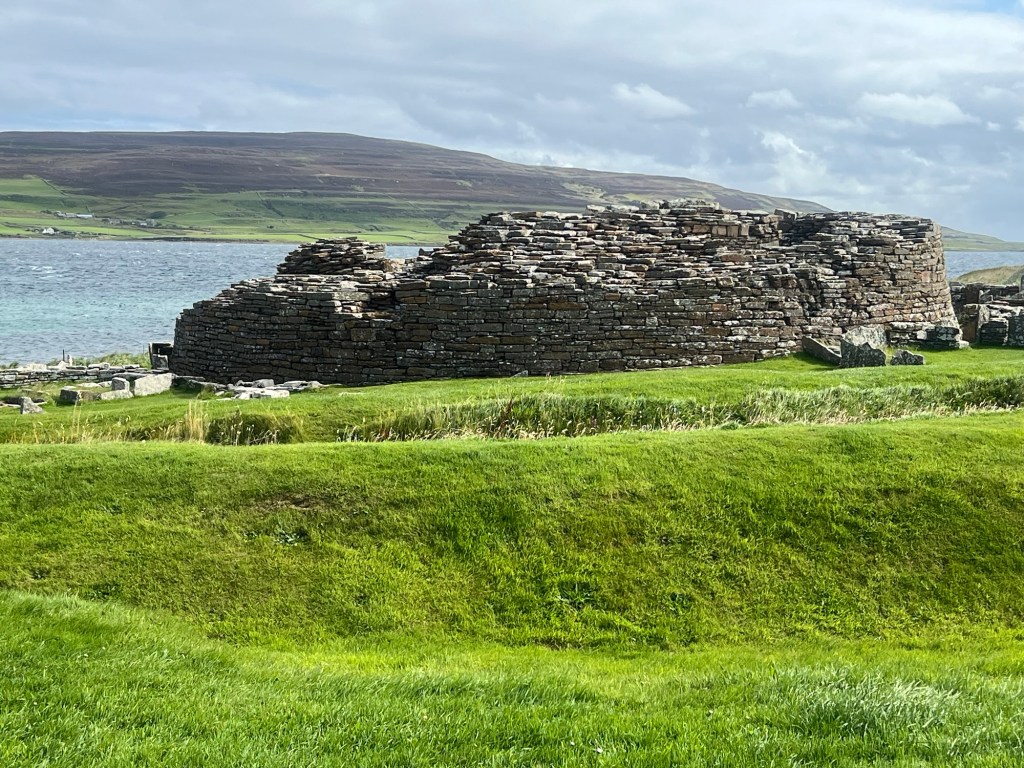
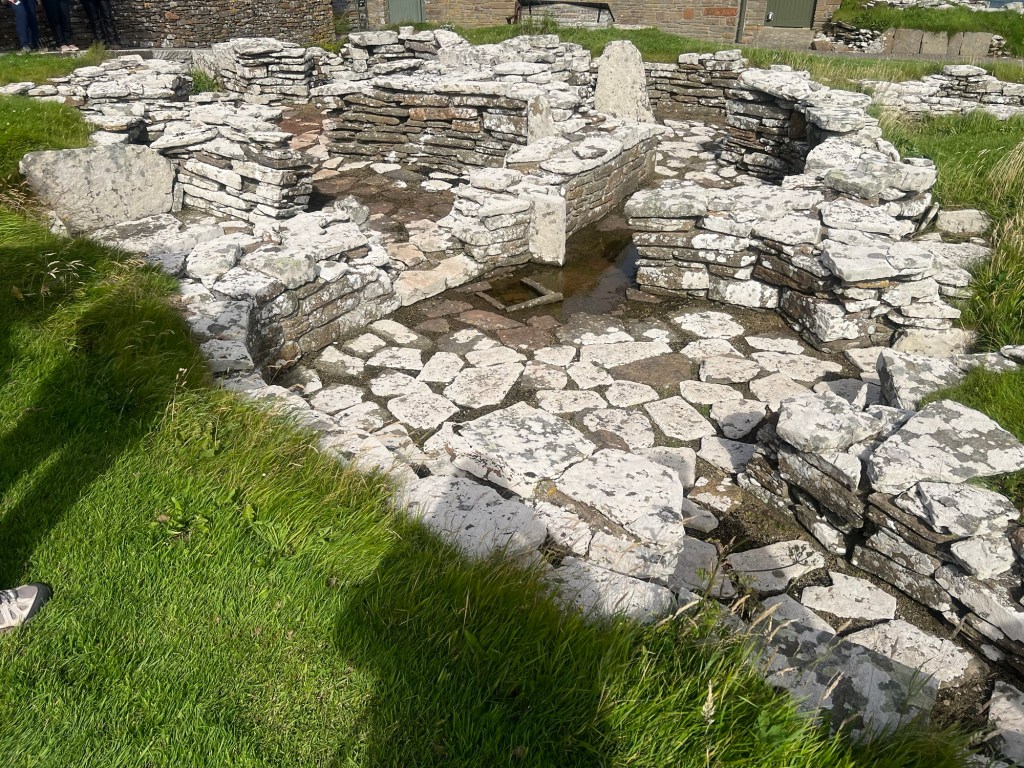
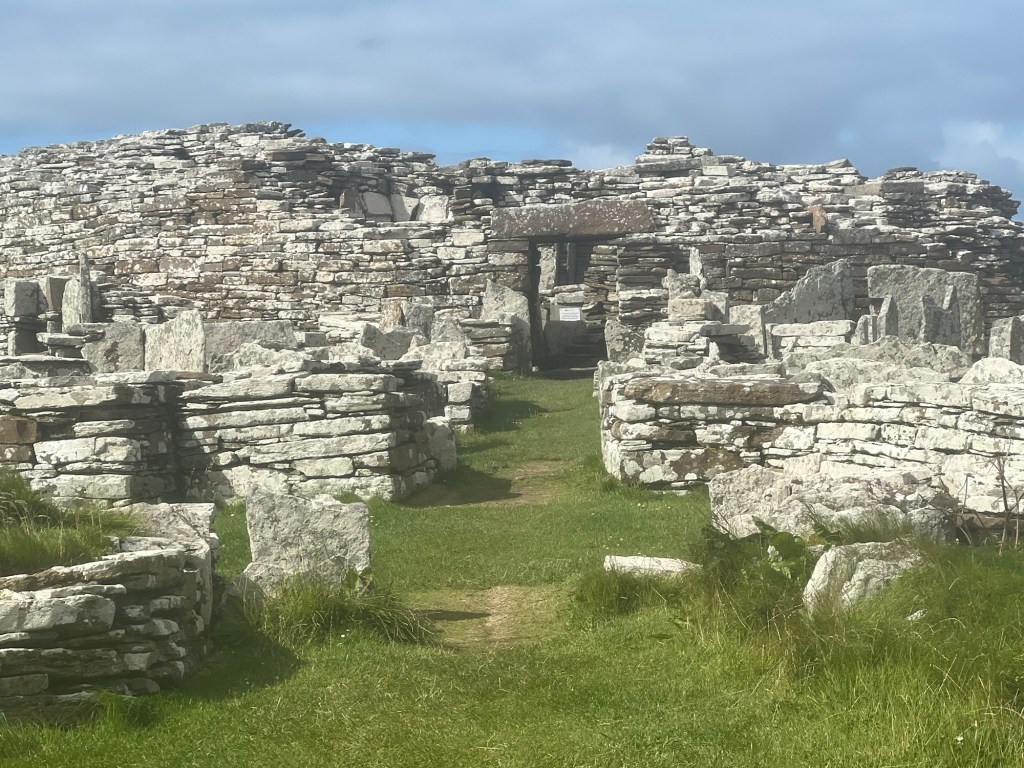
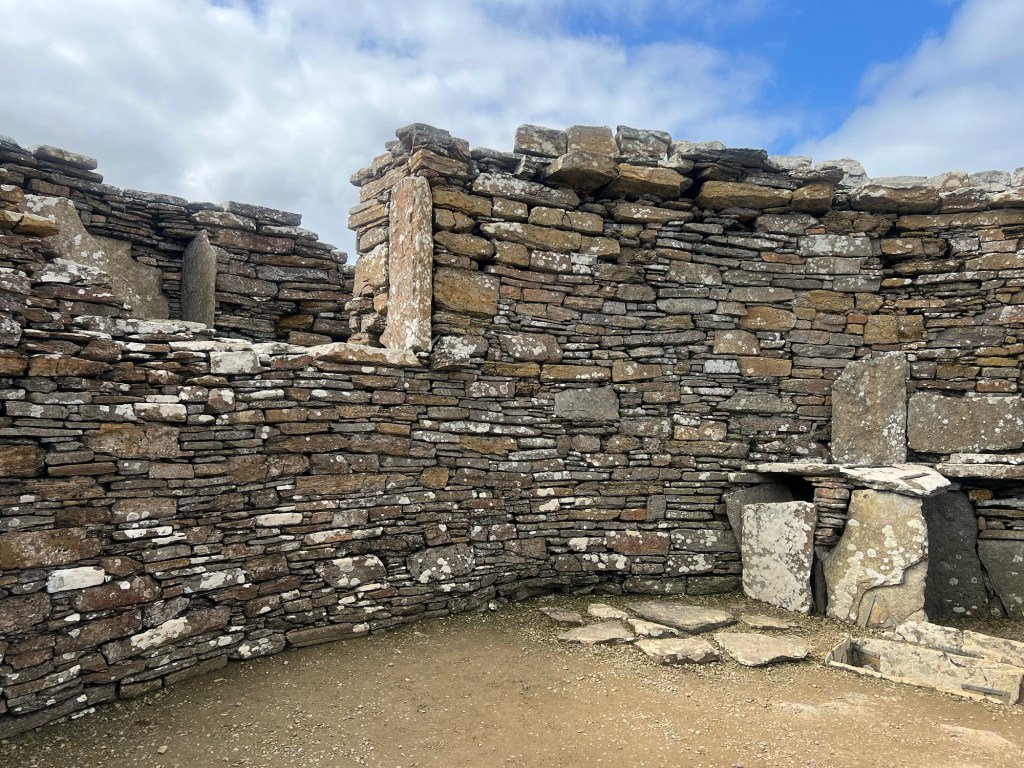
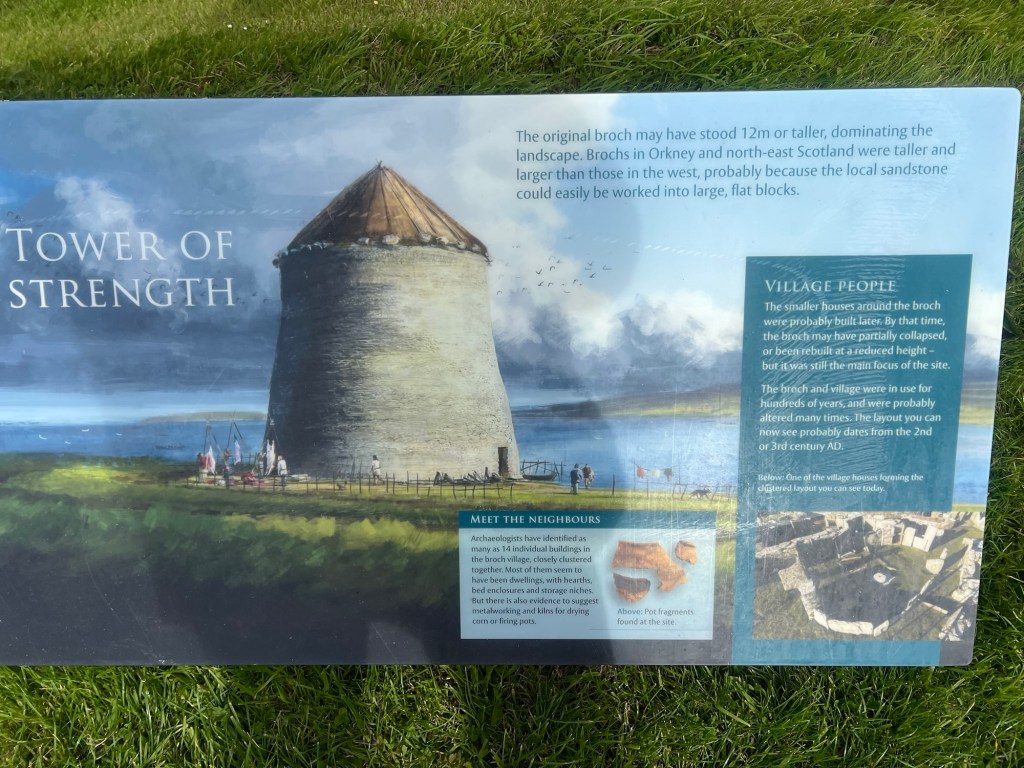
This is a broch that is in relatively good shape. Brochs are large circular dwellings, originally several stories high, built during the Iron Age. They seem to be the homes / headquarters of chiefs and usually have the remains of villages around them. In Orkney, the mound formed when the Broch was abandoned was often built on by successive waves of later inhabitants – Picts, Vikings, medieval lords etc.
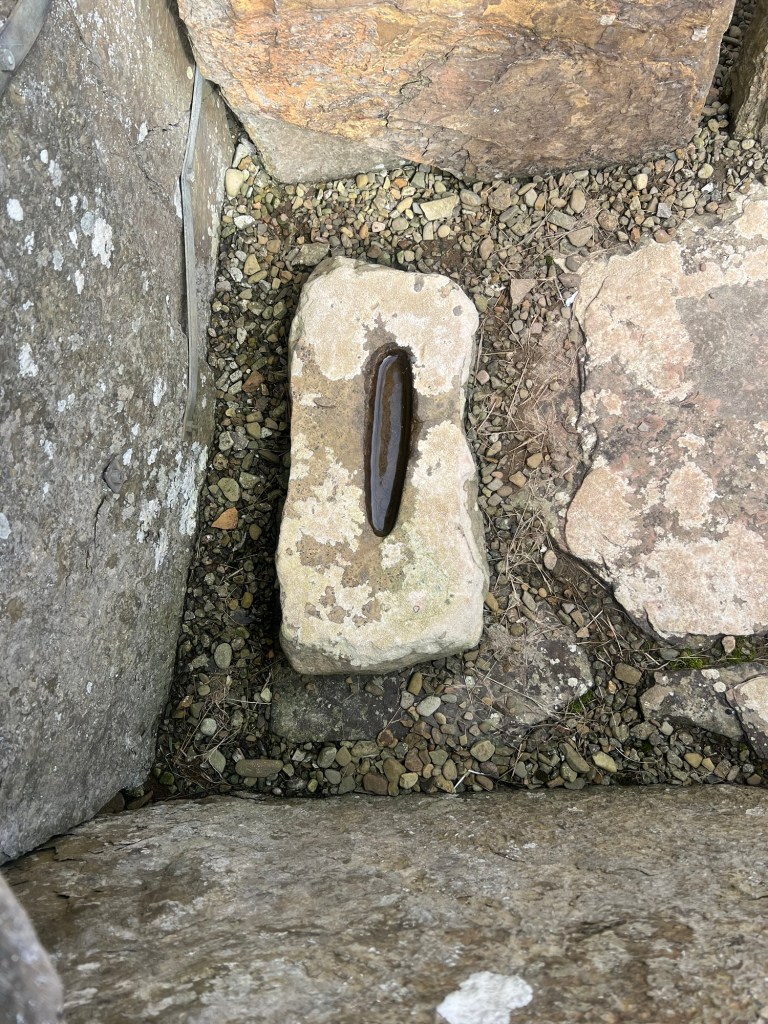
This is the broch now as you approach it.This is the remains of a Pictish village which used to be on top of the broch. It has been carefully removed and reconstructed next to it Entrance to the broch surrounded by the remains of village houses.This cell is just outside the broch door. It is too small for a guard – dog kennel?The builders knew how to make stones stay up without mortar. Mould for iron tool casting. It’s a bit hard to see but there are two walls – outer and inner – with a corridor in between. There were no windows in the outer wall. What brochs probably looked like when they were first built.
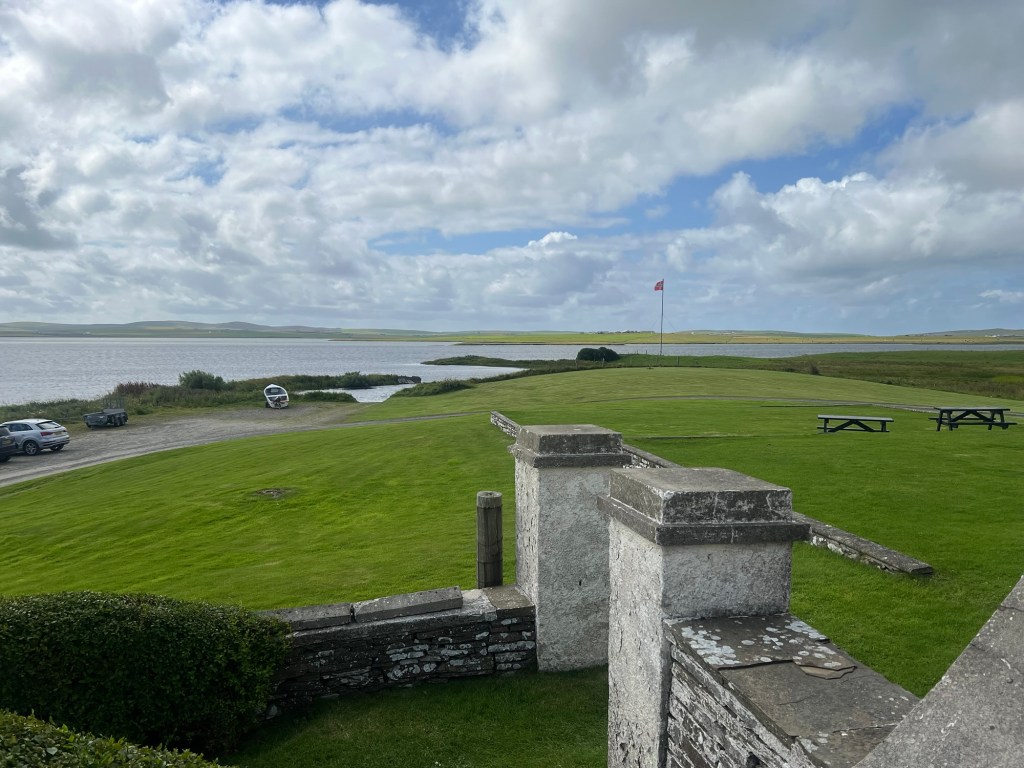
Harray Loch
This is the view from the hotel where we had lunch. Three three course meals a day has done nothing for my waistline. Fudge also appears to be compulsory 😋 There was a mother swan and some very small cygnets in the pool near the centre of the picture.
Kirbuster
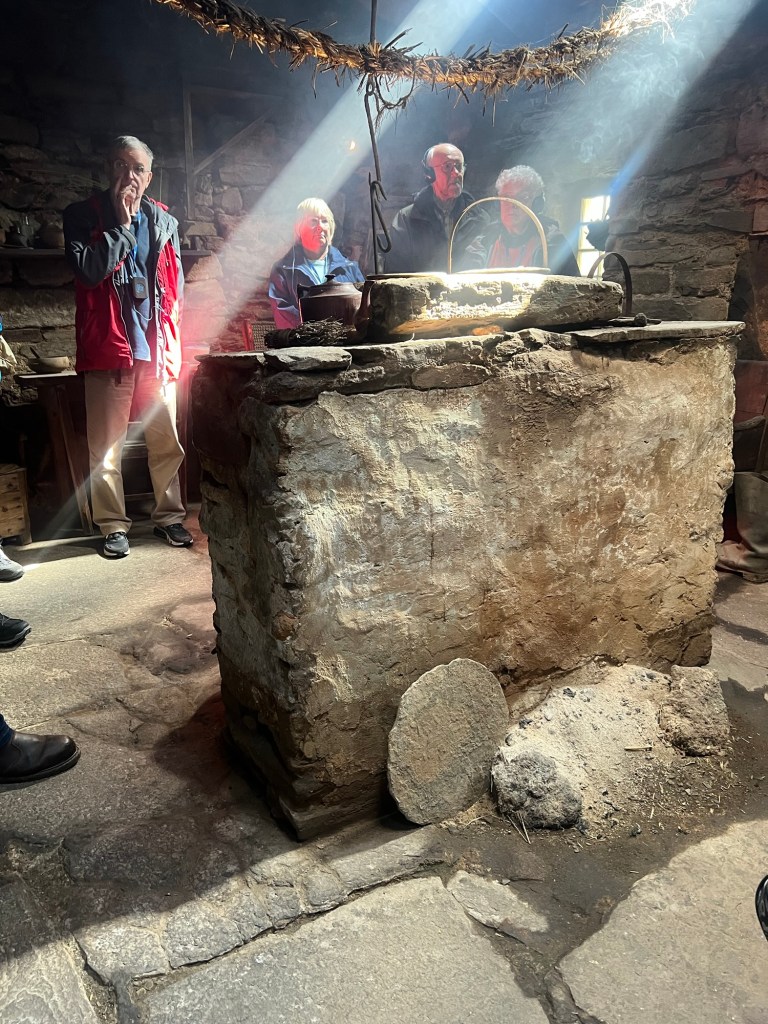
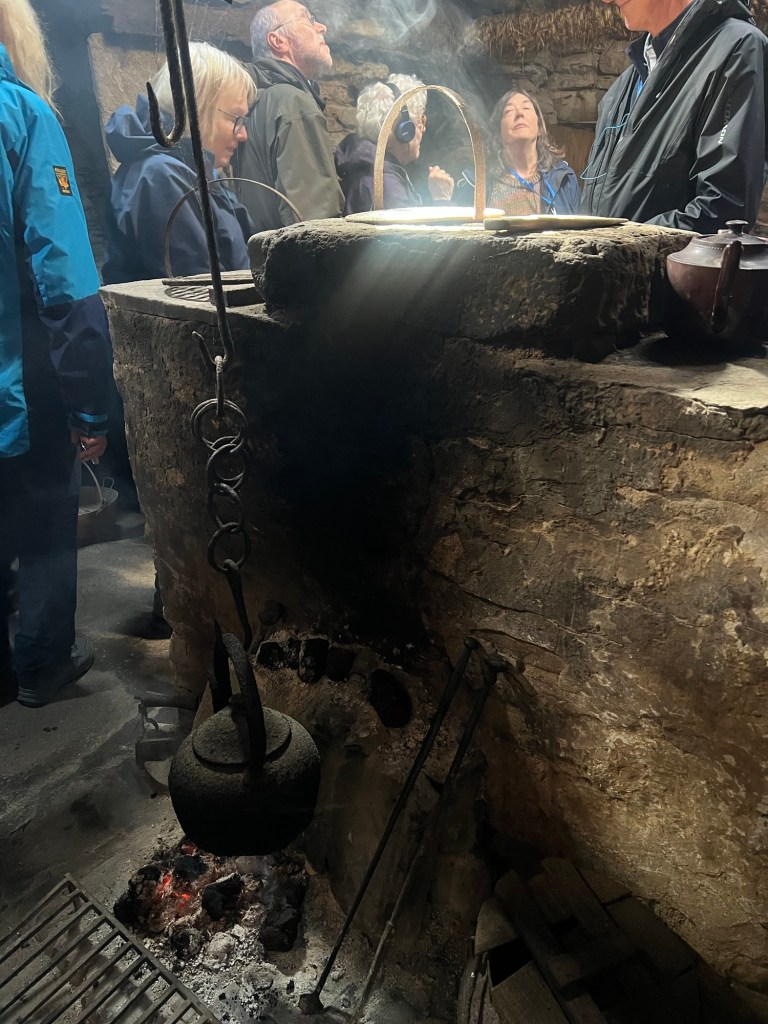
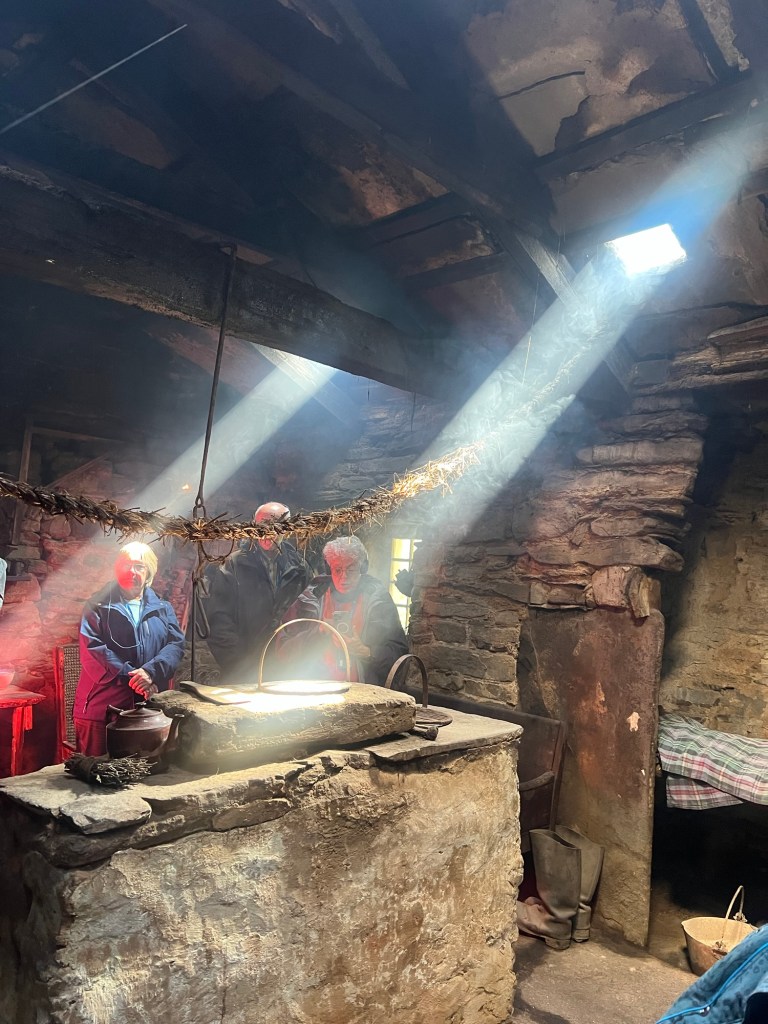
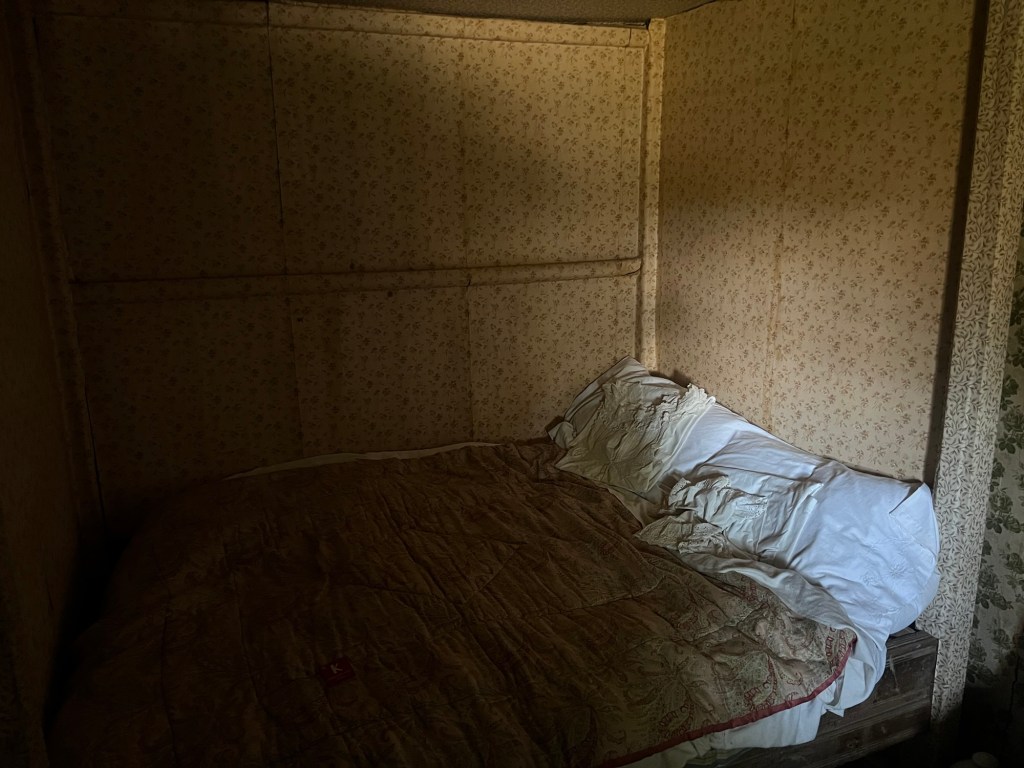
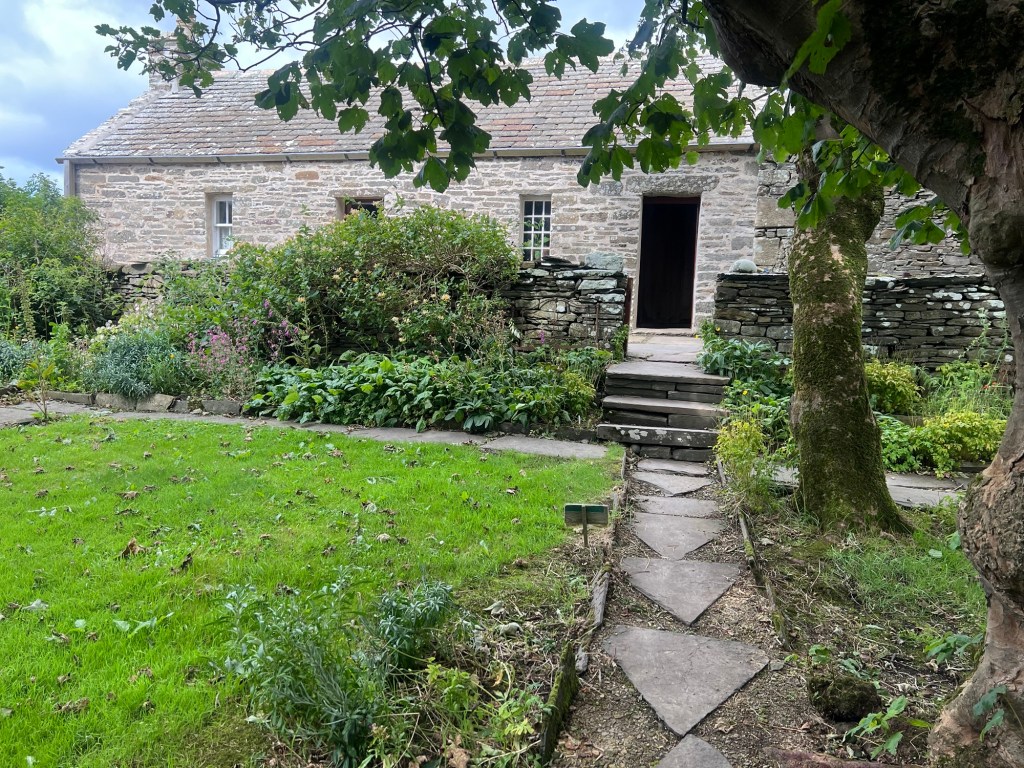
This is a small local museum which is basically a historic farmhouse. The last people to live in it died in their 80s in the mid 1960s. They had no children and so had never bothered to modernise – the house was essentially as it had been before the First World War. It was bought by a man who wanted to make a museum out of it. He restored the central section of the house – the firhoose – to how it would have been in mediaeval times. The basic layout is very similar to the Neolithic houses in Skara Brae.
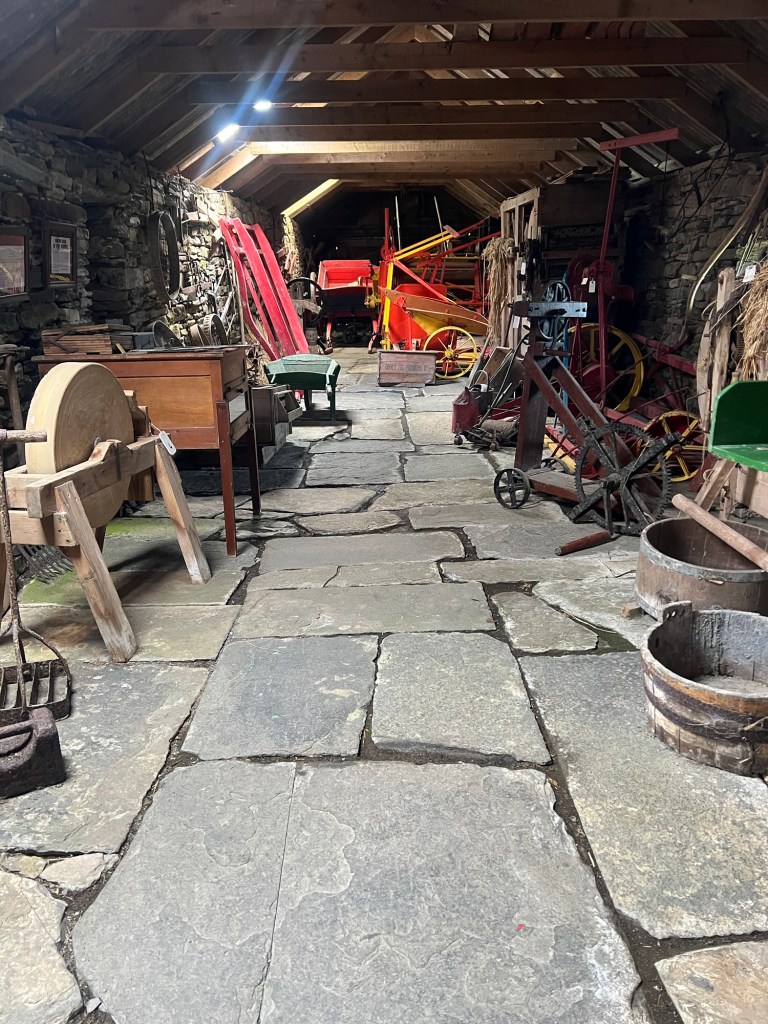
This and the subsequent picture show the fireplace. It is in the middle of the room and burns peat. It was never allowed to go out. There is no chimney but there is a hole in the roof. The roof is high enough that the wind does not come in – but the snow does!The front of the fire with kettle. It took me about 3 days to get the smoke out of my lungs. The main room and fireplace again. On the right you can just see the edge of a box or cupboard bed, set into the wall. On the other side of the room is the box for meal and the barrel for brewing. The rest of the house has been left as it was when the last residents died. This is a Victorian box bed. A collection of old farm implements in the barn.View of the house from the garden – set down and surrounded by buildings and walls to protect it from the wind.
The man who showed us round this place had a proper Orkney accent. Until the 15C both Orkney and Shetland were part of Norway. They were gifted to Scotland as part of the King’s daughter’s dowry when she married the King of Scotland. The King of Norway was supposed to raise enough money to buy them back but he never did. Gaelic was never spoken – Old Norse was – and this man’s accent sounded very Scandinavian. I’m afraid it didn’t occur to me to record him.
Birsay
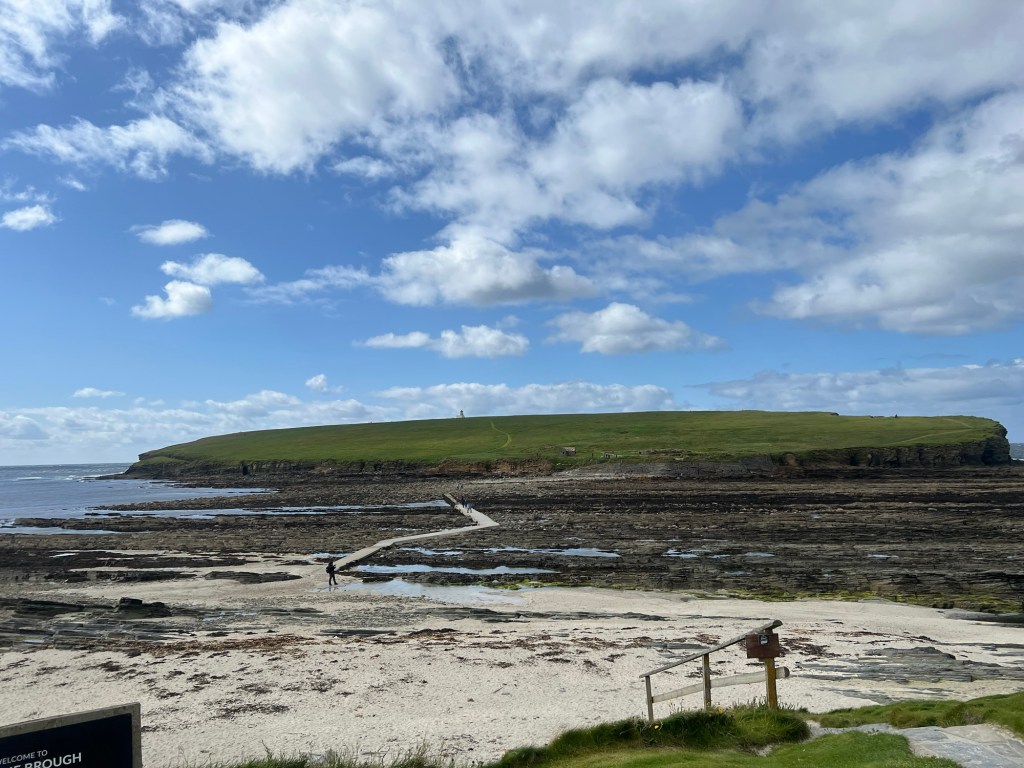
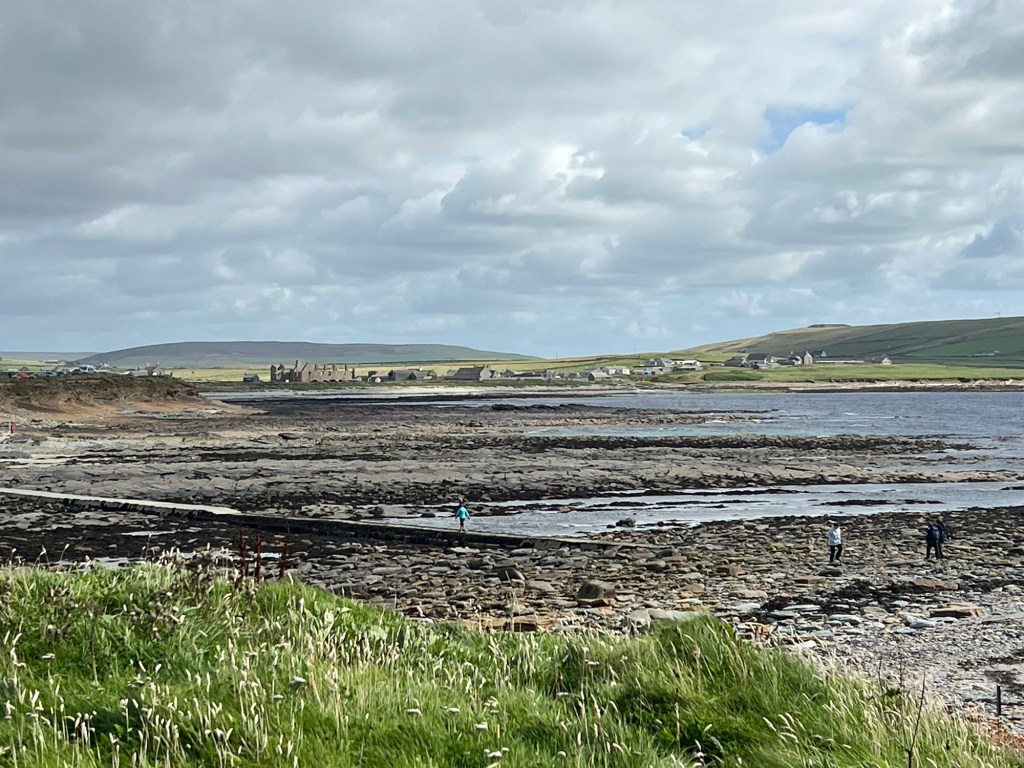
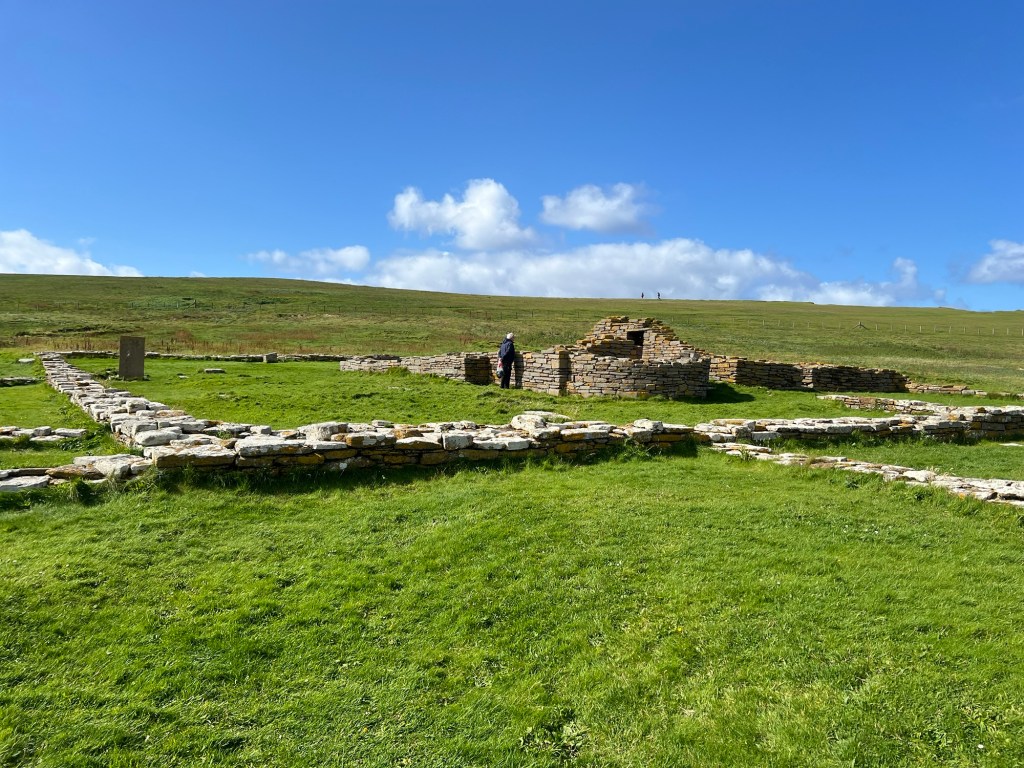
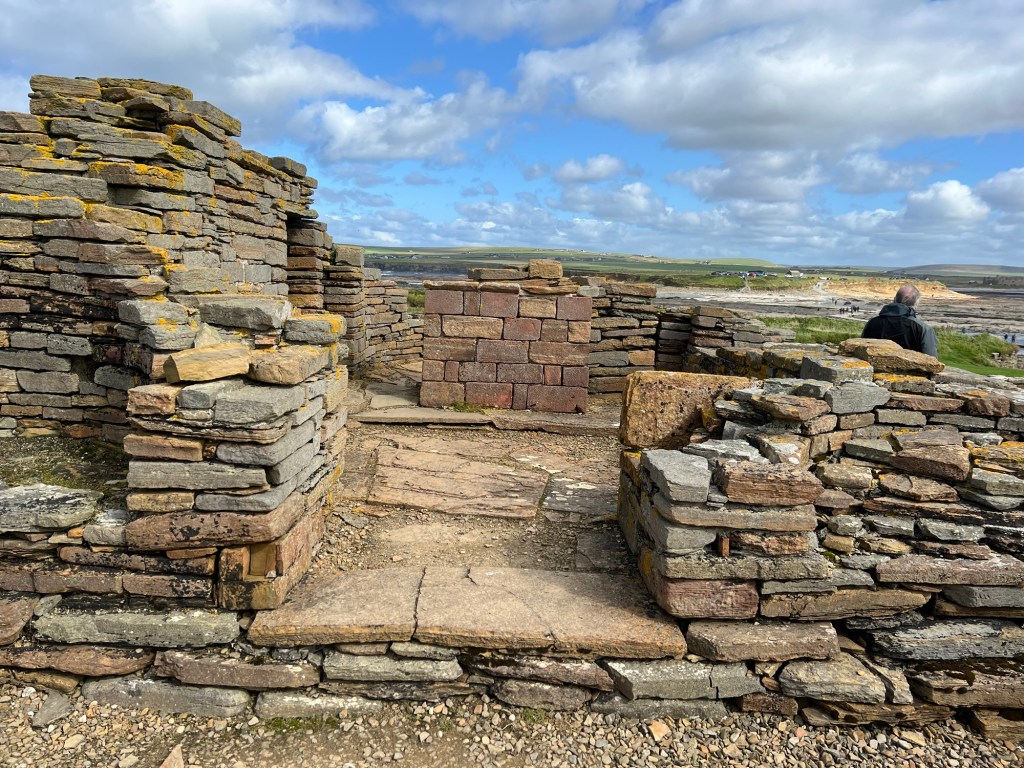
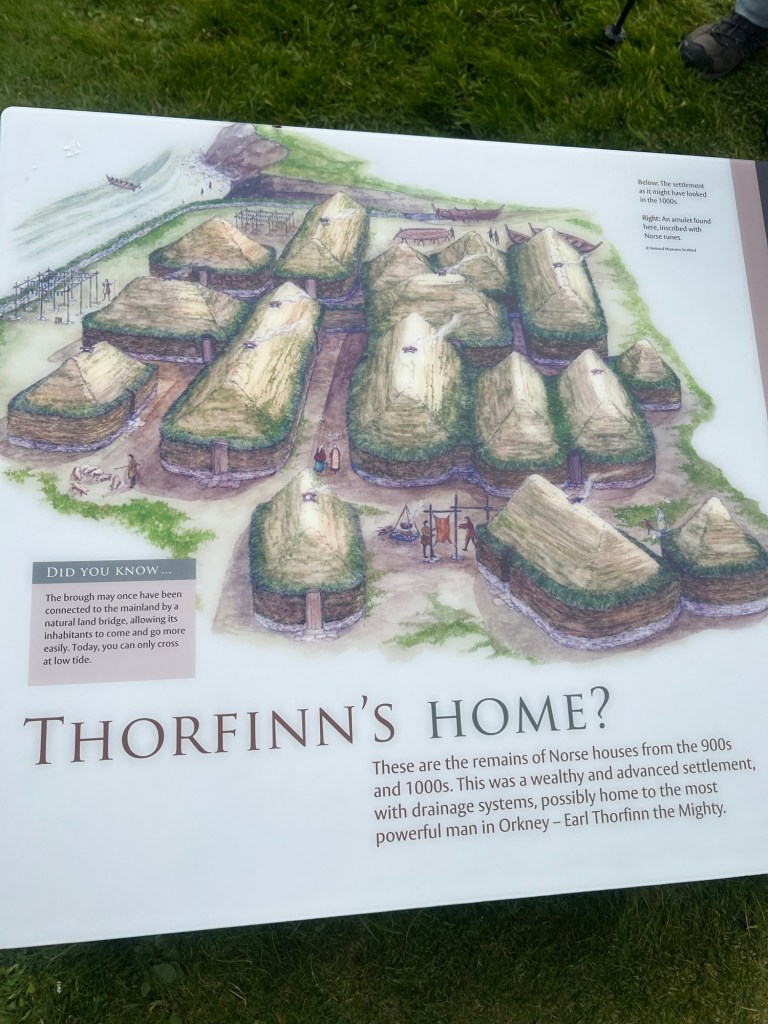
The Brough (pronounced broch) of Birsay is a small island off the coast, next to the town of Birsay. This was an important place in Viking times with the remains of Viking longhouses, a church and what was possibly a monastery. There are also Pictish symbol stones and a 19C lighthouse.
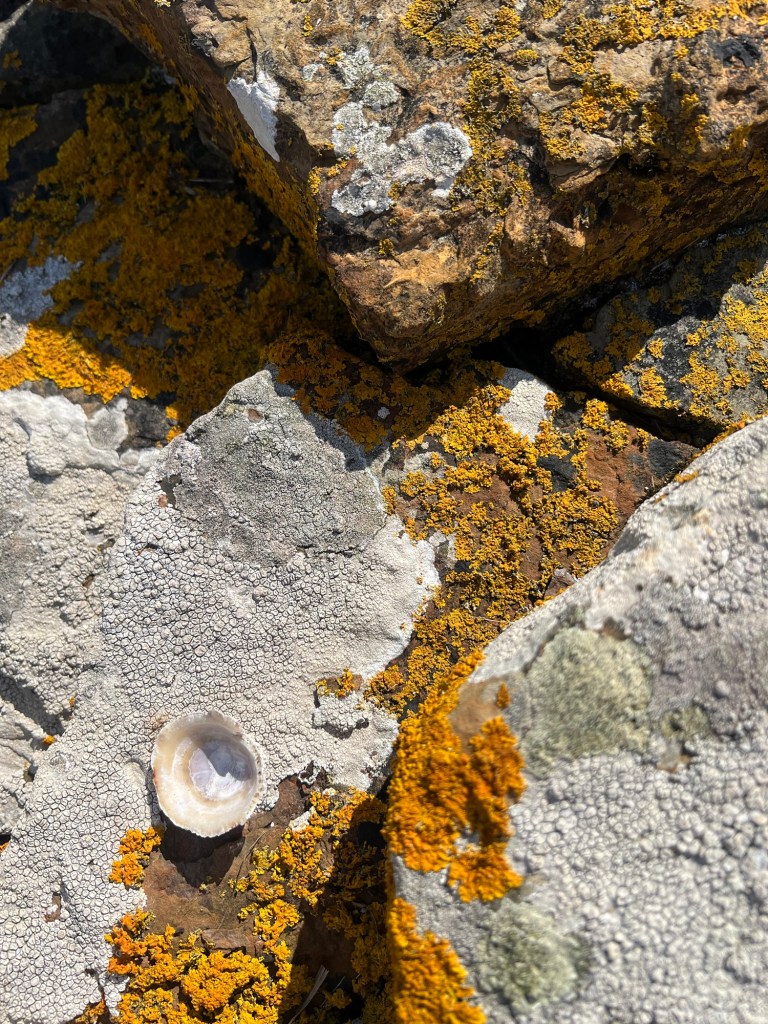
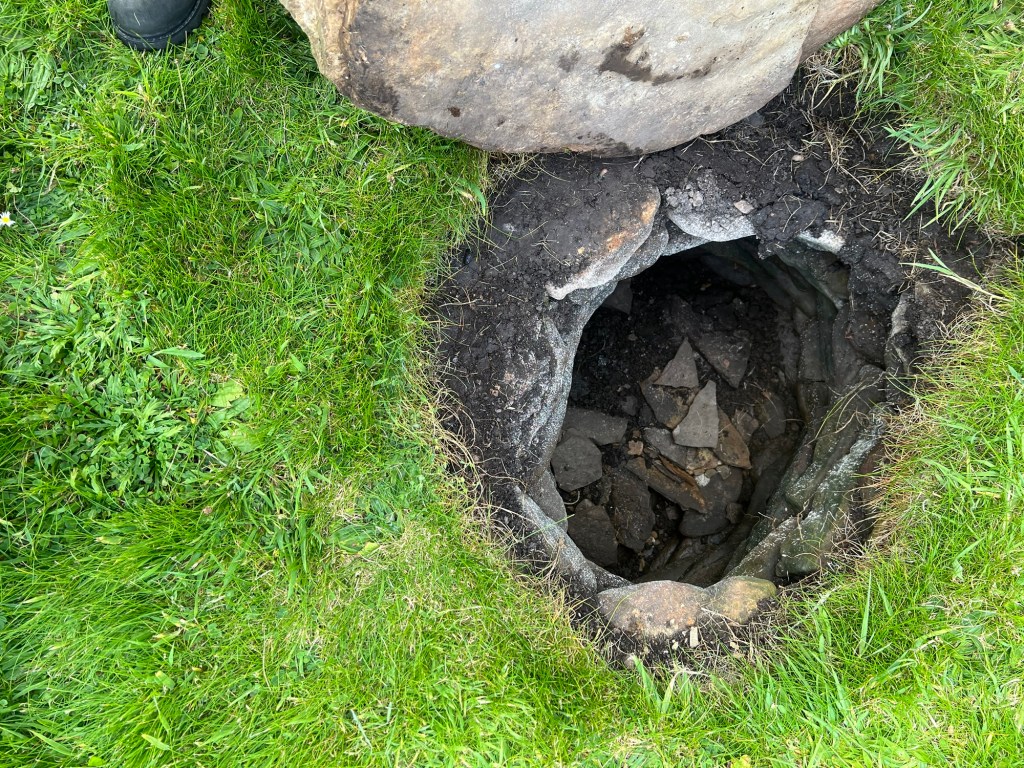
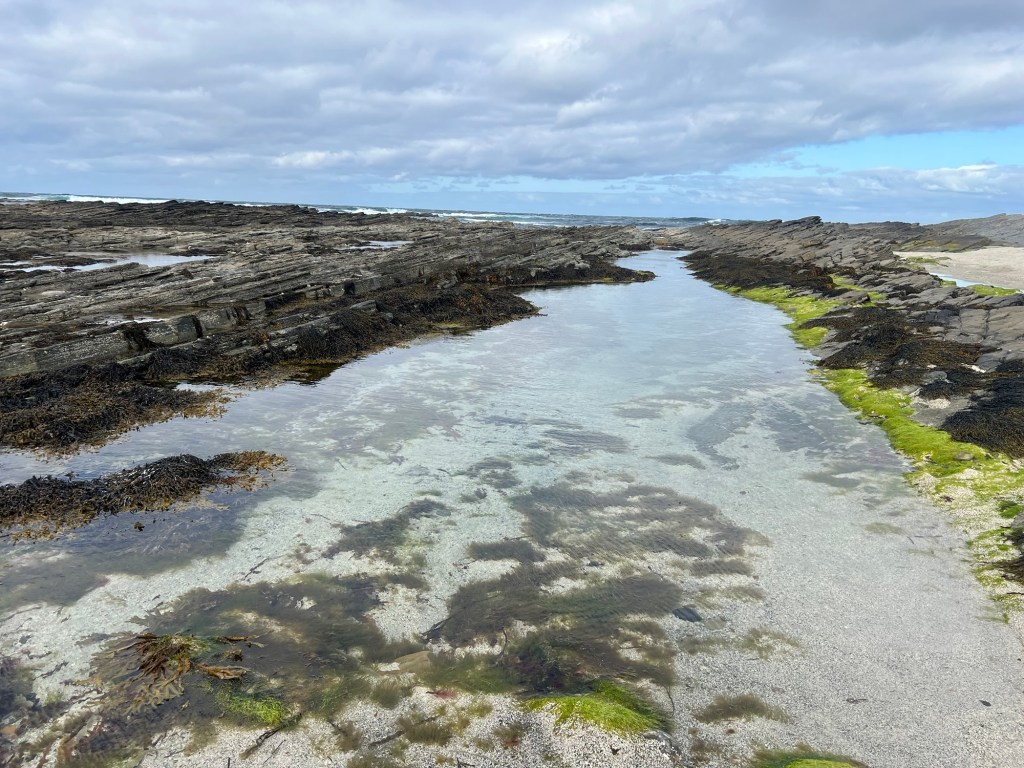
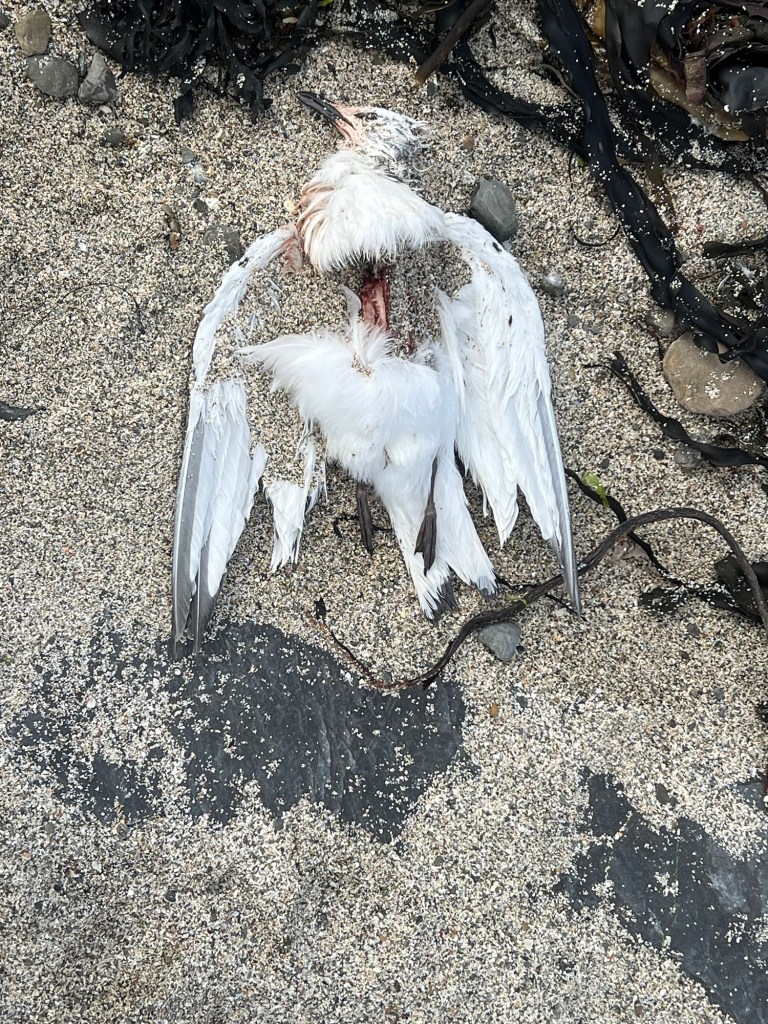
View of the island at low tide. The tide will come that way. Ruins of the church or possibly the monastery. Lichen on stone walls. The altar of the church. It is red sandstone in memory of St Magnus. Red sandstone turns up in the corners of all sorts of churches, added in memory of the saint. Pictish well. Our tour leaders took off the cover – both ex archaeologists – so that we could see it. Model of what the settlement might have looked like. The tide is coming inPicturesque dead bird.
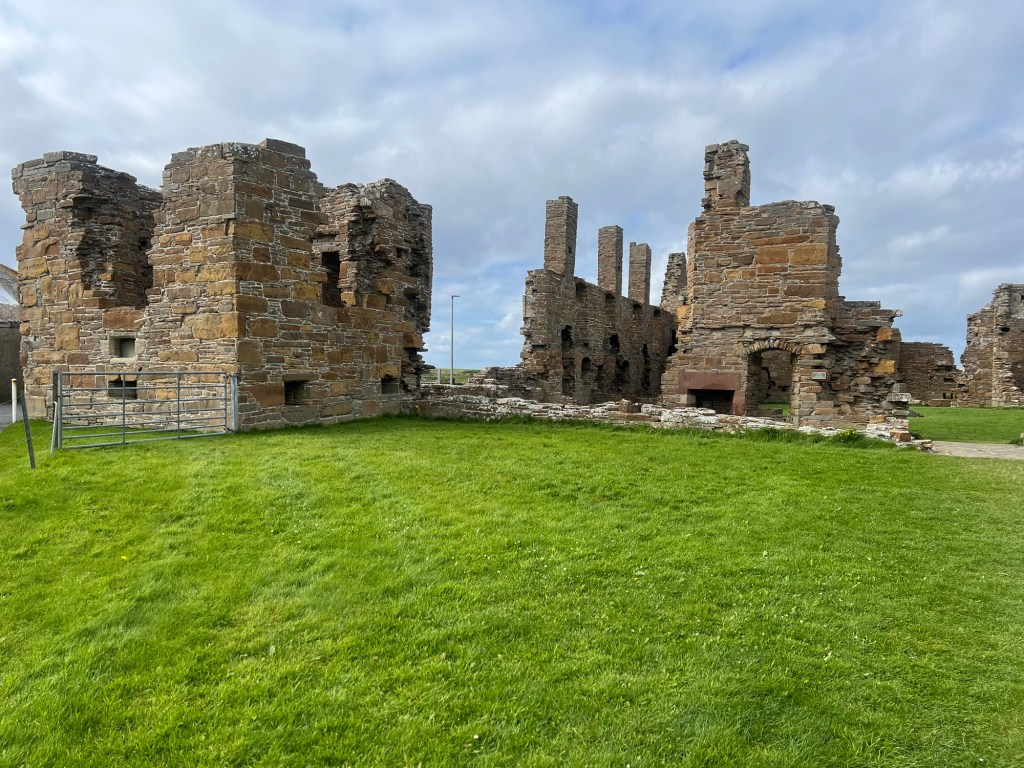
The Earl’s Palace, Birsay
Built by Robert Stewart, illegitimate half brother of Mary Queen of Scots. It was not used for very long and was built with gun ports below every window embrasure. He was much disliked. Once the Earl had been assassinated, the locals took the stone away for building. https://en.wikipedia.org/wiki/James_Stewart,_1st_Earl_of_MorayNo comment
You’re certainly getting the full tour and I’m learning snippets about that part of the world I had no idea about. The broch on Mousa is intact enough that you can climb the steps between the two outside walls and walk along the gallery…at least according to Gavin. I know how pervasive peat smoke can be, but it is a wonderful smell. As children we helped with the peat cutting/stacking for the croft we stayed on through the Summer and Mrs. McIver made wonderful drop scones/pancakes on the griddle which swung over the peat fire…goodness that was a long, long time ago.
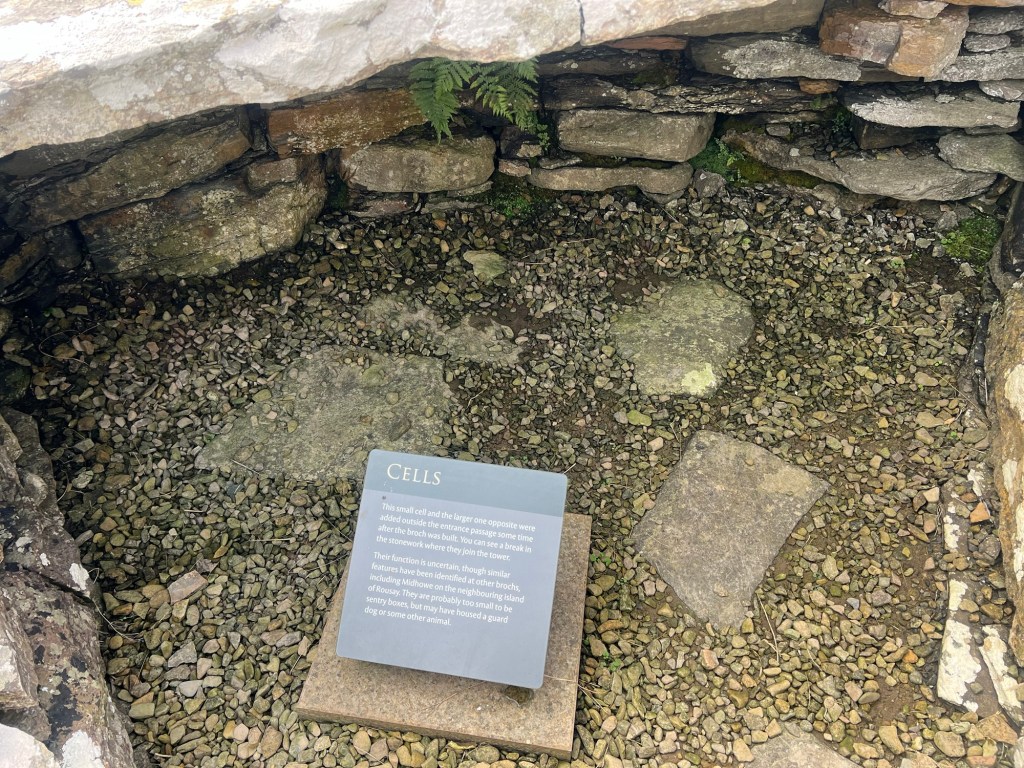
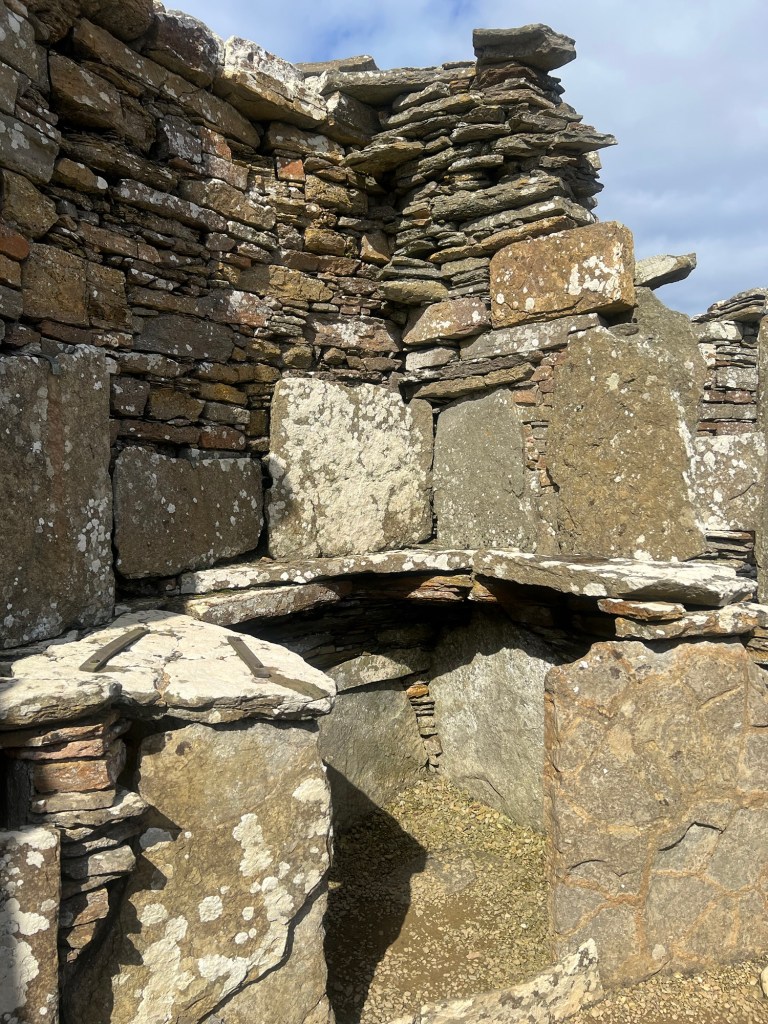
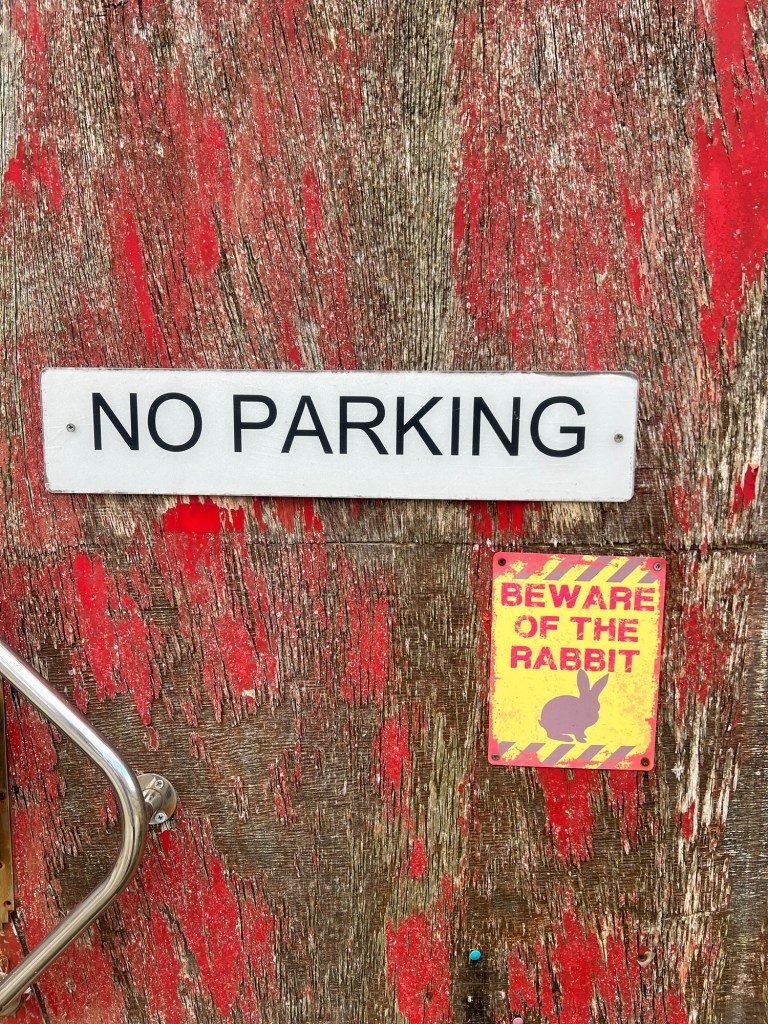


Dog Kennel? somewhere to leave the milk?
You’re certainly getting the full tour and I’m learning snippets about that part of the world I had no idea about. The broch on Mousa is intact enough that you can climb the steps between the two outside walls and walk along the gallery…at least according to Gavin. I know how pervasive peat smoke can be, but it is a wonderful smell. As children we helped with the peat cutting/stacking for the croft we stayed on through the Summer and Mrs. McIver made wonderful drop scones/pancakes on the griddle which swung over the peat fire…goodness that was a long, long time ago.
LikeLiked by 1 person