This is one of the smaller islands which has a nice selection of tombs, settlements etc.
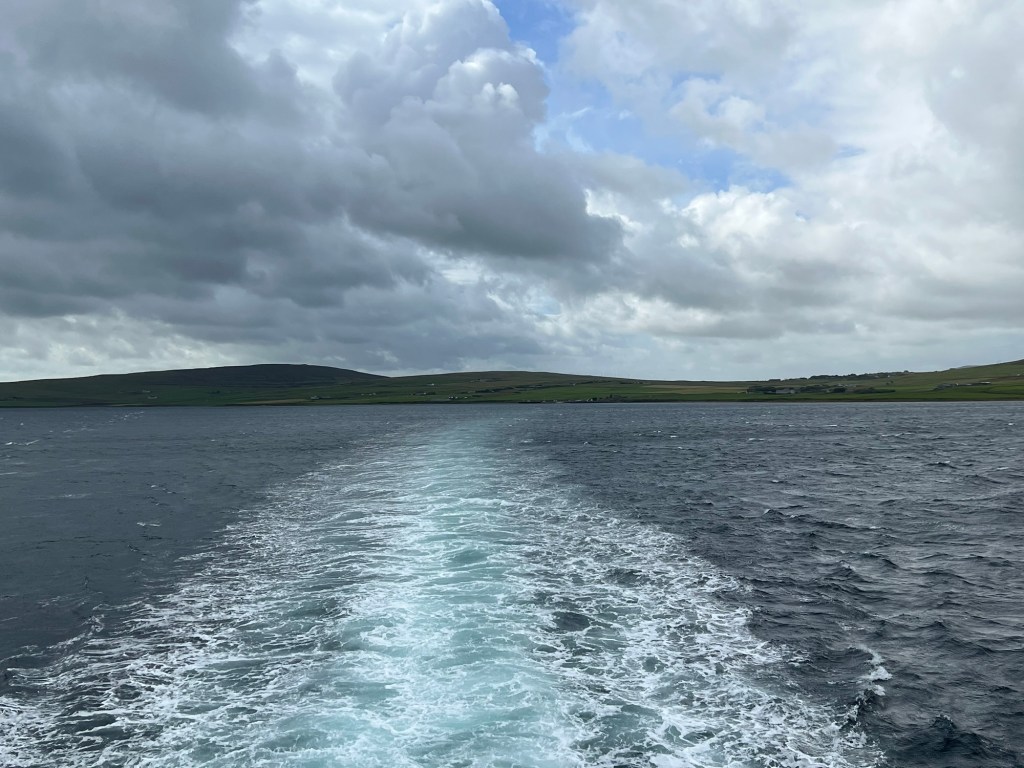
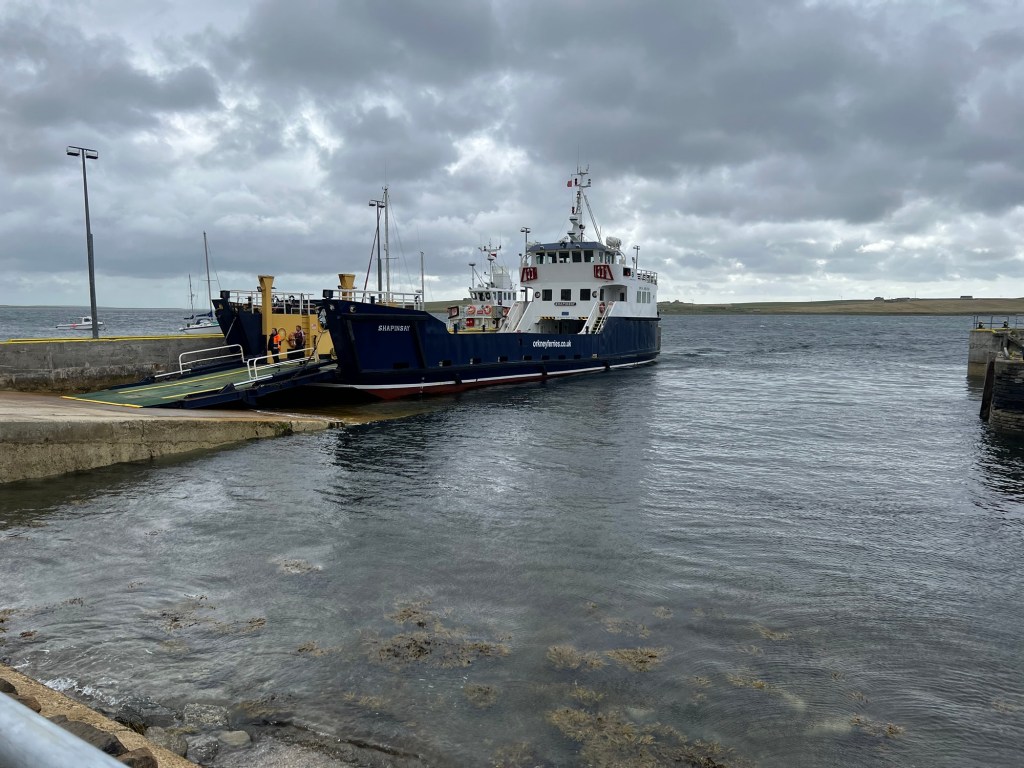
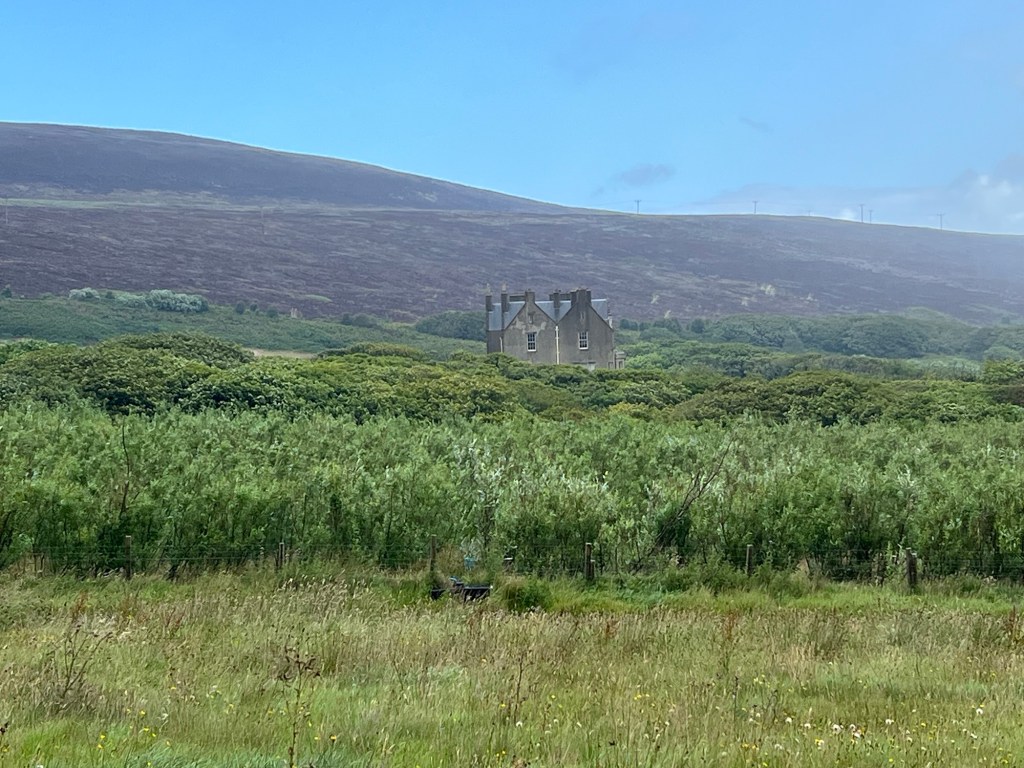
View of Rousay from the ferry. The ferry in the harbour at Tingwall – site of the Viking parliament. This is a house built by a Colonel Traill-Burrowes, replacing a Jacobean one on the other side of the island in the hope of attracting Edward VII to visit.
There are very few trees on Orkney. Those that there are tend to be around houses. I believe there were more originally but most of them were cut down in antiquity. The ones planted round houses sometimes used the ‘tattered flag’ technique. You attach flags to sticks and put them in the earth where you are thinking of planting your trees. You come back a year later and some of them will have lost the flags, some of the flags will be tattered and some will be OK. The third category is where you plant your trees!
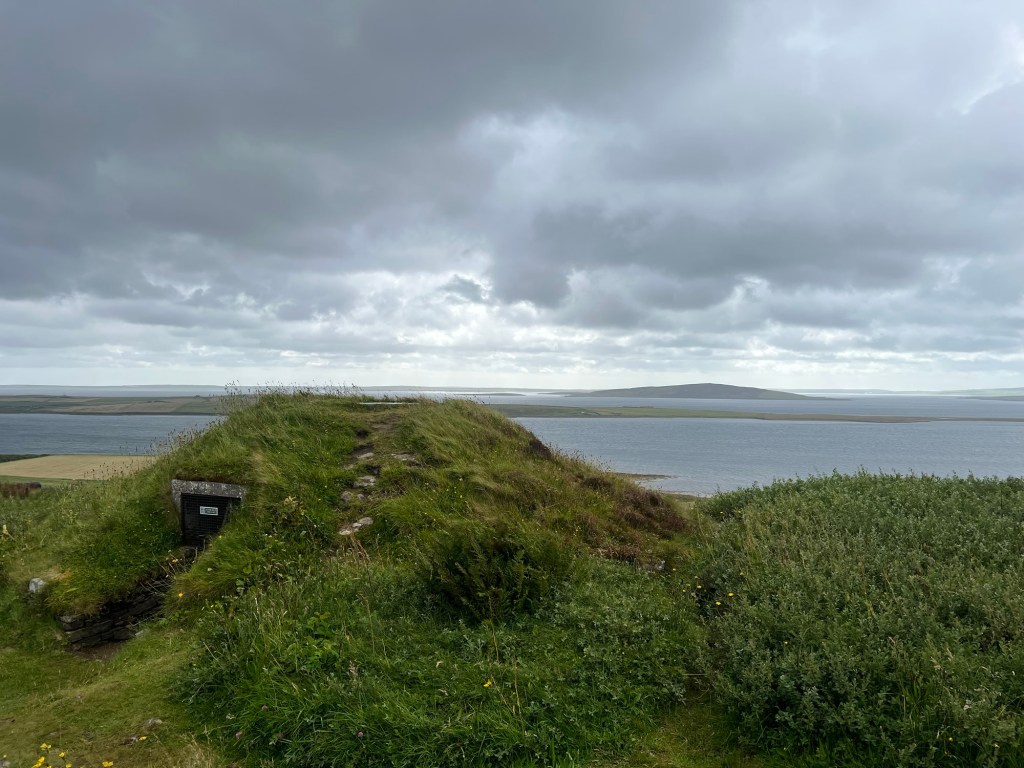
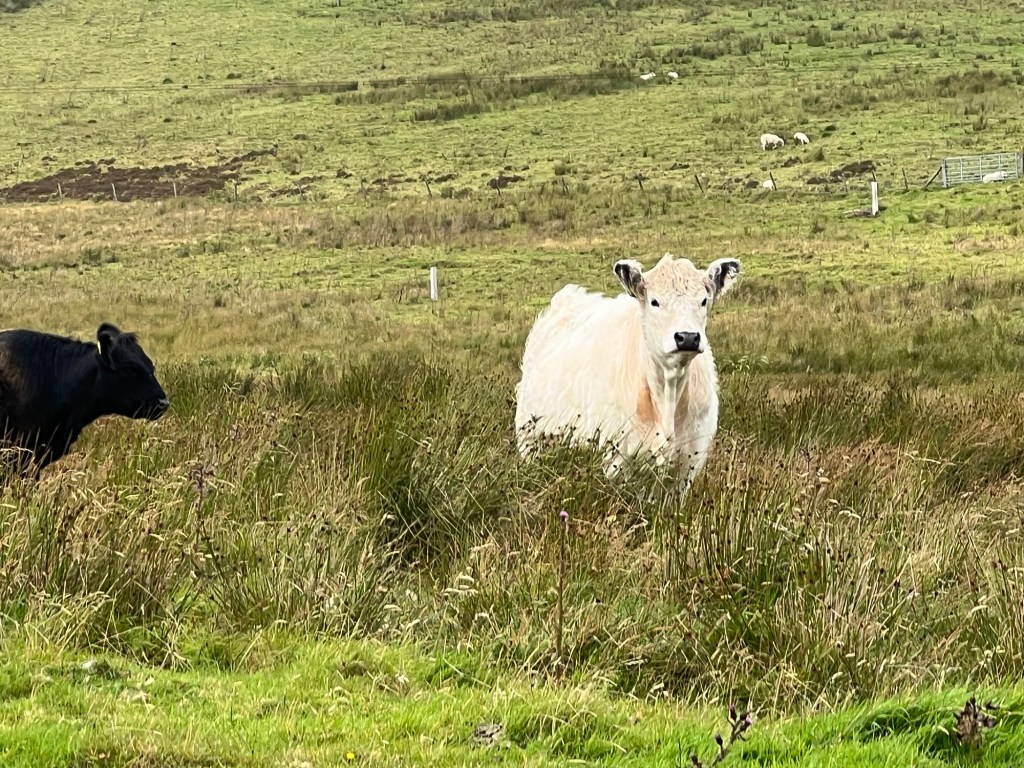
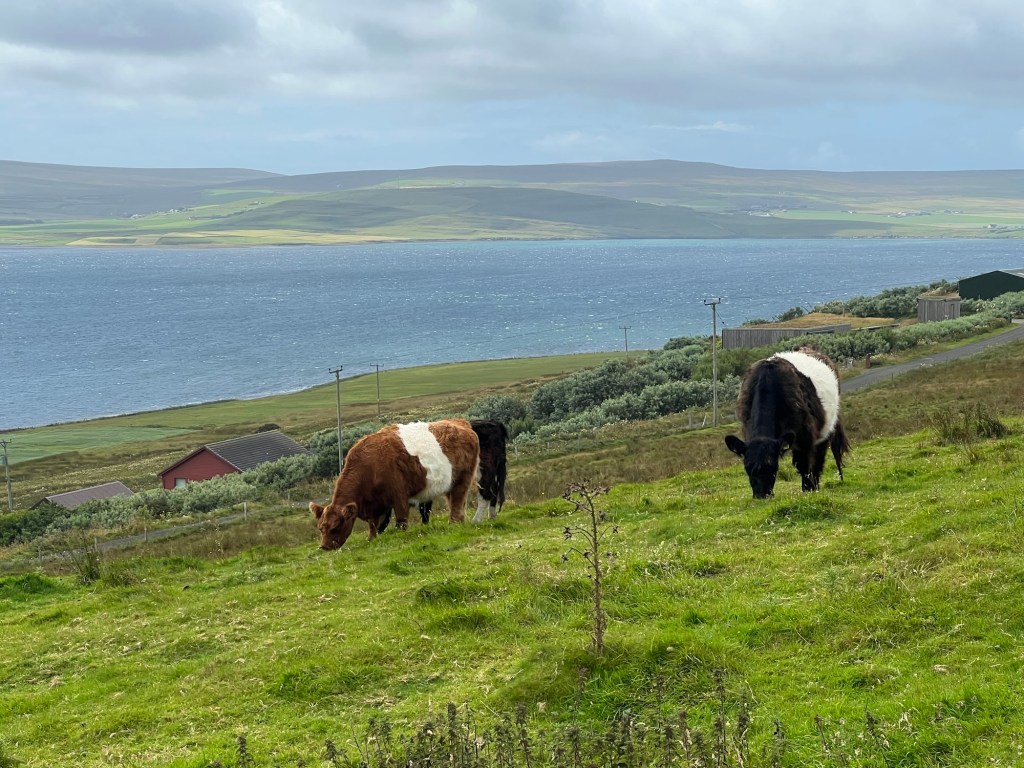
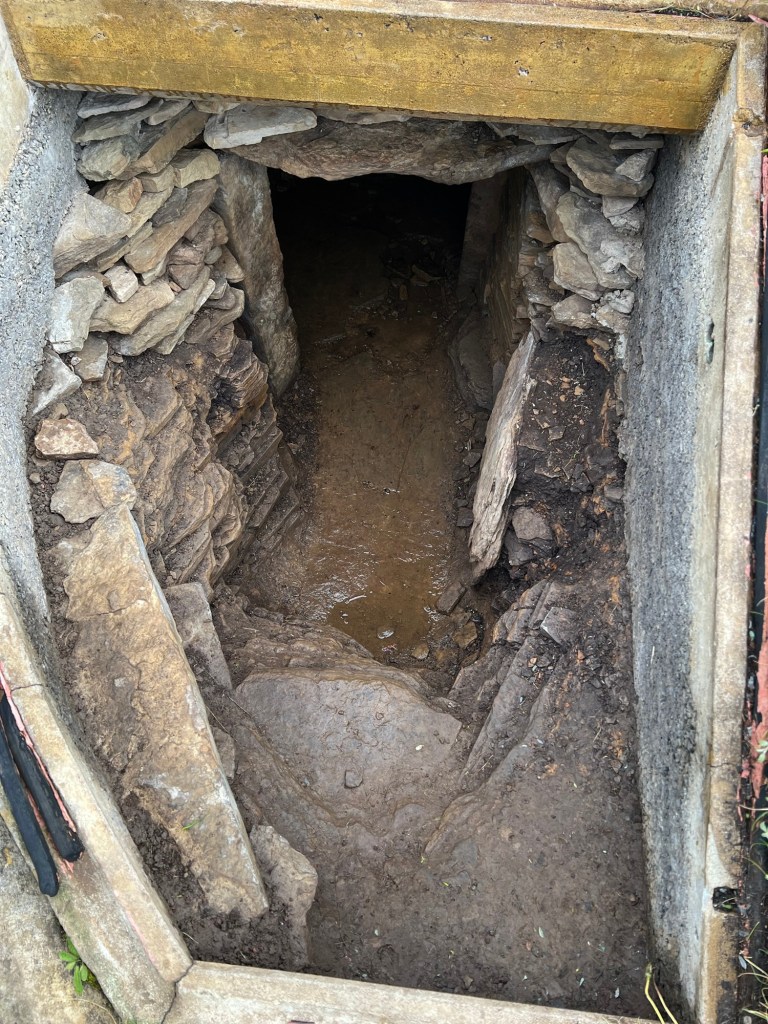
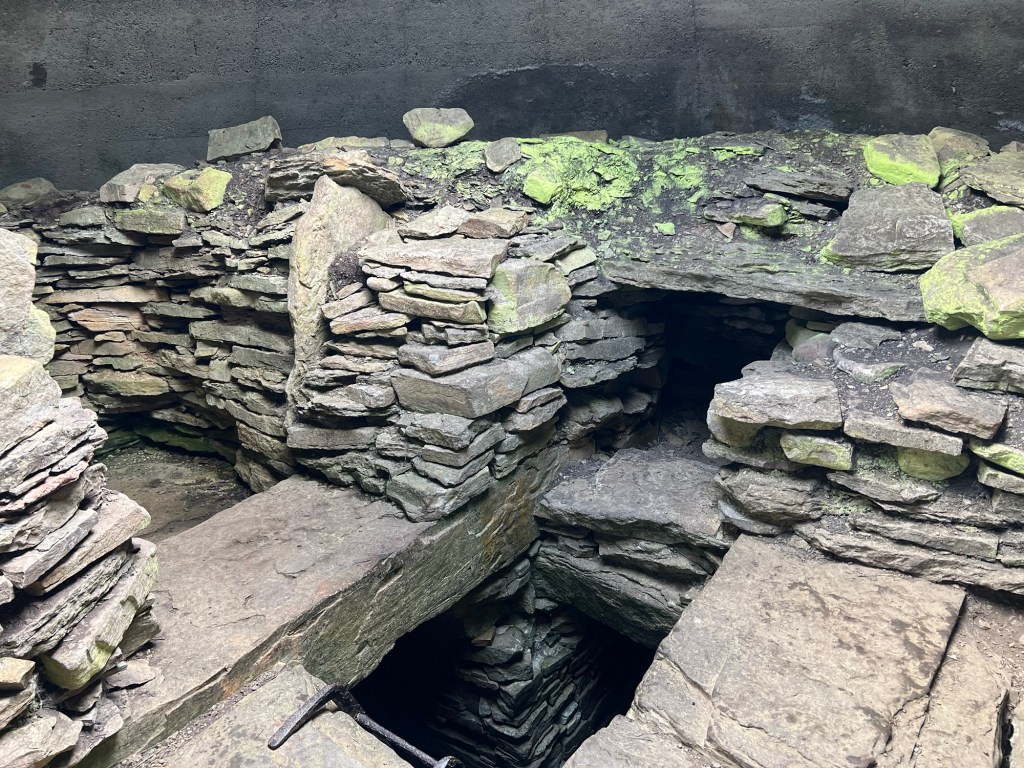
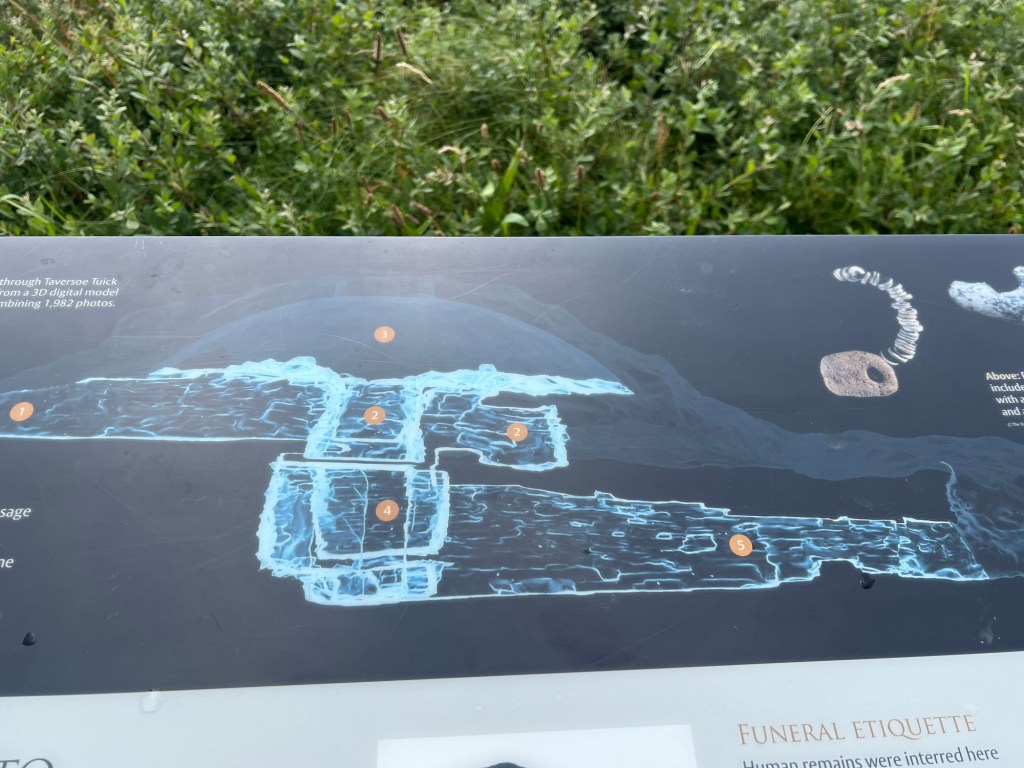
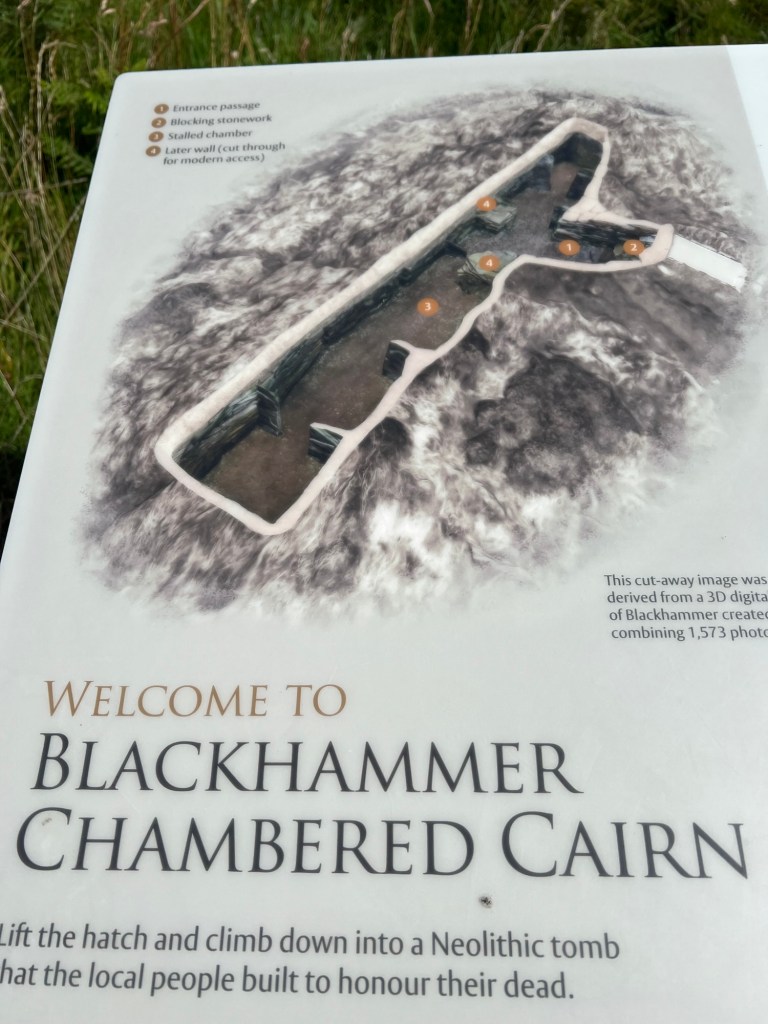
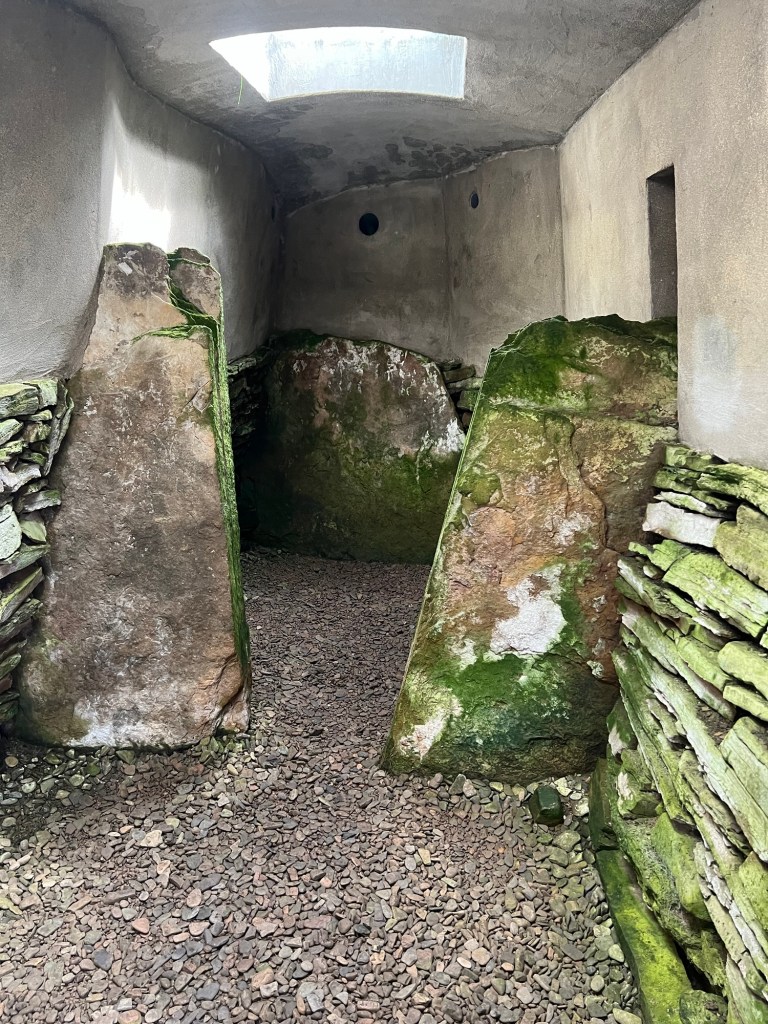
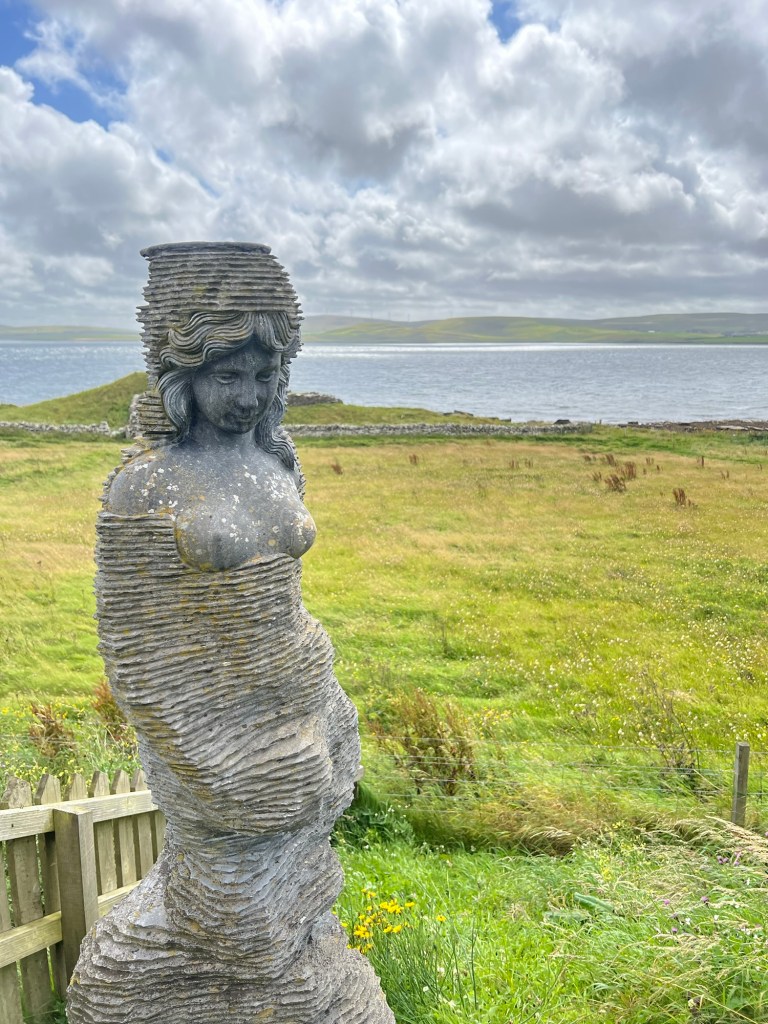
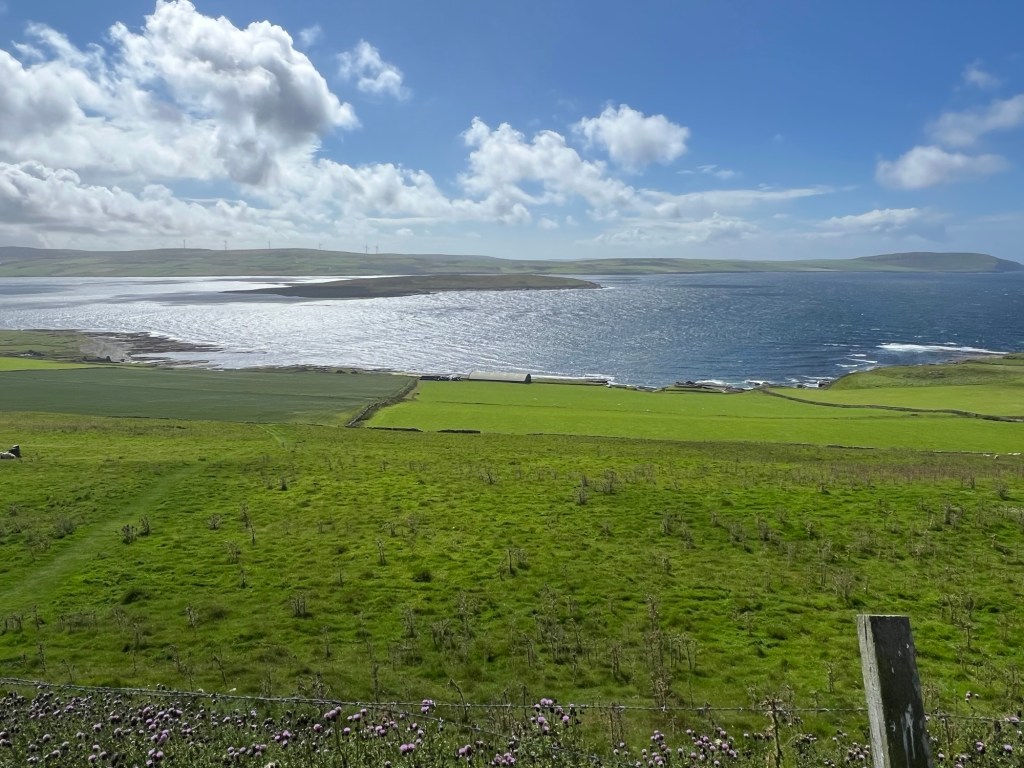
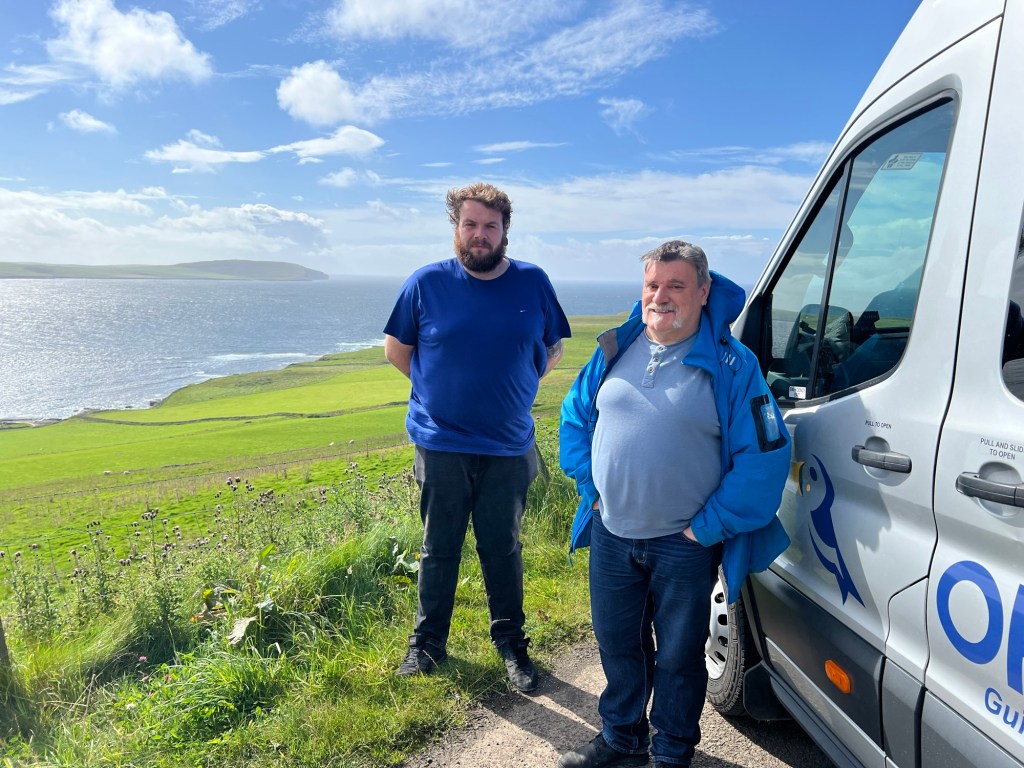
Taversoe Tuick. This is an unusual two storey tomb, dating to around 3000 BCE. This cow glowered at us for most of our visit. Orkney, being mainly agricultural, has a lot of cows and sheep. Apparently there are a few pigs as well but we haven’t seen any. Belted Galloways ignoring their view. Those of you living in the south of England will note green grass and the presence of regular rain. The entrance to another, much smaller tomb built into the same mound. Inside the upper level of the main tomb. The hole in the floor has a ladder leading to the lower level. I declined the privilege. Like Maeshowe, the bodies would have been put in the side chambers. This is a diagram of how the two halves of the tomb fit together. Plan of the next tomb. The method of disposing of the dead was the same but the side chapels are in a line rather than being round a central space.Inside. please note 1940s Ministry of Works concrete roof. This is a modern statue at the house belonging to Julie Gibson, newly retired County Archaeologist for the Orkney Islands and one of our tour leaders. We had lunch here. Down there, along the shore line, is Midhowe Chambered Cairn and Midhowe Broch. Unfortunately the path down to them involved a slippery downhill slope. As my left knee tends to object vociferously to that sort of thing, I declined the outing. However, I got a personal tour of the island with these two gentlemen- George, our driver on the left and Tom Muir, our other tour guide, on the right. Tom is an ex archeologist, ex curator of the museum, publisher and story teller. (https://www.orkneyology.com)
We saw an area of the island where one of the rare clearances had taken place. The landlord decided, in the middle of the 19C, that sheep would be more profitable than crofters. He turned out the crofters who mainly didn’t leave the island but built themselves shacks on the common land at the tops of the hills. Because they were starving, they had to take work. The landlord offered them work creating sheepfolds on the land they had just vacated, using the stones from their old houses. You couldn’t make it up.
Intriguing – I’ve never seen a two-storey chambered cairn before. It sounds as though you’ve got just the right folk to guide you around. This area has the habit of attracting archaeologists who arrive for a dig and basically never leave. I remember, working at UHI no matter how ferocious the weather, the staff who’d flown in from Shetland for staff meetings in Inverness always seemed to be the cheeriest souls.


This looks such a great tour. I’m very envious x
Yahoo Mail: Search, organise, conquer
LikeLiked by 1 person
Intriguing – I’ve never seen a two-storey chambered cairn before. It sounds as though you’ve got just the right folk to guide you around. This area has the habit of attracting archaeologists who arrive for a dig and basically never leave. I remember, working at UHI no matter how ferocious the weather, the staff who’d flown in from Shetland for staff meetings in Inverness always seemed to be the cheeriest souls.
LikeLiked by 1 person
Hi Ann
Enjoying reading about your travels, thanks x. Sounds a fantastic trip. I hope to get up that way one day. Enjoy Love Sonya xx
LikeLiked by 1 person